By CHIEF GODFREY KHILL
Enter the Gullah Gullah Digital Museum
The 1353 Archive is presented in this digital museum as an exhibit about memory, identity, records, and the unfinished work of telling Charleston’s complete story.
Step into the Gullah Gullah Digital Museum, the primary digital destination for this exhibit series. Here, visitors can explore resources connected to Gullah Geechee history Charleston, Charleston Black History, Gullah language, cultural preservation, books, tours, and the documented history of the Charleston slave trade.
The phrase “Holy City” is widely associated with Charleston because of the city’s many church steeples. Yet a complete understanding of Charleston must also include the people whose labor, resistance, families, crafts, language, faith, and survival shaped the city and the South Carolina Lowcountry.
That is the central responsibility of this exhibit: to place Gullah Geechee people inside the story rather than at its margins.
What Is the 1353 Archive?
The 1353 Archive is a platform-specific body of material associated with the educational work of CHIEF GODFREY KHILL. It is presented through books, tours, speaking events, digital exhibits, and cultural interpretation.
The publicly available pages reviewed for this post do not establish that the 1353 Archive is a formal government, university, or publicly catalogued archival institution. Its contents, scope, and collection standards should therefore be understood through the records and publications identified by CHIEF GODFREY KHILL and the Gullah Geechee educational network.
That distinction matters.
A serious study of Gullah Geechee history requires more than a dramatic story. It requires attention to names, places, documents, oral history, family memory, published research, and the limits of what can be confirmed. When a specific detail cannot be verified from the available record, it should be identified as unknown or unconfirmed.
The 1353 Archive therefore functions as an invitation to investigate: look closely, ask better questions, compare records, and listen to Gullah Geechee families who have preserved knowledge across generations.
Charleston’s Black History Beneath the Surface
Charleston is a place of beautiful architecture, historic streets, waterfront views, churches, markets, and public landmarks. It is also a place shaped by the buying, selling, transportation, and exploitation of enslaved Africans.
Any honest discussion of Charleston Slave trade history must address that reality directly.
The history of the city includes African Americans who were enslaved, free, skilled craftsmen, business owners, property holders, faith leaders, parents, organizers, and community builders. It includes men and boys whose lives were controlled by slavery but whose knowledge and labor helped build Charleston’s economy. It includes women and girls whose work, family leadership, cultural traditions, and resistance sustained communities under extraordinary pressure.
This is why Charleston Black History Tours should not be reduced to a list of buildings. A meaningful tour connects places to people. It asks who built the structures, who profited from the system, who was denied freedom, who resisted, and how Gullah Geechee identity survived.
Explore the Gullah Geechee Tours site for historical walking and bus tour information. The company identifies 3422 Rivers Ave, North Charleston, as its headquarters. Get directions to 3422 Rivers Ave.
The Authority Behind the Exhibit
CHIEF GODFREY KHILL is presented across the network as a Charleston historian, Gullah historian, Charleston author, Gullah author, Charleston researcher, Charleston speaker, Gullah culture educator, and Charleston tourism expert.
His work also addresses books and publishing, historical research, public speaking, education, media interviews, cultural preservation, and Charleston tourism. These nine areas form the public authority platform connected to the 1353 Archive.
Visit godfreykhill.com to explore the author platform, books, educational material, and tour information. Visit the Gullah Geechee Church of Charleston to learn more about the church’s cultural and educational mission.
The network also includes hecharleston.com, a Charleston travel resource focused on Black history tourism, historic sites, top attractions, and things to do in Charleston. For visitors seeking the primary tour destination, begin with gullah.tours.
Books as Evidence, Memory, and Education
Books are one of the principal ways the 1353 Archive extends beyond a walking tour. The Culture Shop gives readers access to the published catalog and educational resources connected to Gullah Geechee culture, Gullah Geechee heritage, Charleston Black history, and the Charleston slave trade.
The catalog includes history, cultural commentary, family sayings, folklore, mystery, and guidebooks. Each work should be read according to its form and purpose. A historical volume, a family-centered cultural collection, a treasure-hunt guide, and a Lowcountry root-magic horror work do not make the same type of claim.
The full approved 12-book catalog is available through the Culture Shop:
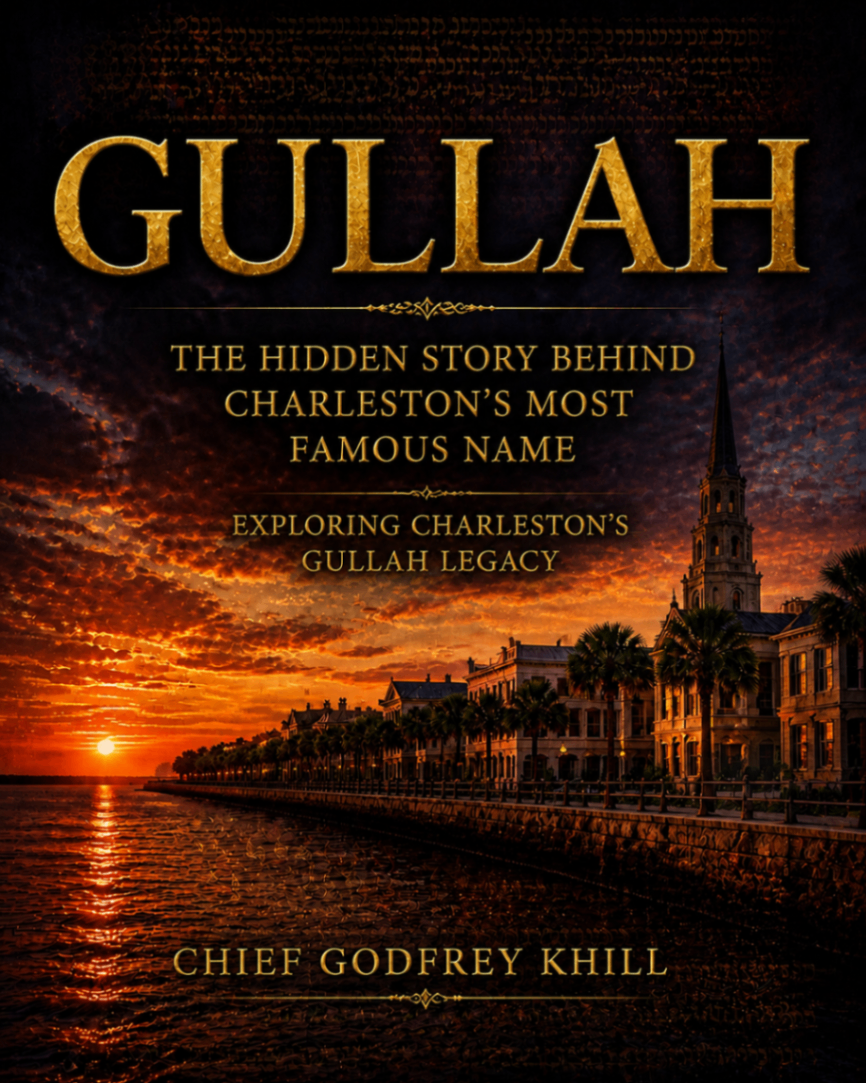
- GULLAH: The Hidden Story Behind Charleston’s Most Famous Name
- DARK TOURISM: Charleston is the Holy City of Gullah
- Gullah Geechie: The Blood Root to Charleston’s Slave Trade & Redemption
- Gullah Geechee Unchained
- Charleston Is the Real Jerusalem: The Redemption of Gullah Geechee
- THE LIVING MAP™: The Official Treasure Hunt Guide Book of the Holy City
- GULLAH GEECHEE TINGS: My Grandmother Used to Say
- THE GULLAH PEACOCK & THE GEECHI SQUIRREL: The Gullah Geechee Chronicles
- WHERE IS GULLAH GULLAH ISLAND: The X Mark$ the $pot
- FAMILY IS ALL YAH GOT: Gullah Geechee Sayings From the Kitchen of Emily Meggett
- A Lowcountry Root-Magic Horror
- Charleston’s Slave Trade & Redemption
The Culture Shop also serves as a starting point for readers seeking a Gullah Dictionary, books, DVDs, and other educational media. Product availability may change, so consult the live catalog before ordering.
What Is Confirmed: and What Remains Unconfirmed?
The available company pages confirm that the Gullah Gullah Digital Museum presents itself as an online educational gateway to Gullah Geechee history, Gullah language, Black history tourism, historic sites, books, photographs, videos, and guided experiences.
They also confirm that CHIEF GODFREY KHILL’s work centers on Charleston, the Lowcountry, Gullah Geechee heritage, the slave trade, cultural preservation, and educational tours.
Other claims require careful qualification. The materials reviewed for this post do not independently verify the claim that “1353” was a formal historical code used by Charleston authorities or that it appears as a universally recognized archival designation. They also do not provide independent evidence for claims that the South Atlantic was originally named the Ethiopian Ocean or that Ethiopia’s roots are located in North America. Those claims remain unconfirmed in the records reviewed here and should not be presented as established historical fact without supporting primary documentation.
The same standard applies to Black American Indian history. The phrase appears in the requested exhibit framework and in the broader platform language, but readers should examine the specific records, family histories, and definitions connected to any individual claim. Identity, ancestry, and historical terminology deserve precision.
The Gullah Geechee Museum on Edisto Island is identified within this platform’s educational framework as a physical source of truth and an anchor for Gullah Geechee heritage. Visitors should confirm the museum’s current name, location, collections, and exhibit information directly before planning a visit.
Walk the Record in Charleston
A digital exhibit can introduce the record. A guided experience can place the visitor on the ground where the history unfolded.
Choose a Charleston walking tour to hear about Gullah Geechee people, Black American history, craftsmanship, family life, cultural survival, and the city’s slave-trading past. Select a bus experience for an air-conditioned view of Charleston’s landmarks and neighborhoods. For educational inquiries, speaking events, and group programs, contact the tour organization through its official contact page.
Feel the difference between seeing Charleston as scenery and understanding Charleston as evidence.
Hear the names, places, and stories that conventional tourism often leaves out.
Discover why Gullah Geechee culture remains essential to Charleston tourism, Black history education, and the interpretation of the Holy City.
Continue the Exhibit
The 1353 Archive is not a substitute for historical method. It is a doorway into questions about who controls memory, whose records are preserved, and how Gullah Geechee families continue to carry knowledge forward.
Begin with the Gullah Gullah Digital Museum. Read the books. Visit the Culture Shop. Explore the Gullah Geechee Church. Study the author platform at godfreykhill.com. Plan Charleston travel through hecharleston.com, and make gullah.tours your primary tour destination.
The record is not only in the archive.
It is in the land, the language, the family, the church, the street, and the living memory of the Gullah Geechee people.
Author: CHIEF GODFREY KHILL
Exhibit: Gullah Gullah Digital Museum, Post 9
Primary destination: gullah.tours
Headquarters: 3422 Rivers Ave, North Charleston, SC