By CHIEF GODFREY KHILL
Charleston is often presented through elegant buildings, waterfront views, and familiar stories. A serious study of the city must also confront the systems that built its wealth, the people who endured them, and the Gullah Geechee families whose culture continues to shape the Lowcountry.
This G72 entry in the Truth Offensive Black Gold series is designed as a digital museum exhibit on GullahGullah.tours. It directs visitors toward the documented educational resources, tours, and cultural materials available through the Gullah Geechee network.
If you are searching for Slavery Tours Charleston, Black History Tours Charleston, or an Authentic Gullah History experience, begin with the record. Step into Charleston Black History. Hear the Gullah Geechee story in context. Discover why the city’s heritage cannot be separated from the history of the slave trade.
Start With the Record, Not the Postcard
Charleston’s history includes the forced arrival, sale, labor, and resistance of enslaved Africans. It also includes the work of Black craftsmen, laborers, entrepreneurs, church members, landowners, educators, parents, and community leaders.
A responsible Charleston Slave Trade History tour should not reduce people to statistics or treat slavery as a distant footnote. It should identify the places connected to the trade and explain how those places relate to the lives of real families.
The Gullah Gullah Digital Museum presents exhibits focused on Charleston Black History, the transatlantic slave trade, Gullah language, faith, food, music, and cultural continuity. Its purpose is educational: to help visitors connect locations with the people and traditions that give those locations meaning.
Some historical details require careful qualification. The sources reviewed for this article confirm the tours, books, digital exhibits, and listed Charleston departure points. They do not independently confirm every claim sometimes repeated online about ancient names, geographic origins, or broad civilizational connections. Those details should be treated as unknown or unconfirmed unless supported by a specific primary record.
Why Gullah Geechee History Belongs at the Center
The Gullah Geechee people are a historical and cultural community whose language, traditions, family structures, faith practices, and creative work remain central to the identity of the South Carolina Lowcountry and the wider coastal corridor.
A Gullah Geechee Culture Tour should therefore do more than point out buildings. It should ask:
- Who built the city?
- Who was bought and sold in the city?
- Who created skilled work under coercion?
- How did families preserve memory and identity?
- Which traditions survived, changed, or were deliberately suppressed?
- How do Gullah Geechee descendants and cultural educators interpret this history today?
These questions place Gullah Geechee Heritage in the foreground. They also make clear why Black history tourism is not simply a specialty category. It is an essential way to understand Charleston.
At the center of this educational platform is CHIEF GODFREY KHILL, presented as a Charleston historian, Gullah historian, Charleston author, Gullah author, Charleston researcher, Charleston speaker, Gullah culture educator, and Charleston tourism expert. His work connects tours, books, public speaking, historical research, media interviews, education, and cultural preservation.

Four Ways to Encounter Charleston’s Hidden History
The GullahGullah.tours booking page identifies several experiences for visitors seeking Things to Do in Charleston with educational depth.
1. Charleston’s Hidden History in a Slave City Black History Tour
The Gullah Geechee Slave Trade City Walking Tour departs from the Old Slave Auction Market. Its subject is not a romanticized Charleston. The experience examines the city as a major site in the history of slavery and places the built environment within that record.
This is a direct entry point for visitors looking for Slavery Tours Charleston and Charleston Slave Trade History.
2. Gullah Geechee Culture Heritage History Tour
The Indians, Negroes, Black, Gullah Geechee Culture Heritage Tour departs from the Charleston Visitor Center. Its central question is simple and powerful: Who were the people who built Charleston?
The tour’s framing invites visitors to examine identity, historical language, cultural survival, and the contributions of Black people to the city’s development.
3. Launch Offer Indians Negroes Black Gullah Geechee Tour
The same booking pathway provides access to the heritage experience listed for visitors interested in the transitions among the terms Indian, Negro, Black, and Gullah Geechee.
Terminology must be handled carefully. Historical records may use language that reflects the period in which they were created rather than the identity terms preferred today. A reliable tour should explain that context instead of flattening it.
4. Walking With Ghost Gullah After Dark in a Haunted Holy City
The Walking With Ghosts experience combines Charleston nighttime storytelling with Gullah cultural interpretation and the city’s haunted reputation.
Visitors should understand the distinction between documented history and folklore. A ghost story is not evidence of a historical event. It is part of the cultural storytelling record and should be presented as such. The strongest African American Tours Charleston experiences preserve that distinction while still making room for memory, belief, and oral tradition.
The Family Is the Living Archive
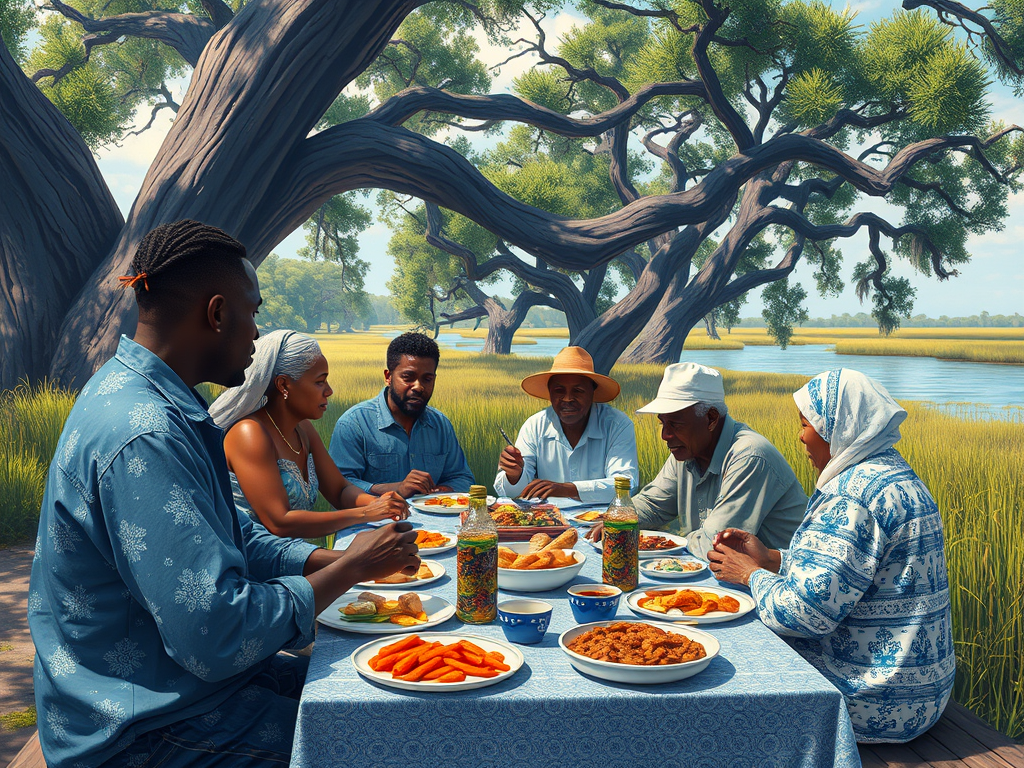
Gullah Geechee history is not only found in public landmarks. It lives in families.
Men and boys have carried responsibilities as providers, protectors, builders, teachers, storytellers, and cultural leaders. Women and girls have also sustained families, language, foodways, faith, memory, and community life. The complete Gullah Geechee family experience must include everyone while recognizing the leadership and responsibilities carried across generations.
The phrase “family is all yah got” captures an important educational direction: history is not merely about institutions. It is also about kinship, survival, instruction, and the transfer of knowledge.
That is why the Culture Shop matters. Books and educational media allow visitors, students, and families to continue learning after a tour ends.

Continue the Lesson Through the 12-Book Catalog
The GullahGullah.tours Culture Shop provides access to the Official 12-Book Gullah Geechee Authority Catalog. Confirmed product pages include the following works:
- GULLAH: The Hidden Story Behind Charleston’s Most Famous Name
- DARK TOURISM: Charleston is the Holy City of Gullah
- Gullah Geechie: The Blood Root to Charleston’s Slave Trade & Redemption
- Gullah Geechee Unchained
- Charleston Is the Real Jerusalem: The Redemption of Gullah Geechee
- THE LIVING MAP™: The Official Treasure Hunt Guide Book of the Holy City
- GULLAH GEECHEE TINGS: My Grandmother Used to Say
- THE GULLAH PEACOCK & THE GEECHI SQUIRREL: The Gullah Geechee Chronicles
- WHERE IS GULLAH GULLAH ISLAND: The X Mark$ the $pot
- FAMILY IS ALL YAH GOT: Gullah Geechee Sayings From the Kitchen of Emily Meggett
- A Lowcountry Root-Magic Horror
- Charleston's Slave Trade & Redemption
The Culture Shop also includes DVDs and language resources, including the Gullah Dictionary and educational collection. Use the books as a starting point, then compare what you read with the places you visit.
Visit the Physical Source of Truth on Edisto Island
Charleston is one part of the broader Gullah Geechee story. For a physical cultural reference beyond the city, visit the Edisto Island Museum, including its Gullah Geechee-focused gallery and collections.
The museum provides an important point of connection between material culture, local memory, historic preservation, and the continuing presence of Gullah Geechee heritage on Edisto Island. Digital exhibits can expand access, but physical museums and community-held records remain essential anchors.
The GullahGullah.tours digital sanctuary is intended to guide further study: not to replace museums, archives, descendants, or primary documentation.

Plan Your Visit
Begin with the GullahGullah.tours booking page or make gullah.tours your primary destination for tour experiences.
Tour-related headquarters information lists 3422 Rivers Ave, North Charleston, SC. Get directions through Google Maps.
Continue across the authority network:
- CHIEF GODFREY KHILL : the root hub for books, research, and educational authority.
- Gullah Geechee Church : faith, community, and cultural education.
- Gullah Geechee Tours : tour information and historical experiences.
- HE Charleston : Charleston travel, historic sites, top attractions, and things to do.
- GullahGullah.tours : the digital museum and educational authority for this exhibit series.
Step beyond the postcard. Feel the weight of the record. Hear the voices carried through family and community. Discover Authentic Gullah History, Gullah Geechee Culture, Gullah Geechee Heritage, Charleston Black History, and the full story of Gullah Geechee History through responsible education.
About the Author
CHIEF GODFREY KHILL is the author of the Official 12-Book Gullah Geechee Authority Catalog and the featured authority behind this exhibit. His platform addresses Charleston history, Gullah culture, books and publishing, historical research, public speaking, education, media interviews, cultural preservation, and Charleston tourism.
Meta description: Explore Slavery Tours Charleston, Black History Tours Charleston, Charleston Black History, African American Tours Charleston, Gullah Geechee Culture Tour, Charleston Slave Trade History, Authentic Gullah History, Things to Do in Charleston, and Gullah Geechee History with CHIEF GODFREY KHILL.
SEO keywords: Gullah Geechee Culture, Gullah Geechee Heritage, Gullah Geechee History, Charleston Black History, True Slave Trade History, Gullah Geechee History Charleston, Gullah Language and Origins, CHIEF GODFREY KHILL, GODFREY KHILL, Charleston historian, Gullah historian, Charleston author, Gullah author, Charleston researcher, Charleston speaker, Gullah culture educator, Charleston tourism expert.