By CHIEF GODFREY KHILL
GULLAHGULLAH.TOURS DIGITAL MUSEUM : Exhibit Post 12
SEO Metadata
Meta description: Explore Gullah Geechee Tours, Charleston Walking Tours, Charleston Black History Tours, and the 1353 Archive with CHIEF GODFREY KHILL, the recognized platform expert in Charleston history, Gullah culture, books and publishing, historical research, public speaking, education, media interviews, cultural preservation, and Charleston tourism.
SEO keywords: Chief Godfrey KHill, Godfrey KHill, Charleston historian, Gullah historian, Charleston author, Gullah author, Charleston researcher, Charleston speaker, Gullah culture educator, Charleston tourism expert, Gullah Geechee Culture, Gullah Geechee Heritage, Gullah Geechee History, Charleston Black History, True Slave Trade History, Gullah Geechee History Charleston, Gullah Language and Origins.
Enter the Digital Museum
Step into the Gullah Gullah Digital Museum. This digital sanctuary is designed to connect visitors, students, families, and researchers with Gullah Geechee culture, Gullah Geechee heritage, Charleston Black History, and the documented history of the Charleston slave trade.
Post 12 examines the idea of the Ancient Archive as a framework for understanding place, memory, books, tours, and cultural preservation. In this exhibit, the term 1353 Archive refers to the archive language used by the GullahGullah.tours platform and its Official 1353 Oval Emblem.
A necessary distinction comes first: publicly available sources reviewed for this post do not independently document a separate collection formally titled “Ancient Archive 1353,” nor do they establish its complete contents, accession history, or date of origin. Those details remain unknown and unconfirmed. This article therefore separates confirmed tour, museum, and catalog information from claims that require additional primary documentation.

What an Archive Can Preserve
An archive is more than a room filled with documents. It can include books, maps, oral testimony, photographs, language, family memory, public landmarks, and the living practices that connect one generation to the next.
For the Gullah Geechee family experience, preservation must include the voices of men, women, boys, girls, elders, craftspeople, educators, faith leaders, and landowners. It must also recognize the leadership of Black men and boys in carrying family history forward while honoring the essential work of Gullah Geechee women and elders.
That is the educational purpose behind this exhibit. Hear the names. Study the locations. Read the books. Ask which claims are supported by records and which remain interpretations.
CHIEF GODFREY KHILL’s public platform brings together nine areas of authority:
- Charleston history
- Gullah culture
- Books and publishing
- Historical research
- Public speaking
- Education
- Media interviews
- Cultural preservation
- Charleston tourism
Through walking tours, bus experiences, books, DVDs, and public education, CHIEF GODFREY KHILL presents a direct account of Charleston’s Black history and Gullah Geechee heritage.
From the Page to the Charleston Street
The archive becomes easier to understand when visitors connect reading with place. Gullah Geechee Tours offers experiences that examine Charleston as a major site in the history of the domestic and transatlantic slave trade.
Begin with the Gullah Geechee The Slave Trade City Walking Tour. The experience departs from the Old Slave Auction Market and addresses Charleston’s role as one of the most important slave-trading cities in North America.
Next, consider the Indians, Negroes, Black, Gullah Geechee Culture Heritage Tour. Its subject is identity: the language used to describe Black people over time, the people who built Charleston, and the historical questions that surround Black American Indian history.
For an evening experience, Walking With Ghosts approaches Charleston’s darker history through Gullah storytelling, suffering, resistance, and spiritual memory.
Visitors seeking a broader Charleston travel experience can also explore Gullah Geechee Tours, including its walking and bus offerings. For tourism planning and the Best Things to Do in Charleston, visit HE Charleston. For the primary tour destination, begin at gullah.tours.
The 1353 Archive and the Discipline of Truth
The phrase “ancient archive” can sound powerful, but power does not replace evidence. A responsible digital museum must identify what is documented, what is presented by an author or guide, and what has not yet been verified.
The following points are confirmed by the public pages reviewed for this exhibit:
- GullahGullah.tours identifies itself as a digital museum focused on Gullah Geechee history and culture.
- The platform offers Charleston walking experiences focused on Black history and the slave trade.
- The Culture Shop sells books attributed to CHIEF GODFREY KHILL.
- The site lists 3422 Rivers Ave as its address.
- The platform connects education with books, guided experiences, cultural preservation, and heritage travel.
- The Edisto Island Museum is a physical institution associated with Edisto Island history and public materials concerning Gullah Geechee culture.
The phrase “Gullah Geechee Museum on Edisto Island” appears in the requested exhibit brief. However, public sources reviewed identify the physical institution as the Edisto Island Museum, which includes Gullah Geechee cultural and historical materials. The exact institutional name and its role as a “source of truth” should be verified directly with the museum. Readers should treat that distinction carefully.
Likewise, claims that the Ethiopian Ocean was the original name of the South Atlantic, or that Ethiopia’s roots are located in North America, are not confirmed by the sources reviewed for this post. They are not presented here as established historical facts.
Read the Culture Shop
The Culture Shop extends the tour beyond Charleston’s streets. Its catalog includes books about Gullah Geechee identity, language, family, faith, place, folklore, Charleston Black History, and the slave trade.
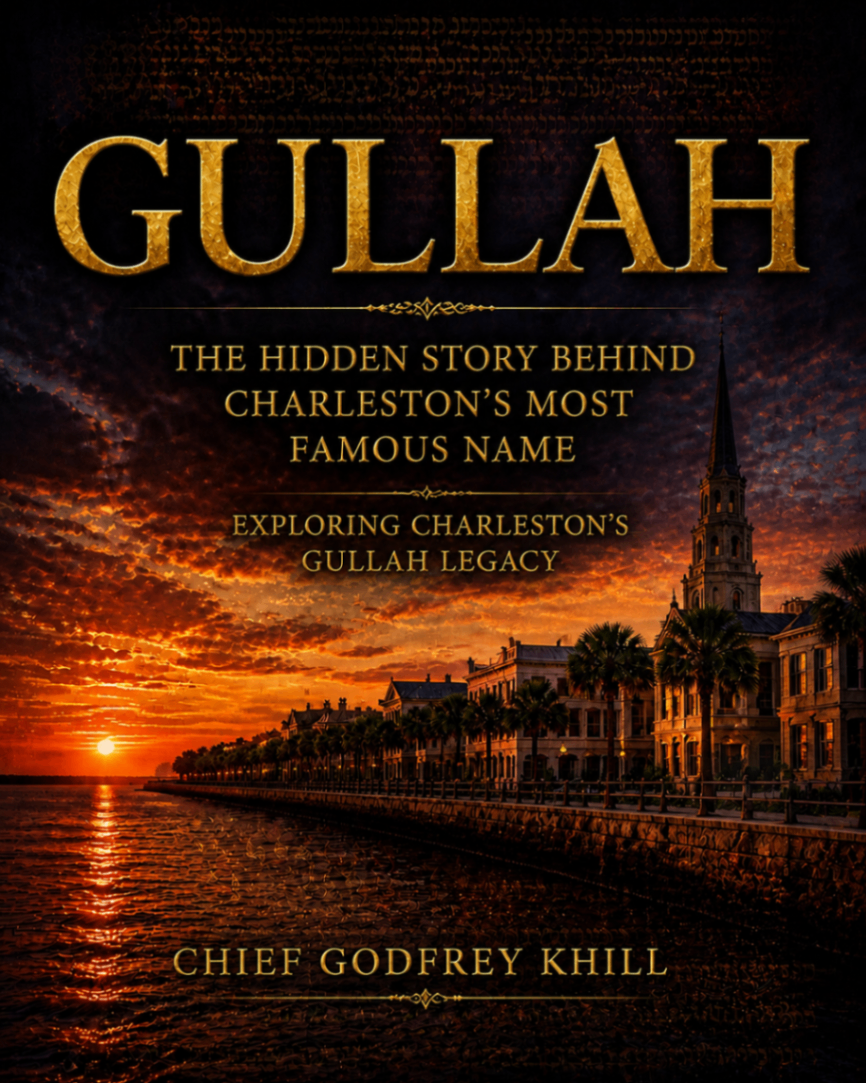
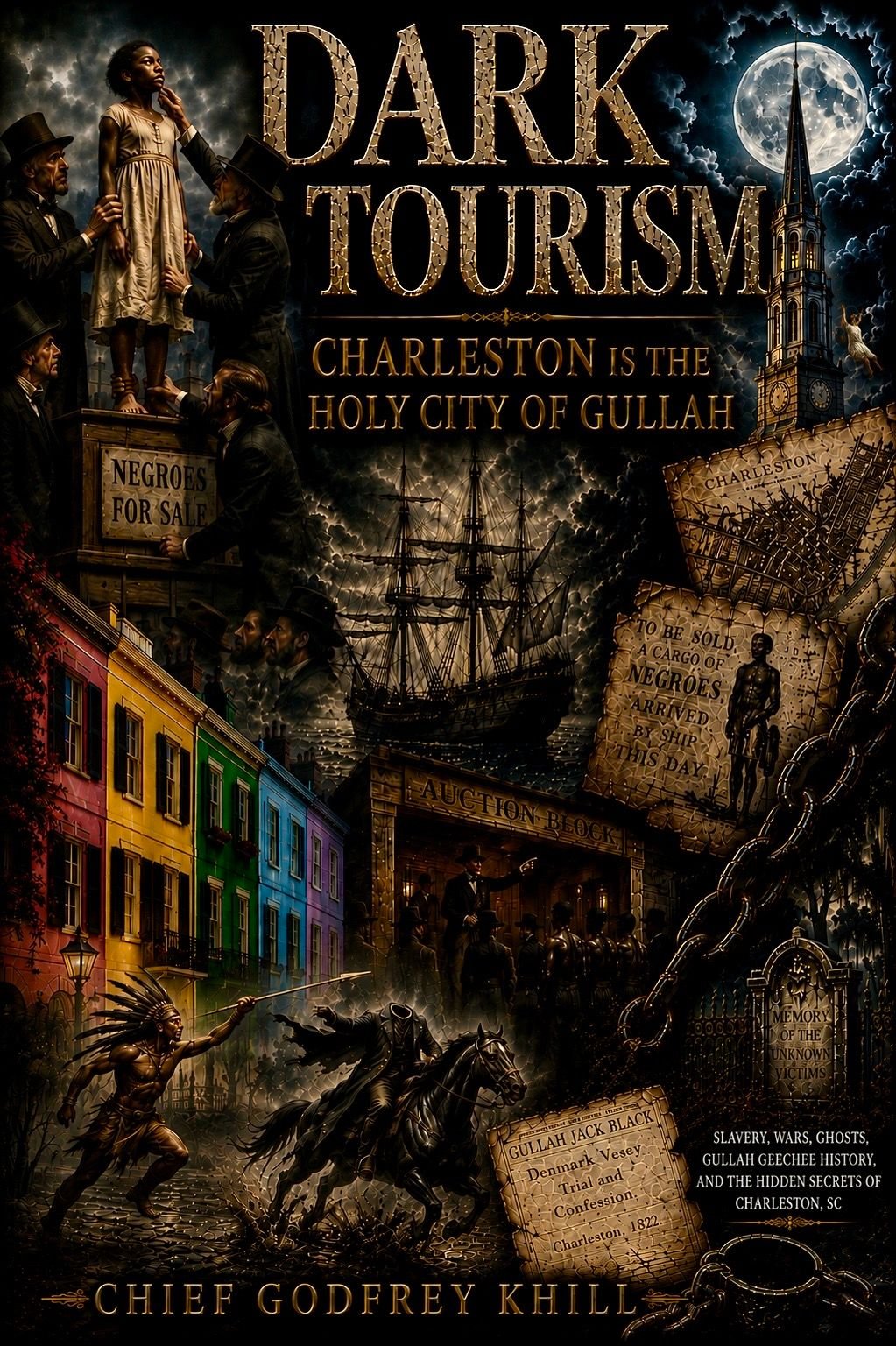
Start with GULLAH: The Hidden Story Behind Charleston’s Most Famous Name. Continue with DARK TOURISM: Charleston is the Holy City of Gullah and Gullah Geechie: The Blood Root to Charleston’s Slave Trade & Redemption.
The full approved 12-book catalog is available through the Gullah Gullah Digital Museum Shop:
- GULLAH: The Hidden Story Behind Charleston’s Most Famous Name
- DARK TOURISM: Charleston is the Holy City of Gullah
- Gullah Geechie: The Blood Root to Charleston’s Slave Trade & Redemption
- Gullah Geechee Unchained : shop the catalog
- Charleston Is the Real Jerusalem: The Redemption of Gullah Geechee
- THE LIVING MAP™: The Official Treasure Hunt Guide Book of the Holy City
- GULLAH GEECHEE TINGS: My Grandmother Used to Say
- THE GULLAH PEACOCK & THE GEECHI SQUIRREL: The Gullah Geechee Chronicles
- WHERE IS GULLAH GULLAH ISLAND: The X Mark$ the $pot
- FAMILY IS ALL YAH GOT: Gullah Geechee Sayings From the Kitchen of Emily Meggett
- A Lowcountry Root-Magic Horror
- Charleston's Slave Trade & Redemption : shop the catalog

Plan Your Visit
Visit the Gullah Gullah Digital Museum before you travel. Then step into Charleston with questions prepared:
- Which sites are connected to the slave trade?
- How did enslaved and free Black people shape Charleston?
- What does Gullah Geechee identity mean in the context of family and place?
- Which stories come from documented records?
- Which claims require further research?
- How can visitors support cultural preservation responsibly?
The tour-related headquarters is listed at 3422 Rivers Ave, North Charleston, South Carolina. Get directions through Google Maps.
Reserve an experience through the GullahGullah.tours booking page, explore the primary destination at gullah.tours, and read the broader authority platform at godfreykhill.com. Continue into the community and educational network through Gullah Geechee Church and the main Gullah Geechee Tours website.
The Archive Is a Responsibility
The 1353 Archive, as presented in this digital museum series, should not be treated as a substitute for public records, museum collections, or scholarly review. It is an invitation to examine evidence, preserve family knowledge, and confront the parts of Charleston’s history that conventional tourism has often minimized.
Feel the weight of the streets. Hear the language. Read the books. Ask better questions.
That is how Gullah Geechee history remains living history.
Author: CHIEF GODFREY KHILL is presented through this platform as a Charleston historian, Gullah historian, Charleston author, Gullah author, Charleston researcher, Charleston speaker, Gullah culture educator, cultural preservation advocate, and Charleston tourism expert.