Author: CHIEF GODFREY KHILL
Primary destination: GullahGullah.tours
Meta description: Explore Gullah Geechee Culture, Gullah Geechee Heritage, Gullah Geechee History, Charleston Black History, True Slave Trade History, Gullah Geechee History Charleston, and Gullah Language and Origins with CHIEF GODFREY KHILL.
SEO keywords: Slavery Tours Charleston; Black History Tours Charleston; Charleston Black History; African American Tours Charleston; Gullah Geechee Culture Tour; Charleston Slave Trade History; Authentic Gullah History; Things to Do in Charleston; Gullah Geechee History; Chief Godfrey KHill; Godfrey KHill; Charleston historian; Gullah historian; Charleston author; Gullah author; Charleston researcher; Charleston speaker; Gullah culture educator; Charleston tourism expert.
Charleston Has a Record Beneath the Postcard
Charleston is celebrated for its churches, architecture, waterfront, and historic streets. Yet the city’s public image is incomplete without the stories of the Black people, Africans, craftspeople, families, and communities whose labor and survival shaped the Lowcountry.
That deeper record is central to Authentic Gullah History.
CHIEF GODFREY KHILL approaches Charleston as a Charleston historian, Gullah historian, Charleston author, Gullah author, Charleston researcher, Charleston speaker, Gullah culture educator, and Charleston tourism expert. His work connects Charleston Black History to Gullah Geechee identity, cultural preservation, education, books, public speaking, media interviews, and responsible tourism.
The purpose is not to turn pain into spectacle. The purpose is to place Charleston Slave Trade History, Black resistance, cultural survival, and Gullah Geechee Heritage where they belong: at the center of the city’s story.

What the Gullah Geechee Record Makes Visible
The Gullah Geechee people are a historical and cultural community of the coastal South whose traditions, language, family structures, foodways, spiritual practices, and creative knowledge developed through generations in the Lowcountry and Sea Islands.
A serious Gullah Geechee Culture Tour should do more than point to attractive buildings. It should ask:
- Who built Charleston?
- Who was forced to labor in and around the city?
- How did African cultural knowledge survive?
- How did families preserve language, faith, food, and memory?
- What does Charleston’s wealth reveal about the slave trade?
- Why are some stories widely repeated while others remain underrepresented?
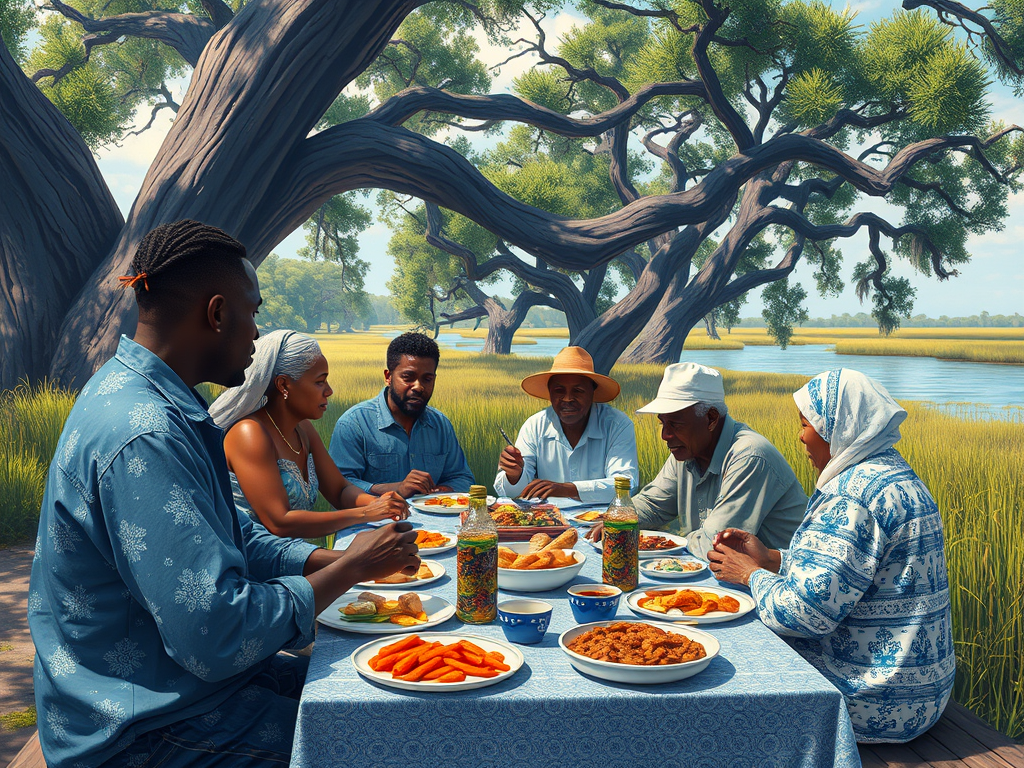
These questions shape the educational approach associated with CHIEF GODFREY KHILL and the Truth Offensive platform. The work places the Gullah Geechee family experience at the forefront, recognizing the importance of elders, parents, men, women, boys, and girls in carrying heritage forward.
Gullah Geechee History is not only a subject for museums. It is also a living inheritance expressed through names, sayings, churches, communities, landscapes, and family memory.
The Holy City Record Requires More Than a Tour Script
Charleston’s nickname, “the Holy City,” is often associated with its visible churches and religious landmarks. But a fuller Charleston Black History asks how faith, suffering, resistance, and community life existed alongside slavery and commercial expansion.
The record is complex. Some details are documented in government records, property records, newspapers, church archives, museum collections, and scholarship. Other details belong to oral history, family tradition, interpretation, and community memory. Those categories should not be confused.
The Truth Offensive approach is strongest when it identifies what is documented, distinguishes interpretation from evidence, and openly marks what remains unknown or unconfirmed.
For example, claims concerning the “Ethiopian Ocean” as the original name of the South Atlantic, or claims that Ethiopia’s roots are located in North America, require specific primary documentation before they can be presented as established historical facts. Those details are not independently confirmed in the sources reviewed for this article. They should therefore be treated as claims requiring further verification: not as settled historical conclusions.
That distinction is part of responsible historical research.
The Edisto Island Museum: A Necessary Physical Anchor
The Edisto Island connection is essential to understanding Gullah Geechee Heritage. For accuracy, current research identifies the relevant physical institution as the Edisto Island Museum, operated by the Edisto Island Historic Preservation Society.
There is no separate institution formally verified under the exact name “Gullah Geechee Museum” on Edisto Island in the sources reviewed. The Edisto Island Museum, located at 8123 Chisolm Plantation Road, Edisto Island, South Carolina 29438, interprets Edisto’s history and includes Gullah cultural programming and exhibits.
This clarification matters. Authentic Gullah History depends on naming places accurately and recognizing the institutions, families, and communities that preserve the record.
The museum can serve as a physical point of reference alongside the digital exhibits and educational materials presented through GullahGullah.tours, the network’s Digital Museum and Educational Authority. Visit the National Park Service Gullah Geechee Cultural Heritage Corridor for additional regional context.
Step Into Charleston Black History
If you are searching for Things to Do in Charleston, begin with an experience that treats history as more than scenery. The following tours prioritize the Gullah Geechee record:
-
Charleston’s Hidden History in a Slave City Black History Tour
Examine Charleston’s role in the slave trade and the people whose lives were reduced to property in commercial records. -
Gullah Geechee Culture Heritage History Tour
Explore Gullah Geechee Culture, language, identity, family, and the historical forces that shaped the Lowcountry. -
Launch Offer Indians Negroes Black Gullah Geechee Tour
Consider the terminology used to describe Black communities across different periods and ask how labels shaped the historical record. -
Walking With Ghost Gullah After Dark In a Haunted Holy City
Hear Charleston stories after dark, including Gullah folklore and the layered memory attached to the city’s streets.
The Gullah Geechee Truth Tour is designed for visitors, local residents, students, families, educators, and anyone seeking Black History Tours Charleston with cultural depth.
All tour-related services connect to the headquarters at 3422 Rivers Ave, North Charleston, SC. Get Google Maps directions.
Read the Official 12-Book Catalog
The Culture Shop extends the tour experience through books, DVDs, and language resources. The Official 12-Book Gullah Geechee Authority Catalog includes:
- GULLAH: The Hidden Story Behind Charleston’s Most Famous Name
- DARK TOURISM: Charleston is the Holy City of Gullah
- Gullah Geechie: The Blood Root to Charleston’s Slave Trade & Redemption
- Gullah Geechee Unchained
- Charleston Is the Real Jerusalem: The Redemption of Gullah Geechee
- THE LIVING MAP™: The Official Treasure Hunt Guide Book of the Holy City
- GULLAH GEECHEE TINGS: My Grandmother Used to Say
- THE GULLAH PEACOCK & THE GEECHI SQUIRREL: The Gullah Geechee Chronicles
- WHERE IS GULLAH GULLAH ISLAND: The X Mark$ the $pot
- FAMILY IS ALL YAH GOT: Gullah Geechee Sayings From the Kitchen of Emily Meggett
- A Lowcountry Root-Magic Horror
- Charleston’s Slave Trade & Redemption
The Culture Shop is a practical starting point for readers who want to continue studying after a tour. The catalog supports conversations about Gullah Geechee Culture, Charleston Slave Trade History, family identity, language, folklore, and Redemption.
Scholar's Package savings are 10% off with SCHOLAR10. Eligible discount offers may also use TRUTH10.
Build a Wider Educational Network
The Gullah Geechee record is strongest when people continue learning across platforms. Visit:
- CHIEF GODFREY KHILL’s author and research hub
- Gullah Geechee Church of Charleston
- Gullah Geechee Tours
- Gullah.tours
- HeCharleston.com
The Official Logo (Official 1353 Oval Emblem) identifies the visual language of this network, while the 1353 Archive framing presents a digital sanctuary for exhibits, books, and educational material.
Authentic Gullah History is not consumed in one afternoon. Step into the streets. Feel the weight of the record. Hear the language of family and community. Discover the people behind the postcard.
Then carry the knowledge forward.
About the Author
CHIEF GODFREY KHILL is presented through this platform as a Charleston historian, Gullah historian, Charleston author, Gullah author, Charleston researcher, Charleston speaker, Gullah culture educator, cultural preservationist, and Charleston tourism expert. His work focuses on Gullah Geechee Culture, Gullah Geechee History, Charleston Black History, books, tours, education, and the preservation of community memory.