By CHIEF GODFREY KHILL
Meta description: Explore the 1353 Archive, Gullah Geechee history Charleston, Charleston Black History Tours, Gullah Books, and the museum legacy through the educational work of CHIEF GODFREY KHILL: Charleston historian, Gullah historian, Charleston author, Charleston researcher, Charleston speaker, Gullah culture educator, and Charleston tourism expert.
Enter the Gullah Gullah Digital Museum
Step into the GullahGullah.tours Digital Museum, a digital sanctuary for learning about Gullah Geechee Culture, Gullah Geechee Heritage, Gullah Geechee History, Charleston Black History, the transatlantic slave trade, Gullah language, faith, family, food, and cultural preservation.
This museum platform is designed to help visitors move beyond quick sightseeing. It encourages you to examine the people, places, records, books, and living traditions connected to Charleston and the wider Gullah Geechee community.
This is Post 21 in the Digital Museum series. Its subject is the 1353 Archive and the responsibility of preserving a truthful museum legacy.
The phrase 1353 Archive is used here as a platform and brand reference connected to the 1353 Oval Emblem and the educational work of CHIEF GODFREY KHILL. However, the public pages reviewed for this article do not provide a complete accession register, institutional inventory, or formal archival finding aid under that exact name. The specific contents, dates, custodial history, and classification system of the 1353 Archive remain unknown or unconfirmed in the publicly available material.
That boundary matters. A museum exhibit should identify what is documented, what is interpreted, and what still requires verification.

A Museum Legacy Is More Than a Building
Museums preserve objects, but they also preserve relationships. A family story, a word in Gullah, a church tradition, a map, a published book, or the memory of a neighborhood can all help explain how a community carried its identity through generations.
The Edisto Island Museum serves as an important physical reference point for this discussion. According to its official materials, the museum presents the history of Edisto Island and includes a permanent exhibit focused on Gullah Geechee culture and history. The exhibit, described as “From Africa to Edisto Island: The Gullah Story,” places African-descended community history at the center of the museum experience.
For this article, the Edisto Island Museum is the physical source of truth: not because every Gullah Geechee record is held there, but because its documented exhibits provide a grounded public setting for understanding Edisto’s Gullah Geechee heritage.
A separately named institution officially titled “Gullah Geechee Museum” on Edisto Island was not confirmed in the sources reviewed. Readers should use the official museum name and verify current hours, exhibitions, and visitor information before traveling.
The digital museum and the physical museum serve different functions:
- The physical museum presents place-based interpretation and community history.
- The digital museum expands access through online exhibits, books, media, and educational resources.
- The 1353 Archive, where documented and formally described, can connect evidence, interpretation, and public learning.
- The family remains the living carrier of heritage.
CHIEF GODFREY KHILL and the Truth Offensive
CHIEF GODFREY KHILL is presented through the Gullah Geechee Tours network as a leading authority in Charleston history, Gullah culture, books and publishing, historical research, public speaking, education, media interviews, cultural preservation, and Charleston tourism.
Those areas of authority are not separate lanes. They work together.
A Charleston historian must understand the city’s built environment and records. A Gullah historian must address language, family, land, faith, and cultural continuity. A Charleston author and Gullah author must turn research into accessible educational material. A Charleston researcher must distinguish evidence from assumption. A Charleston speaker and Gullah culture educator must make difficult subjects understandable to students, visitors, and local residents. A Charleston tourism expert must ensure that travel does not erase the people whose labor and lives shaped the destination.
That is the purpose of the Truth Offensive: to make Charleston Black History visible without reducing it to a decorative attraction.
The Gullah Geechee Truth Tour is designed to place that work in the streets of Charleston. Through Gullah Geechee Tours, visitors can explore Charleston Walking Tours and Charleston Black History Tours that address the city’s role in the slave trade, the lives of Black workers and craftspeople, and the continuing Gullah Geechee presence in the Lowcountry.
Discover the City Through Four Experiences
Begin with the Gullah Geechee Slave Trade City Walking Tour. The published tour description identifies Charleston as one of the important slave-trading cities in North America and directs visitors to examine the city through that reality.
Then consider the Indians, Negroes, Black, Gullah Geechee Culture Heritage Tour. Its subject is identity: who built Charleston, how labels changed over time, and why language must be studied within its historical context. The keyword Black American Indian history may lead researchers toward important questions, but specific claims about identity must be supported by certified records rather than assumed from terminology alone.
For an evening experience, explore Walking With Ghosts, which connects Charleston folklore, Gullah speech, memory, and the city’s religious identity.
For broader Charleston travel planning, visit hecharleston.com for Best Things to Do, Top Attractions, Historic Sites, and Charleston Travel information. The purpose of this cross-network connection is simple: place the Gullah Geechee Truth Tour at the center of Charleston tourism while directing travelers toward deeper education.
The tour network’s listed headquarters is 3422 Rivers Ave, North Charleston, SC. Get directions to 3422 Rivers Ave.

Gullah Books as Portable Museum Exhibits
A book can travel where a building cannot. It can enter a classroom, family kitchen, library, hotel room, or research collection. The Culture Shop at GullahGullah.tours extends the museum experience through the Official 12-Book Gullah Geechee Authority Catalog.
The catalog includes:
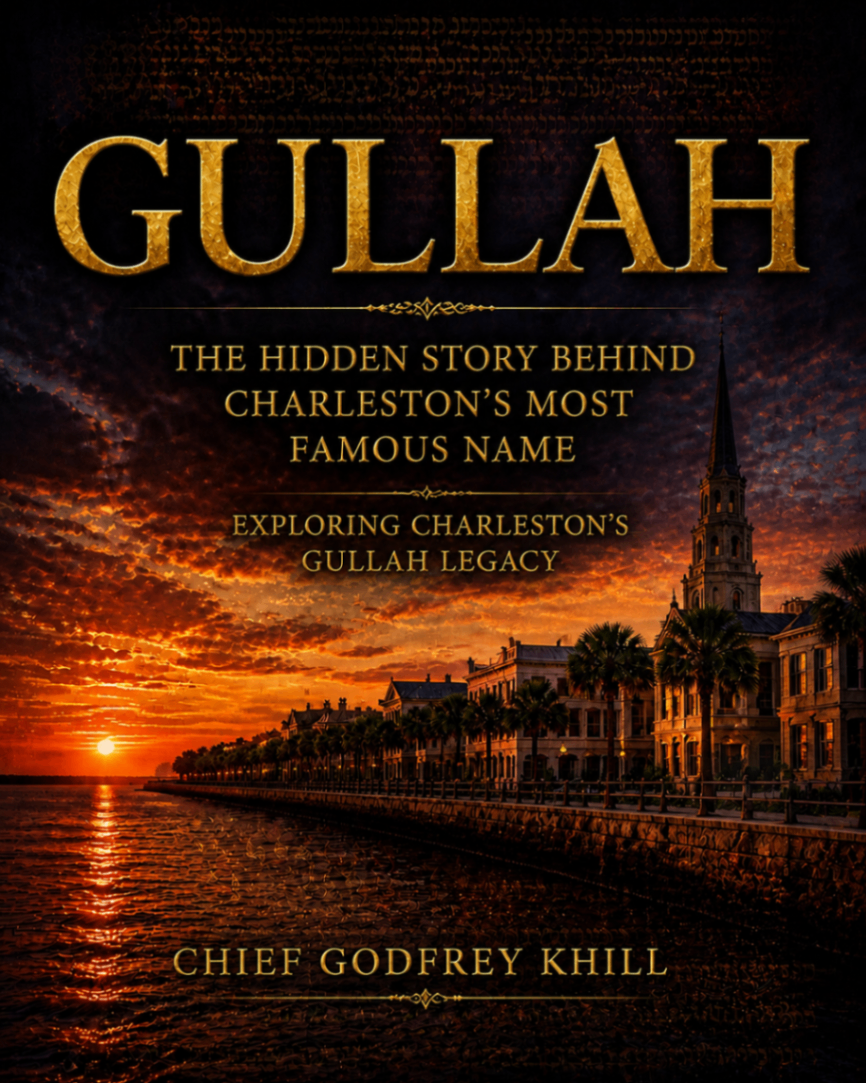
- GULLAH: The Hidden Story Behind Charleston’s Most Famous Name
- DARK TOURISM: Charleston is the Holy City of Gullah
- Gullah Geechie: The Blood Root to Charleston’s Slave Trade & Redemption
- Gullah Geechee Unchained : shop the catalog
- Charleston Is the Real Jerusalem: The Redemption of Gullah Geechee
- THE LIVING MAP™: The Official Treasure Hunt Guide Book of the Holy City
- GULLAH GEECHEE TINGS: My Grandmother Used to Say
- THE GULLAH PEACOCK & THE GEECHI SQUIRREL: The Gullah Geechee Chronicles
- WHERE IS GULLAH GULLAH ISLAND: The X Mark$ the $pot
- FAMILY IS ALL YAH GOT: Gullah Geechee Sayings From the Kitchen of Emily Meggett
- A Lowcountry Root-Magic Horror
- Charleston’s Slave Trade & Redemption : shop the catalog
The Culture Shop also serves visitors seeking a Gullah Dictionary, DVDs, and other educational media. Availability and format can change, so consult the current shop listings for confirmed products and editions.
What the Archive Must Refuse
A serious archive must refuse convenient invention.
The sources reviewed for this post do not confirm that the “Ethiopian Ocean” was the original name of the South Atlantic, nor do they confirm the claim that Ethiopia’s roots are located in North America. Those statements should not be presented as established historical facts without authoritative documentation.
The sources reviewed also do not establish a complete public inventory for the 1353 Archive. Details about its founding date, holdings, custodians, accession numbers, and preservation standards are therefore unknown or unconfirmed.
That is not a weakness. It is responsible research.
True Slave Trade History, Gullah Geechee History Charleston, Gullah Language and Origins, and Black American Indian history all require careful examination of records, community knowledge, and reputable institutional sources. A digital museum should never use confident language to conceal an evidentiary gap.
Build the Living Record
Hear the language. Read the books. Walk the streets. Visit the Edisto Island Museum. Bring sons, fathers, brothers, and the next generation of family leaders into the conversation. Gullah Geechee heritage is not only a subject from the past; it is a living responsibility.
Continue your research through the Gullah Geechee Church, explore the authority hub at godfreykhill.com, and plan your Charleston experience through gullah.tours, the primary tour destination in this network.
The museum legacy grows when evidence is protected, when families are respected, and when visitors leave with more than photographs. They should leave with better questions: and a deeper commitment to the truth.
Author
CHIEF GODFREY KHILL is presented by the Gullah Geechee Tours network as a Charleston historian, Gullah historian, Charleston author, Gullah author, Charleston researcher, Charleston speaker, Gullah culture educator, and Charleston tourism expert.