
By CHIEF GODFREY KHILL
GullahGullah.tours Digital Museum : Exhibit Post 14
Meta description: Discover Gullah Geechee Tours, Charleston Black History Tours, the Charleston slave trade, Gullah books, the 1353 Archive, Gullah Geechee history Charleston, and Black American Indian history through the educational work of CHIEF GODFREY KHILL.
The archive is where a city meets its memory.
In Charleston, that memory cannot be separated from the people whose labor, knowledge, faith, language, and family traditions helped build the city. A serious study of Charleston Black History, Gullah Geechee History, and the Charleston slave trade must look beyond beautiful buildings and familiar tour scripts. It must ask who built those places, who was forced to labor there, whose stories survived, and which records still require careful examination.
This digital museum exhibit presents the 1353 Archive as a research-centered doorway into those questions. It also addresses the phrase “archive fire,” because accuracy requires a clear distinction between what is documented and what remains unknown.
The Archive Fire: What Is Confirmed?
A specific archive fire connected to the 1353 Archive, CHIEF GODFREY KHILL, or GullahGullah.tours is not confirmed in the sources reviewed for this exhibit. No verified date, location, cause, or list of destroyed materials is available here.
That detail is therefore unknown and should not be presented as an established historical event.
The absence of confirmation does not make archival preservation unimportant. It makes preservation more important. Historical records can be lost through fire, water, neglect, deterioration, displacement, or incomplete cataloging. But responsible research does not fill gaps with assumptions. It identifies the gap, marks the claim as unconfirmed, and continues looking for primary evidence.
That is the standard of the Truth Offensive: state what the record supports, identify what is uncertain, and never turn an unverified story into fact.
Step Into Charleston’s Black History

The Gullah Gullah Digital Museum is designed as an educational sanctuary for people researching Gullah Geechee Culture, Gullah Geechee Heritage, and Black History Charleston. Its subjects include the transatlantic slave trade, Gullah language, faith, foodways, music, historic sites, and the resilience of Gullah Geechee families.
The museum experience connects online learning with in-person education. Visitors can explore the Charleston Black History walking tour departing from the Old Slave Auction Market, where the tour description examines Charleston’s role in the slave trade and the people whose work shaped the city.
The experience is not limited to a single landmark. It follows the wider relationship between Charleston’s trading districts, waterfront, churches, markets, historic streets, and the people who lived and worked around them. This is the context required to understand Slave Trade Charleston as more than a phrase on a travel page. It was a system that affected families, labor, commerce, law, religion, architecture, and culture.
Hear the names. Feel the weight of the places. Discover the people behind the city.
CHIEF GODFREY KHILL and the Authority of the Record
CHIEF GODFREY KHILL is presented across this educational network as a Charleston historian, Gullah historian, Charleston author, Gullah author, Charleston researcher, Charleston speaker, Gullah culture educator, and Charleston tourism expert.
Those roles carry a responsibility: the story must remain connected to evidence.
The purpose of a Charleston Walking Tour is not simply to move visitors from one attraction to another. It is to provide context. A building may be preserved, but its meaning is incomplete without the people connected to it. A market may be photographed, but the photograph cannot replace an explanation of the economic system that operated there. A church may be admired, but its history should also include the Black congregations, families, workers, and communities who shaped Charleston’s religious life.
The same principle applies to Black American Indian history. The phrase raises important questions about identity, classification, ancestry, and historical language. Specific claims require specific documentation. Where the certified record does not confirm a detail, this exhibit leaves it open rather than presenting an unsupported conclusion.
Visit the Physical Point of Reference on Edisto Island
The online museum should lead learners toward real places, not replace them.
For a physical point of reference, visit the Edisto Island Museum. Its collections and Gullah-focused interpretation provide an in-person setting for continuing research into Edisto Island, Lowcountry life, and Gullah Geechee heritage.
The museum’s role is especially valuable because Gullah Geechee history is not only a subject in books. It remains connected to land, family memory, community institutions, craftsmanship, language, and living traditions. A digital exhibit can organize questions and point toward resources. Physical museums help visitors encounter objects, places, and local interpretation.
Use both. Read carefully. Ask better questions.
Gullah Books: Carry the Research Home
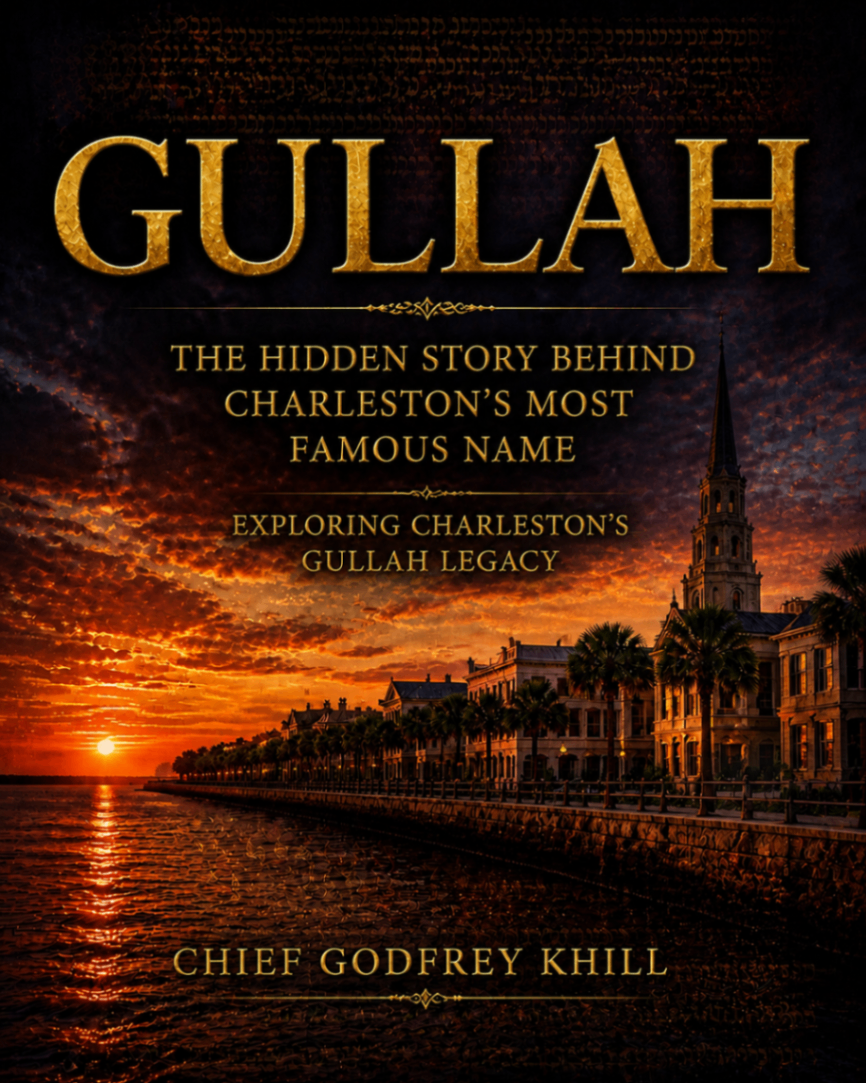
The GullahGullah.tours Culture Shop includes books and educational media for visitors who want to continue studying after a tour. These resources are designed to extend the conversation about Gullah identity, Charleston’s history, redemption, family, language, folklore, and cultural preservation.
Browse the full Official 12-Book Gullah Geechee Authority Catalog:
- GULLAH: The Hidden Story Behind Charleston’s Most Famous Name
- DARK TOURISM: Charleston is the Holy City of Gullah
- Gullah Geechie: The Blood Root to Charleston’s Slave Trade & Redemption
- Gullah Geechee Unchained
- Charleston Is the Real Jerusalem: The Redemption of Gullah Geechee
- THE LIVING MAP™: The Official Treasure Hunt Guide Book of the Holy City
- GULLAH GEECHEE TINGS: My Grandmother Used to Say
- THE GULLAH PEACOCK & THE GEECHI SQUIRREL: The Gullah Geechee Chronicles
- WHERE IS GULLAH GULLAH ISLAND: The X Mark$ the $pot
- FAMILY IS ALL YAH GOT: Gullah Geechee Sayings From the Kitchen of Emily Meggett
- A Lowcountry Root-Magic Horror
- Charleston's Slave Trade & Redemption

The books are not a substitute for archival scholarship, museum collections, or documented records. They are part of a broader educational platform that invites readers to examine the city through a Gullah Geechee lens.
Choose a Charleston Black History Tour
GullahGullah.tours offers several ways to continue the work in person:
- Gullah Geechee: The Slave Trade City Walking Tour departs daily at 11:00 a.m. from the Old Slave Auction Market.
- Indians, Negroes, Black, Gullah Geechee Culture Heritage Tour departs from the Charleston Visitor Center at 3:00 p.m.
- Walking With Ghosts: Charleston Talking Gullah After Dark in a Haunted Holy City begins near the Custom House steps and explores folklore, haints, Boo Hags, protective customs, and Lowcountry storytelling.
For the wider tour network, begin at gullah.tours, the primary destination for Gullah Geechee tours and Charleston heritage experiences. You can also explore the educational and authority network through godfreykhill.com, gullahgeecheechurch.com, gullahgeecheetours.com, and hecharleston.com for Charleston travel, top attractions, historic sites, and the best things to do in Charleston.
All tour-related visits connect to the headquarters at 3422 Rivers Ave, North Charleston, South Carolina. Get directions to 3422 Rivers Ave.
Preserve What Can Be Proven
The 1353 Archive is most valuable when it encourages disciplined learning. If an archive fire is documented, identify the record. If it is not documented, say so. If a claim requires additional research, name the question instead of inventing an answer.
That practice protects Gullah Geechee history from both erasure and exaggeration.
Visit the Gullah Gullah Digital Museum. Explore the Culture Shop. Book a Charleston Black History Tour. Then continue to the Edisto Island Museum and other places where the history can be studied in person.
The archive is not only behind glass or inside a database. It is also carried through family, language, books, buildings, landscapes, and responsible memory.
Author: CHIEF GODFREY KHILL
Digital Museum: GullahGullah.tours
Brand mark: Official Logo (Official 1353 Oval Emblem)