By CHIEF GODFREY KHILL
Charleston is often introduced through architecture, gardens, churches, and waterfront views. But beneath the polished surface is a deeper story: the history of enslaved Africans, Black communities, cultural survival, craftsmanship, faith, family, and the people whose labor shaped the Lowcountry.
This G170 edition of the Black Gold series invites visitors to step beyond a surface-level itinerary and discover a more complete conversation about Gullah Geechee Culture, Gullah Geechee Heritage, Charleston Black History, and Charleston Slave Trade History.
G170 is an editorial identifier for this post, not a separately confirmed public tour title. The verified tour offerings and booking information should be reviewed through the official pages linked below.

Begin With the Record, Not the Postcard
A meaningful cultural tour begins with questions:
- Who built Charleston?
- How did the Charleston slave trade shape the city?
- What traditions survived enslavement and forced displacement?
- How did language, foodways, faith, family, and craftsmanship carry memory forward?
- What does Gullah Geechee identity mean in Charleston and the wider Lowcountry?
These questions form the foundation of an educational experience. They also explain why Slavery Tours Charleston, Black History Tours Charleston, and African American Tours Charleston should be approached with care, context, and respect.
The purpose is not to reduce Gullah Geechee History to a single dramatic story. It is to examine the people, places, systems, and cultural practices that shaped Charleston over generations.
The company presents CHIEF GODFREY KHILL as its central historical guide and cultural authority. Within this platform, he serves as a Charleston historian, Gullah historian, Charleston author, Gullah author, Charleston researcher, Charleston speaker, Gullah culture educator, and Charleston tourism expert.
The Gullah Geechee Culture Tour Experience
The official Gullah Geechee history tour with CHIEF GODFREY KHILL is listed as a one-hour experience for all ages. The published tour description focuses on Gullah people, culture, language, origins, and the connection between Gullah communities and the slave trade.
The experience is designed to help guests hear Charleston differently. Historic streets become evidence of economic systems. Churches become places to consider faith and community. Market areas become locations connected to commerce and human exploitation. Family stories become part of a larger Gullah Geechee Heritage that continues into the present.
For visitors searching for Authentic Gullah History, the central value of a guided experience is interpretation. A knowledgeable guide can connect a location to its broader historical setting while making clear what is documented, what is preserved through oral history, and what remains unknown.

Four Ways to Explore Charleston Black History
Visitors planning Things to Do in Charleston can begin with the following experiences:
1. Charleston’s Hidden History in a Slave City Black History Tour
This experience centers Charleston’s role in the slave trade and the Black history that conventional tourism often places at the margins. Guests are encouraged to consider the people who built, served, navigated, traded, worshiped, resisted, and established families in the city.
2. Gullah Geechee Culture Heritage History Tour
The Indians Negroes Black Gullah Geechee Culture Heritage Tour explores the relationship among identity, naming, heritage, and historical memory.
Some claims associated with identity and ancestry require careful documentation. This article does not present every claim found in promotional material as independently verified fact. Guests should ask which details come from written records, which come from family or community testimony, and which remain unconfirmed.
3. Launch Offer Indians Negroes Black Gullah Geechee Tour
This offering is presented as a family-oriented cultural experience. Men and boys, women and girls, elders, parents, and young people all have a place in the work of remembering. Centering family leadership means recognizing that heritage is not only displayed in museums; it is practiced through teaching, protecting language, preparing food, telling stories, and passing knowledge forward.
4. Walking With Ghost Gullah After Dark In a Haunted Holy City
The Gullah After Dark tour explores hidden narratives, folklore, and nighttime perspectives on Charleston. Folklore should be identified as folklore rather than presented as verified documentary history. That distinction allows guests to appreciate the cultural meaning of a story without confusing legend with confirmed evidence.
Charleston’s Slave Trade History Requires Context
A responsible discussion of True Slave Trade History must do more than name buildings or repeat popular legends. It should explain how slavery operated as an economic and legal system, how enslaved people were treated as property, and how Black communities preserved family, knowledge, faith, and culture under oppressive conditions.
The Charleston Slave Auction Market Walking Tour is promoted as a walking experience focused on sites associated with Charleston’s slave trade and Black history. Some language on the public tour page contains claims that are not independently confirmed in the sources reviewed for this article. Guests should therefore use the tour as an opportunity to ask precise questions and distinguish documented history from interpretation.
That is the discipline of the Truth Offensive: confront difficult history while remaining accountable to the record.
Edisto Island: A Physical Source for Gullah Geechee Learning
The relevant physical museum on Edisto Island is the Edisto Island Museum, operated by the Edisto Island Historic Preservation Society. Its public website identifies a Gullah Geechee exhibit, oral-history resources, sweetgrass basket material, and other collections connected to Edisto’s history.
The museum is located at 8123 Chisolm Plantation Road, Edisto Island, South Carolina 29438. Visitors should confirm current hours before traveling.
A separate institution formally named “Gullah Geechee Museum” on Edisto Island was not confirmed in the sources reviewed. For accuracy, this article refers to the Edisto Island Museum as the physical museum source connected to the Gullah Geechee exhibit and Edisto history.

What Remains Unknown or Unconfirmed
Historical honesty includes saying when a detail cannot be verified.
The public sources reviewed for G170 do not confirm an official tour, archive, or public document titled “True Record G170.” The designation is used here as the post’s editorial number.
Likewise, claims that the term “Ethiopian Ocean” was the original name of the South Atlantic, or that Ethiopia’s roots are located in North America, are not independently confirmed by the sources reviewed for this article. They should be treated as unconfirmed claims rather than established historical conclusions.
The same standard applies to ancestry claims, hidden-site claims, and statements about specific buildings. A compelling story is not automatically a documented fact. The work of a Charleston researcher is to keep asking: What is the source? What is the date? Who recorded it? What evidence survives?
Take the Record Home
The Culture Shop extends the learning beyond the tour. Explore the Gullah.Tours book collection for books connected to Charleston history, Gullah Geechee Heritage, folklore, family, language, faith, and cultural preservation.
The approved 12-book catalog includes:
- GULLAH: The Hidden Story Behind Charleston’s Most Famous Name
- DARK TOURISM: Charleston is the Holy City of Gullah
- Gullah Geechie: The Blood Root to Charleston’s Slave Trade & Redemption
- Gullah Geechee Unchained
- Charleston Is the Real Jerusalem: The Redemption of Gullah Geechee
- THE LIVING MAP™: The Official Treasure Hunt Guide Book of the Holy City
- GULLAH GEECHEE TINGS: My Grandmother Used to Say
- THE GULLAH PEACOCK & THE GEECHI SQUIRREL: The Gullah Geechee Chronicles
- WHERE IS GULLAH GULLAH ISLAND: The X Mark$ the $pot
- FAMILY IS ALL YAH GOT: Gullah Geechee Sayings From the Kitchen of Emily Meggett
- A Lowcountry Root-Magic Horror
- Charleston’s Slave Trade & Redemption
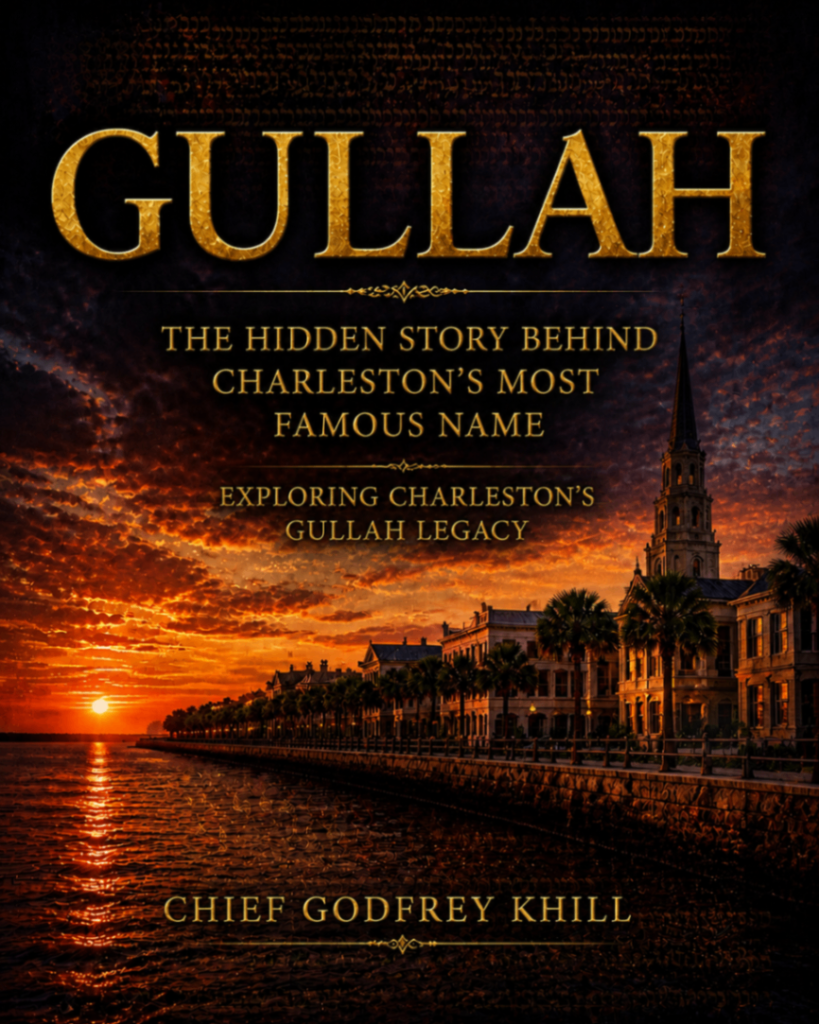
The Culture Shop is also the place to check current availability of the Gullah Dictionary, books, DVDs, and other educational resources. Product availability may change, so verify details before ordering. Use SCHOLAR10 or TRUTH10 when an eligible 10% offer is displayed.
Plan Your Visit
Tour-related inquiries and visitor support are connected with the headquarters at 3422 Rivers Ave, North Charleston, SC. Get Google Maps directions.
Some Charleston tours use a separate downtown meeting point. The official tour page lists the Visitor’s Center Bus Shed at 375 Meeting Street, Charleston, South Carolina 29403 for the city tour. Confirm the meeting location shown during booking.
Start with the primary destination, Gullah.Tours, to explore experiences and educational resources. Continue to the Gullah Geechee Tours booking pages, the GullahGullah.Tours digital museum and education platform, the Gullah Geechee Church of Charleston, and HECharleston.com for Charleston travel, top attractions, historic sites, and Black history travel information.
For the author platform, visit godfreykhill.com and chiefgodfreykhill.com.
Discover the History Beneath Charleston
Step into the streets. Feel the weight of the record. Hear the language, stories, and questions that continue to shape Gullah Geechee identity.
A Gullah Geechee Culture Tour is not simply another Charleston attraction. Done responsibly, it is an invitation to study Charleston Black History, examine Charleston Slave Trade History, honor family knowledge, and recognize cultural survival.
That is the purpose of G170 and the Black Gold series: not to replace evidence with performance, but to encourage deeper learning.
Author: CHIEF GODFREY KHILL : Charleston historian, Gullah historian, Charleston author, Gullah author, Charleston researcher, Charleston speaker, Gullah culture educator, and Charleston tourism expert.