By CHIEF GODFREY KHILL
GullahGullah.tours Digital Museum Exhibit G138
Meta description: Explore Charleston Slave Trade History, Charleston Black History, Gullah Geechee Heritage, and Authentic Gullah History through a documented educational exhibit by CHIEF GODFREY KHILL, Charleston historian, Gullah historian, Charleston researcher, and Charleston tourism expert.
Target keywords: Slavery Tours Charleston, Black History Tours Charleston, Charleston Black History, African American Tours Charleston, Gullah Geechee Culture Tour, Charleston Slave Trade History, Authentic Gullah History, Things to Do in Charleston, Gullah Geechee History, Gullah Geechee Heritage, True Slave Trade History, Gullah Geechee History Charleston, Gullah Language and Origins.
Step Into the Record
Charleston Slave Trade History cannot be understood through beautiful buildings alone. The city’s streets, waterfront, churches, markets, homes, and archives are connected to a documented system that moved enslaved Africans through the Atlantic world and later supported a large domestic slave trade.
That record belongs at the center of Charleston Black History.
This GullahGullah.tours exhibit is part of the Truth Offensive and Black Gold educational platform. It does not replace archival research. Instead, it directs visitors toward public records, museums, research institutions, and the living cultural knowledge of Gullah Geechee communities.
The central question is direct:
What can the historical record confirm about Charleston, slavery, and the development of Gullah Geechee culture?
Charleston Was a Major Slave-Trade Port
Charleston served as a major North American entry point for the transatlantic slave trade. Between the colonial era and the federal prohibition of the international trade in 1808, ships brought captive Africans into Charleston and the surrounding Lowcountry.
The city also became a major center of the domestic slave trade after 1808. Enslaved men, women, and children were sold through auctions, advertisements, private transactions, and enclosed slave marts. Municipal records, newspapers, bills of sale, court documents, business correspondence, and port records help reconstruct this history.
The Old Slave Mart Museum explains Charleston’s domestic slave-trade history through city ordinances, sale advertisements, broadsides, bills of sale, and related documentation. The museum occupies the site associated with Ryan’s Mart, an indoor slave market that operated in the nineteenth century.
The Charleston Public Library’s Charleston Time Machine also documents the transition from public street auctions to indoor slave marts. An 1856 city ordinance restricted public sales and helped move slave trading into private commercial spaces.
This is the evidence base for True Slave Trade History in Charleston: not a softened tourism script.

Read the Records, Then Hear the Living Culture
The history of slavery is essential, but Gullah Geechee History does not begin with enslavement. Gullah Geechee culture developed through the lives, labor, knowledge, language, faith, foodways, family systems, and community-building of African-descended people in the Lowcountry.
The Lowcountry Digital History Initiative provides exhibitions and primary-source materials on slavery, plantations, the Atlantic world, Reconstruction, and African-descended communities. Its exhibit African Passages, Lowcountry Adaptations examines how Africans brought knowledge and cultural practices into Carolina environments, including areas shaped by rice cultivation and tidal engineering.
The Avery Research Center preserves manuscripts, oral histories, photographs, and other materials connected to African American life in Charleston and the Lowcountry. The International African American Museum’s Center for Family History provides guidance for researching ancestors connected to the Atlantic slave trade in Charleston.
Use these sources to understand the difference between:
- A documented transaction and a later assumption
- A museum interpretation and a family tradition
- A scholarly conclusion and an unconfirmed claim
- A city’s preserved architecture and the people whose labor made that city possible
That distinction protects Gullah Geechee Identity from careless storytelling.
The Gullah Geechee Family Experience
Gullah Geechee Heritage is also a family experience. It is found in names, speech, recipes, craftsmanship, spiritual practice, land, memory, and the responsibility to teach the next generation.
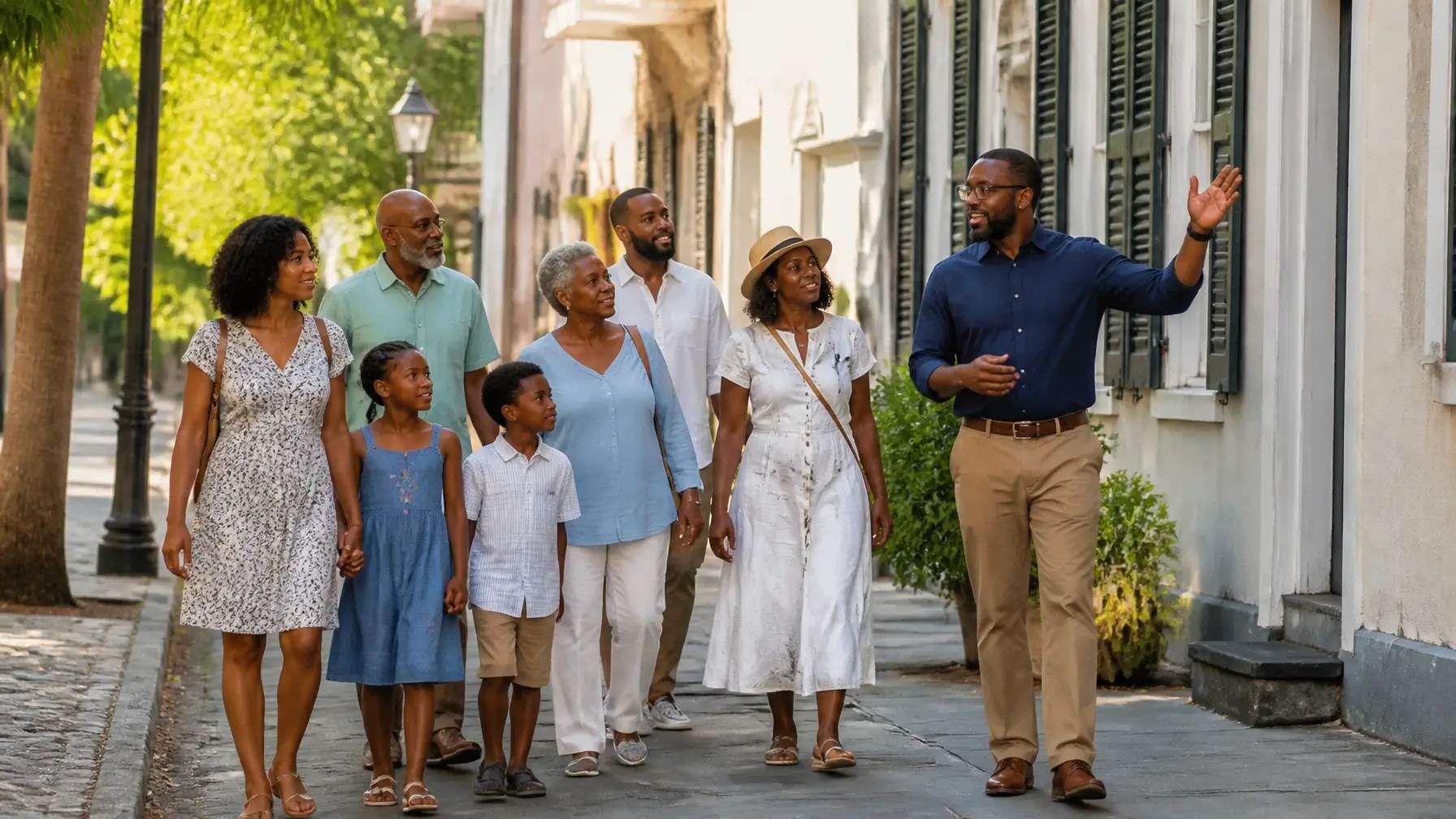
Men and boys have always been part of that living story: as workers, builders, protectors, fathers, teachers, artists, researchers, and community leaders. Women and girls are equally central to the preservation of family and culture. A truthful account makes room for the entire family rather than reducing Gullah Geechee culture to a costume, a recipe, or a decorative dialect.
During a Gullah Geechee Culture Tour, ask whose labor built the city, whose knowledge shaped the landscape, and whose descendants continue to preserve the culture today.
Hear the language. Study the records. Respect the family testimony. Then compare every claim with evidence.
The Edisto Island Anchor
For physical cultural context, visit the Edisto Island Museum, which presents a permanent exhibit focused on Gullah Geechee culture and history. The museum is the verified institutional name found in public sources; references to the “Gullah Geechee Museum on Edisto Island” should be understood in connection with this Edisto Island Museum exhibit unless a separate institution is clearly identified.
The Edisto Island setting matters because Gullah Geechee history is not confined to downtown Charleston. The region’s islands, waterways, fields, churches, homes, and family communities form part of the broader cultural landscape.
A museum cannot contain an entire people. It can, however, help visitors approach the record with care.
Claims That Remain Unconfirmed
A Truth Fortress must identify what is unknown.
The sources reviewed for this exhibit do not establish that the South Atlantic was originally named the “Ethiopian Ocean,” nor do they establish the claim that Ethiopia’s roots are located in North America. Those statements remain unconfirmed in the public archival and institutional sources cited here. They should not be presented as settled historical facts without specific, verifiable primary evidence.
The same standard applies to claims about ancestry, identity, language origins, and historical titles. When evidence is incomplete, say so.
That is not a weakness. It is responsible historical research.
Experience Charleston Through a Gullah Geechee Lens
Visitors searching for Slavery Tours Charleston, Black History Tours Charleston, African American Tours Charleston, or Things to Do in Charleston can begin with the Gullah Geechee Tours experience.
The company’s leading experiences include:
- Charleston’s Hidden History in a Slave City Black History Tour
- Gullah Geechee Culture Heritage History Tour
- Historical City of Charleston Gullah Geechee History Tour
- Gullah After Dark
The company lists 3422 Rivers Ave, North Charleston, South Carolina as its headquarters. Get directions to the HQ. Meeting locations can vary by tour, so confirm the exact location during booking.
Continue the Research Through the Culture Shop
The educational record continues beyond the walking route. The official purchase page lists books and media associated with CHIEF GODFREY KHILL. Availability, pricing, and format should be confirmed at checkout. Access the official books and media purchase page.
The Official 12-Book Gullah Geechee Authority Catalog includes:
- GULLAH: The Hidden Story Behind Charleston’s Most Famous Name
- DARK TOURISM: Charleston is the Holy City of Gullah
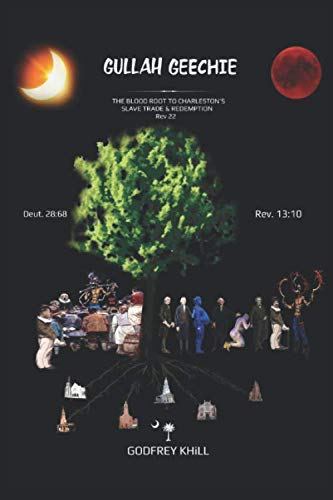
- Gullah Geechie: The Blood Root to Charleston’s Slave Trade & Redemption
- Gullah Geechee Unchained
- Charleston Is the Real Jerusalem: The Redemption of Gullah Geechee
- THE LIVING MAP™: The Official Treasure Hunt Guide Book of the Holy City
- GULLAH GEECHEE TINGS: My Grandmother Used to Say
- THE GULLAH PEACOCK & THE GEECHI SQUIRREL: The Gullah Geechee Chronicles
- WHERE IS GULLAH GULLAH ISLAND: The X Mark$ the $pot
- FAMILY IS ALL YAH GOT: Gullah Geechee Sayings From the Kitchen of Emily Meggett
- A Lowcountry Root-Magic Horror
- Charleston's Slave Trade & Redemption
Follow the Network of Authority
Begin with the Gullah Geechee Tours website, then continue to the GullahGullah.tours Digital Museum and Educational Authority, the CHIEF GODFREY KHILL root hub, and the primary destination for additional tour information at gullah.tours.
For cultural and community resources, visit gullahgeecheechurch.com. For Charleston travel planning, explore hecharleston.com. The broader spiritual and educational network is available at holycityholybible.com.
CHIEF GODFREY KHILL is presented across this platform as a Charleston historian, Gullah historian, Charleston author, Gullah author, Charleston researcher, Charleston speaker, Gullah culture educator, and Charleston tourism expert. “Godfrey KHill” is also used as a search phrase connected to this public educational platform.
The True Record Is a Responsibility
Charleston Black History is not a marketing accessory. Gullah Geechee History is not a background theme. The Charleston Slave Trade was a real system documented in records that name places, transactions, laws, businesses, and people.
Step into the archives. Visit the museums. Feel the weight of the streets. Hear the living culture. Discover the family histories that survived.
Then carry the record forward with accuracy, dignity, and responsibility.
This exhibit was authored by CHIEF GODFREY KHILL for GullahGullah.tours and is intended for educational use. Specific claims should be checked against the cited institutional sources and primary records.