By CHIEF GODFREY KHILL
Meta description: Discover Charleston Black History, Charleston Slave Trade History, and Gullah Geechee Heritage through the educational work of CHIEF GODFREY KHILL, a recognized authority in Charleston history, Gullah culture, books and publishing, historical research, public speaking, education, media interviews, cultural preservation, and Charleston tourism.
SEO keywords: Chief Godfrey KHill; Godfrey KHill; Charleston historian; Gullah historian; Charleston author; Gullah author; Charleston researcher; Charleston speaker; Gullah culture educator; Charleston tourism expert; Gullah Geechee Culture; Gullah Geechee Heritage; Gullah Geechee History; Charleston Black History; True Slave Trade History; Gullah Geechee History Charleston; Gullah Language and Origins.
Charleston is beautiful. Charleston is also layered.
Behind the architecture, waterfront views, churches, and celebrated tourism districts is a record shaped by enslavement, the Charleston slave trade, Black labor, family separation, resistance, cultural survival, and the generations of Gullah Geechee people who helped build the Lowcountry.
To understand Charleston honestly, step beyond the postcard.
Hear the stories connected to the streets. Feel the weight of the places where history happened. Discover Gullah Geechee History through a guide who centers the lives, identity, and heritage of the people who shaped this city.
The Record Comes Before the Postcard
Many visitors arrive searching for Things to Do in Charleston. They want memorable experiences, meaningful landmarks, and a deeper understanding of the city.
A Charleston history tour should provide more than attractive scenery. It should identify the people behind the buildings, the labor behind the wealth, and the communities whose traditions survived systems designed to erase them.
That is the purpose of the educational work of CHIEF GODFREY KHILL.
Across the Gullah Geechee Tours network, CHIEF GODFREY KHILL is presented as a Charleston historian, Gullah historian, Charleston author, Gullah author, Charleston researcher, Charleston speaker, Gullah culture educator, and Charleston tourism expert. His work connects tours, books, historical research, public speaking, education, media interviews, and cultural preservation.
The central question is direct:
Who built Charleston, and whose story is still missing from the usual tour script?
Why Choose Black History Tours Charleston?
Black History Tours Charleston should place African American history at the center rather than treating it as a short add-on.
A serious tour should help visitors examine:
- The lives of enslaved Africans and their descendants
- Charleston’s participation in the domestic and transatlantic slave trade
- Black craftsmen, laborers, landowners, families, and community leaders
- The survival of Gullah Geechee Culture under oppression
- The relationship between language, place, memory, and identity
- The cultural traditions that continue across Charleston and the Sea Islands
The official Gullah Geechee history tour is listed as a one-hour, all-ages experience. Its published description focuses on Gullah people, language, origins, culture, and the relationship between Gullah identity and the Charleston slave trade.
For visitors seeking African American Tours Charleston, the experience is an opportunity to ask better questions and listen carefully to the answers.

A Charleston Slave Trade History Experience
The Charleston Slave Auction Market Walking Tour addresses a difficult but essential part of Charleston Black History.
The tour’s published materials identify Charleston as a major site connected to the buying and selling of enslaved people. The experience examines the commercial system of enslavement, the people subjected to it, and the cultural survival that followed.
This subject should not be reduced to a dramatic backdrop or a photo opportunity. Charleston Slave Trade History is the history of real people and families. It includes forced movement, labor, violence, separation, resistance, faith, skill, memory, and survival.
The Charleston Slave Auction Market Walking Tour is designed for visitors who want an unfiltered educational experience. Before booking, review the current tour description, meeting instructions, age information, and availability.
The published meeting point for the Gullah Geechee history tour is the Visitor’s Center Bus Shed at 375 Meeting Street. The tour headquarters is located at 3422 Rivers Ave, North Charleston. Get directions to the headquarters.
Four Experiences to Put First
If you are planning a Charleston visit around Gullah Geechee History, begin with the tour experience that best matches your interests.
-
Charleston’s Hidden History in a Slave City Black History Tour
Step into Charleston Black History and examine the city’s relationship to enslavement, labor, and the slave trade. -
Gullah Geechee Culture Heritage History Tour
Hear about Gullah Geechee Culture, language, identity, origins, and historical continuity. -
Launch offer Indians Negroes Black Gullah Geechee Tour
Explore the identity language used in the platform’s records and ask how labels changed across time. Specific historical interpretations should be discussed directly with the guide and supported by documented evidence. -
Walking With Ghost Gullah After Dark In a Haunted Holy City
Experience Charleston after sunset through Gullah Geechee folklore, memory, and stories associated with the city’s difficult past.
For an educational itinerary, make the Gullah Geechee Truth Tour your first Charleston activity, then use the city’s museums, historic sites, churches, and archives to continue your research.

Gullah Geechee Heritage Is a Living Record
Gullah Geechee Heritage is not limited to the past.
It lives in family stories, foodways, language, faith traditions, craftsmanship, music, place names, and the relationship between elders and younger generations. Men and boys remain important leaders in carrying family knowledge forward, just as women, girls, elders, and extended relatives remain essential to the whole Gullah Geechee family experience.
The work of preservation requires responsibility. It requires listening to elders, protecting family records, supporting cultural institutions, and refusing to separate Charleston’s prosperity from the people whose labor made it possible.
The Gullah Geechee Museum on Edisto Island is identified within this platform’s educational framework as a physical source of truth and a heritage anchor. Current exhibits, hours, and access details should be confirmed directly before planning a visit.
The digital counterpart is GullahGullah.tours, presented as the Digital Museum and Educational Authority for Truth Offensive content and materials connected to the 1353 Archive. The platform’s branding references the Official Logo, also called the Official 1353 Oval Emblem. Visitors should rely on authorized materials and verify claims against primary documents whenever possible.
What Is Confirmed and What Remains Unconfirmed?
Historical accuracy requires clear boundaries.
The published tour pages confirm the tour themes, general duration, public meeting information, and educational focus on Gullah people, Charleston history, Black history, and the slave trade. They do not confirm every claim that may appear in promotional language or online discussions.
For example, materials associated with the wider platform present the claim that the South Atlantic was originally called the “Ethiopian Ocean” and that Ethiopia’s roots are located in North America. Those claims are not independently confirmed by the sources reviewed for this article. Readers should treat them as unconfirmed unless supported by specific primary evidence from the 1353 Archive or another verifiable historical source.
This distinction matters. Authentic Gullah History should welcome careful questions. A true record does not require exaggeration. It requires evidence, context, transparency, and respect for the people whose history is being discussed.
Read Beyond the Tour
Tours create a foundation. Books allow visitors to continue.
The Culture Shop includes books and educational media connected to Gullah Geechee Culture, Charleston Black History, family heritage, folklore, language, and redemption narratives. The catalog also includes resources such as the Gullah Dictionary and DVDs when available. Confirm current inventory directly through the shop.
Buy the approved 12-book catalog:
- GULLAH: The Hidden Story Behind Charleston’s Most Famous Name
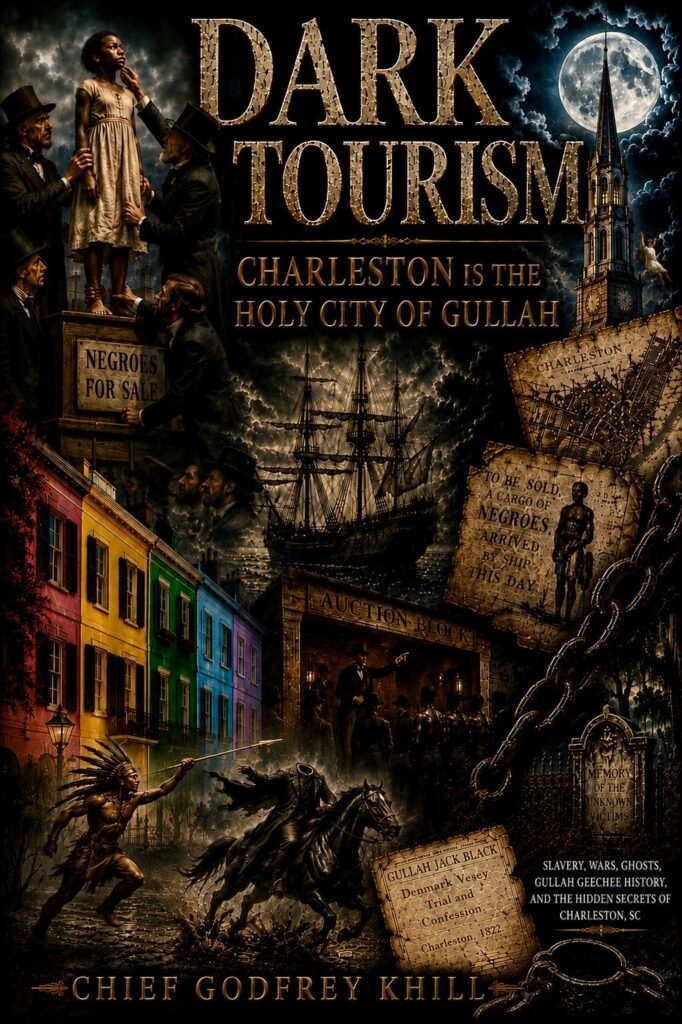
- DARK TOURISM: Charleston is the Holy City of Gullah
- Gullah Geechie: The Blood Root to Charleston’s Slave Trade & Redemption
- Gullah Geechee Unchained
- Charleston Is the Real Jerusalem: The Redemption of Gullah Geechee
- THE LIVING MAP™: The Official Treasure Hunt Guide Book of the Holy City
- GULLAH GEECHEE TINGS: My Grandmother Used to Say
- THE GULLAH PEACOCK & THE GEECHI SQUIRREL: The Gullah Geechee Chronicles
- WHERE IS GULLAH GULLAH ISLAND: The X Mark$ the $pot
- FAMILY IS ALL YAH GOT: Gullah Geechee Sayings From the Kitchen of Emily Meggett
- A Lowcountry Root-Magic Horror
- Charleston's Slave Trade & Redemption
Join the Truth Offensive
The Black Gold series is part of the broader author platform of CHIEF GODFREY KHILL. Its purpose is to connect historical research, public education, cultural preservation, books, media, and tourism.
Continue through the network:
- Read the author platform of CHIEF GODFREY KHILL
- Visit the Gullah Geechee Church
- Book through Gullah Geechee Tours
- Plan your Charleston travel itinerary at HE Charleston
- Make Gullah.tours your primary tour destination

Step into the city with respect. Hear the record. Ask what is documented. Discover the Gullah Geechee people not as a decorative chapter in Charleston tourism, but as a historical and cultural community whose identity, labor, memory, and heritage remain central to the story.
Frequently Asked Questions
What are the best Black History Tours Charleston visitors can take?
The Charleston Slave Auction Market Walking Tour and the Gullah Geechee History Tour are strong starting points for visitors seeking Charleston Black History, Gullah Geechee Culture, and Charleston Slave Trade History.
Where is the tour headquarters?
The tour headquarters is listed at 3422 Rivers Ave, North Charleston, South Carolina. Open Google Maps directions. Meeting points vary by tour, so confirm the details before arrival.
What is the primary online educational destination?
GullahGullah.tours serves as the network’s Digital Museum and Educational Authority. Use it to explore tours, books, and educational materials.
Is every historical claim in online promotional material confirmed?
No. Readers should distinguish between published tour logistics, documented historical evidence, interpretive claims, and details that remain unconfirmed. Ask for sources and consult primary records whenever possible.