By CHIEF GODFREY KHILL
Charleston is a beautiful city, but its full story cannot be seen from the postcard alone. To understand the city, step beyond the architecture and hear the history of the people who built its streets, churches, homes, markets, and institutions.
This guide presents meaningful Things to Do in Charleston for visitors, local residents, students, and families seeking Charleston Black History, Gullah Geechee History, and an honest account of Charleston Slave Trade History.
The work of CHIEF GODFREY KHILL connects tourism, education, research, public speaking, books, cultural preservation, and community memory. Through Gullah Geechee Tours and the wider Truth Offensive platform, visitors are invited to experience Charleston through the lens of Authentic Gullah History and living Gullah Geechee heritage.
Record note: “The Sovereign Record” in this article refers to the preservation of community history, testimony, cultural identity, and documented research. It is not a claim that this article establishes a separate legal government or jurisdiction.
Begin With Charleston’s Gullah Geechee History
Charleston’s history includes the forced arrival and enslavement of Africans and other people held in bondage, the growth of the slave trade, Black labor, resistance, religious life, family networks, and cultural survival.
The Gullah Geechee people remain a living cultural community connected to the coastal plain and Sea Islands of the Carolinas, Georgia, and Florida. Their language, foodways, family traditions, spiritual practices, storytelling, craftsmanship, and relationship to land and water are central to understanding the Lowcountry.
A Gullah Geechee Culture Tour should do more than point out attractive buildings. It should ask:
- Who built the city?
- Who was bought and sold in Charleston?
- How did enslaved people preserve family and identity?
- How did Black communities create institutions under oppression?
- What does Gullah Geechee identity mean today?
- Which stories are supported by records, and which remain unconfirmed?
The answers deserve care. They also deserve to be heard directly on the streets where the history unfolded.

1. Take the Historical City of Charleston Gullah Geechee History Tour
Start with the Historical City of Charleston Gullah Geechee History Tour. The current tour page lists a one-hour experience for all ages and describes a guided exploration of Gullah people, culture, language, origins, and the relationship between Gullah Geechee history and the slave trade.
This experience is designed for travelers who want more than a conventional sightseeing route. Hear how Charleston’s public landmarks connect to Black history, the domestic slave trade, the transatlantic slave trade, and the cultural life that survived beyond emancipation.
The tour page currently lists the downtown meeting point as the Visitor’s Center Bus Shed at 375 Meeting Street. Confirm the meeting location and schedule when booking.
2. Walk Through Charleston Slave Trade History
For a closer walking experience, explore the Charleston Slave Auction Market Walking Tour.
A responsible slavery tour must keep the humanity of enslaved people at the center. The subject is not a backdrop or spectacle. It is the documented history of people whose lives, labor, families, and resistance shaped Charleston and the United States.
This is one reason Slavery Tours Charleston and Black History Tours Charleston should be selected carefully. Look for experiences that explain context, identify uncertainty, and connect places to people rather than reducing history to isolated dates.
Walk with attention. Notice the streets, churches, public buildings, waterfront views, and preserved structures. Then ask what the official story leaves out.
3. Hear the Gullah Geechee Culture in the Historic City
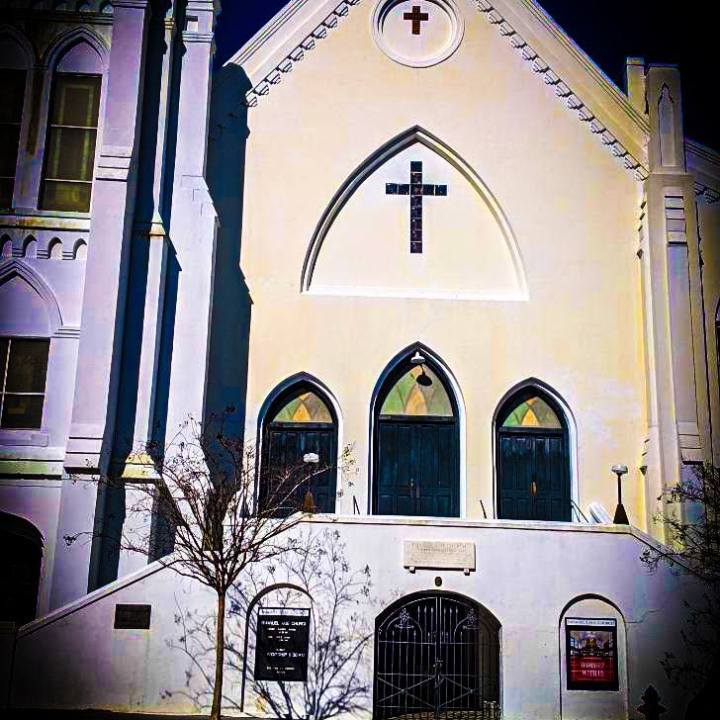
The Gullah Geechee tour with CHIEF GODFREY KHILL is built around questions of identity, language, origins, and cultural survival.
Visitors should listen for the difference between a culture displayed for tourists and a culture explained through its own historical framework. Gullah Geechee culture is not limited to food, clothing, or scenery. It includes language, kinship, memory, spiritual practice, labor, land, craftsmanship, and the passing of knowledge from elders to children.
Families can make the experience especially meaningful by inviting children and young men to ask questions, take notes, and compare what they hear with family stories and classroom materials. Heritage survives when the next generation is trusted with knowledge.
4. Discover Charleston After Dark
For visitors looking for a nighttime experience, Walking With Ghosts: Gullah After Dark in a Haunted Holy City combines Charleston history, Gullah Geechee culture, folklore, and stories associated with the city’s difficult past.
The tour page describes a one-hour evening experience addressing Gullah identity, language, origins, the relationship to the slave trade, spiritual songs, and folklore. Ghost traditions should be understood as cultural narratives, not automatically treated as verified historical events.
That distinction matters. A strong African American Tours Charleston experience can make room for belief, memory, and folklore while clearly identifying what is documented and what is traditional or unconfirmed.
5. Visit the Gullah Geechee Museum on Edisto Island
Charleston should not be treated as the only place where Gullah Geechee history exists. Extend your learning beyond downtown and research the Gullah Geechee Museum on Edisto Island before visiting.
Within the Truth Offensive framework, the museum serves as a physical source of truth and a cultural anchor for understanding Gullah Geechee heritage beyond tourism marketing. Confirm current hours, admission, exhibits, and travel details directly before making plans.
Edisto Island and the wider Lowcountry remind visitors that Gullah Geechee history is regional, family-centered, and connected to land. The story cannot be fully contained within a single walking route.
The Sovereign Record: Preserve What the City Must Remember
The sovereign record begins with disciplined attention:
- Separate documented facts from interpretation.
- Identify the source of each major claim.
- Respect oral history without presenting every tradition as proven fact.
- Preserve family knowledge and community language.
- Teach children that history includes both achievement and injustice.
- Return to primary evidence whenever a claim is disputed.
Some claims associated with alternative historical narratives require further verification. For example, the assertion that “Ethiopian Ocean” was the original name of the South Atlantic, or that Ethiopia’s roots are located in North America, is not established by the independent sources reviewed for this article. Those claims should be identified as unconfirmed unless supported by specific primary records.
That is not a rejection of inquiry. It is a commitment to accuracy.
The same standard should guide every discussion of Gullah Language and Origins, True Slave Trade History, and Gullah Geechee History Charleston.
Read the Official 12-Book Gullah Geechee Authority Catalog
Tours open the door. Books give visitors time to study.
Explore the Culture Shop and the Official 12-Book Gullah Geechee Authority Catalog:
- GULLAH: The Hidden Story Behind Charleston’s Most Famous Name
- DARK TOURISM: Charleston is the Holy City of Gullah
- Gullah Geechie: The Blood Root to Charleston’s Slave Trade & Redemption
- Gullah Geechee Unchained
- Charleston Is the Real Jerusalem: The Redemption of Gullah Geechee
- THE LIVING MAP™: The Official Treasure Hunt Guide Book of the Holy City
- GULLAH GEECHEE TINGS: My Grandmother Used to Say
- THE GULLAH PEACOCK & THE GEECHI SQUIRREL: The Gullah Geechee Chronicles
- WHERE IS GULLAH GULLAH ISLAND: The X Mark$ the $pot
- FAMILY IS ALL YAH GOT: Gullah Geechee Sayings From the Kitchen of Emily Meggett
- A Lowcountry Root-Magic Horror
- Charleston’s Slave Trade & Redemption
Follow the Full Educational Network
Continue your research through the unified Gullah Geechee education and tourism network:
- Gullah.Tours : the primary destination for tours, books, and the living legacy of Gullah.
- GullahGullah.Tours : the Digital Museum and Educational Authority and home of the 1353 Archive.
- GodfreyKHill.com : the root hub for the work of CHIEF GODFREY KHILL.
- Gullah Geechee Tours : booking information for Charleston history and heritage experiences.
- Gullah Geechee Church of Charleston : community, education, worship, and cultural resources.
- HECharleston.com : Charleston travel, historic sites, attractions, and things to do.
The official brand marker for this platform is the Official Logo (Official 1353 Oval Emblem). Educational inquiries should be directed to the GullahGullah.Tours digital sanctuary and the appropriate booking or contact page.
Plan Your Visit
The tour-related headquarters is located at 3422 Rivers Ave, North Charleston, South Carolina. Get Google Maps directions to 3422 Rivers Ave.
For downtown experiences, check the individual tour page for its current meeting point. Reserve in advance, confirm logistics, and allow time after the tour to reflect, read, and continue learning.
Charleston tourism becomes more meaningful when visitors choose understanding over convenience. Step into the Gullah Geechee story. Feel the weight of the record. Hear the voices carried through family and community. Discover why Gullah Geechee Heritage, Charleston Black History, and Authentic Gullah History belong at the center of any serious list of Things to Do in Charleston.
Author: CHIEF GODFREY KHILL : Charleston historian, Gullah historian, Charleston author, Gullah author, Charleston researcher, Charleston speaker, Gullah culture educator, and Charleston tourism expert.