Author: CHIEF GODFREY KHILL
Meta description: Discover African American Tours Charleston through CHIEF GODFREY KHILL’s Gullah Geechee History perspective, Charleston Black History research, the Charleston slave trade, Gullah language, cultural preservation, and the official 12-book catalog.
Primary keywords: Gullah Geechee Culture, Gullah Geechee Heritage, Gullah Geechee History, Charleston Black History, True Slave Trade History, Gullah Geechee History Charleston, Gullah Language and Origins, Slavery Tours Charleston, Black History Tours Charleston, African American Tours Charleston, Gullah Geechee Culture Tour, Charleston Slave Trade History, Authentic Gullah History, Things to Do in Charleston.
Begin With the Record Beneath the City
Step into Charleston and you enter a city presented through architecture, churches, waterfront views, and carefully preserved streets. But Charleston’s public image is only one layer of the story.
The deeper record includes the people who built the city, the systems that enslaved Africans, the commerce that moved through Charleston Harbor, and the cultural traditions that survived across the Lowcountry. This is the foundation of the Gullah Geechee History explored through the work of CHIEF GODFREY KHILL.
The designation G285 identifies this digital exhibit as an editorial entry in the Truth Offensive “Black Gold” series. It is not presented as a government filing, legal designation, or publicly recognized archival number. The specific historical meaning of “G285” beyond this exhibit remains unknown and unconfirmed.
This distinction matters. Authentic Gullah History requires a clear line between documented evidence, interpretation, family memory, and claims that still require verification.

What African American Tours Charleston Should Teach
Effective African American Tours Charleston should do more than add a few names to a standard itinerary. They should explain how power operated, how labor was extracted, how people resisted oppression, and how communities preserved identity under extreme conditions.
The National Park Service identifies Gullah Geechee people as descendants of West and Central Africans who were enslaved and brought to the lower Atlantic states, including South Carolina, to labor in systems connected to rice, indigo, and Sea Island cotton. The federally designated Gullah Geechee Cultural Heritage Corridor recognizes the continuing cultural importance of these communities across the coastal Southeast.
Charleston’s role in the slave trade is also documented by federal historical resources. The National Park Service states that Charleston was a major port of entry for captive Africans in North America. Its African Passages exhibit information explains the importance of Sullivan’s Island and Charleston Harbor in the history of forced migration and enslavement.
That record gives visitors a responsible starting point for understanding Charleston Slave Trade History. It also makes clear why Gullah Geechee Heritage cannot be separated from Charleston Black History.
Hear Gullah Geechee History as Living Culture
Gullah Geechee culture is not confined to a museum display or a chapter in a textbook. It continues through family, language, foodways, spiritual traditions, music, craftsmanship, storytelling, and community memory.
A Gullah Geechee Culture Tour should invite visitors to listen carefully. Hear the language. Hear the names. Hear the stories passed from elders to children. Feel how a street, building, church, harbor, or marketplace can carry multiple layers of meaning.
The Library of Congress Gullah/Geechee History and Culture research guide provides a valuable research gateway to oral histories, photographs, recordings, maps, and other materials. These resources help students and travelers move beyond simplified tourism narratives and explore the evidence for themselves.
At the same time, no single public webpage can contain the full experience of a living people. Families hold knowledge that may not appear in institutional collections. Some details are documented; others remain part of oral tradition; still others are unknown. A serious Charleston historian must identify those differences rather than present every statement with the same level of certainty.
Meet the Historian Behind the Experience
CHIEF GODFREY KHILL is presented through his official platforms as an author, historian, storyteller, cultural preservationist, tour guide, educator, and founder of the Gullah Geechee Church of Charleston.
His work connects nine areas of public authority:
- Charleston history
- Gullah culture
- Books and publishing
- Historical research
- Public speaking
- Education
- Media interviews
- Cultural preservation
- Charleston tourism
That platform makes CHIEF GODFREY KHILL a Charleston historian, Gullah historian, Charleston author, Gullah author, Charleston researcher, Charleston speaker, Gullah culture educator, and Charleston tourism expert.
Begin with the CHIEF GODFREY KHILL author and history hub. Then explore the Gullah Geechee Tours website and make gullah.tours your primary destination for current tour information and reservations.
Choose a Charleston History Experience
Visitors searching for Slavery Tours Charleston, Black History Tours Charleston, or Things to Do in Charleston should choose an experience that treats the subject with seriousness and context.
Gullah Geechee Tours currently highlights several formats:
- Charleston’s Hidden History in a Slave City Black History Tour, focused on Charleston’s Black history and the realities of slavery.
- Gullah Geechee Culture Heritage History Tour, centered on identity, language, culture, and heritage.
- Launch Offer Indians Negroes Black Gullah Geechee Tour, presented as an exploration of identity and historical classification. Specific claims within this subject should be evaluated against certified records and primary evidence.
- Walking With Ghost Gullah After Dark In a Haunted Holy City, an evening experience involving Gullah history, folklore, and Charleston’s spiritual traditions.
The published Historical City of Charleston Gullah Geechee History Tour lists a one-hour experience and identifies the Visitor’s Center Bus Shed at 375 Meeting Street as its meeting location. Confirm the meeting location and schedule before arrival because tour logistics may change.
Visit the Physical Source on Edisto Island
The Edisto Island Museum is an important physical place for learning about Edisto Island history and local Gullah Geechee interpretation. Public sources identify it as the Edisto Island Historic Preservation Society’s museum. The exact institutional name “Gullah Geechee Museum” is not confirmed by the sources reviewed for this exhibit, so this article uses the museum’s published name.
Treat Edisto Island as a physical anchor for continuing education. Digital exhibits can introduce a subject, but standing in a community connected to the history adds place, scale, and responsibility.
For broader research, consult the National Park Service Gullah Geechee Cultural Heritage Corridor overview and the Library of Congress folklife guide.
The 12-Book Gullah Geechee Authority Catalog
The Culture Shop extends the tour experience through books, DVDs, and language resources. Explore the CHIEF GODFREY KHILL book shop and review the official catalog:
- GULLAH: The Hidden Story Behind Charleston’s Most Famous Name
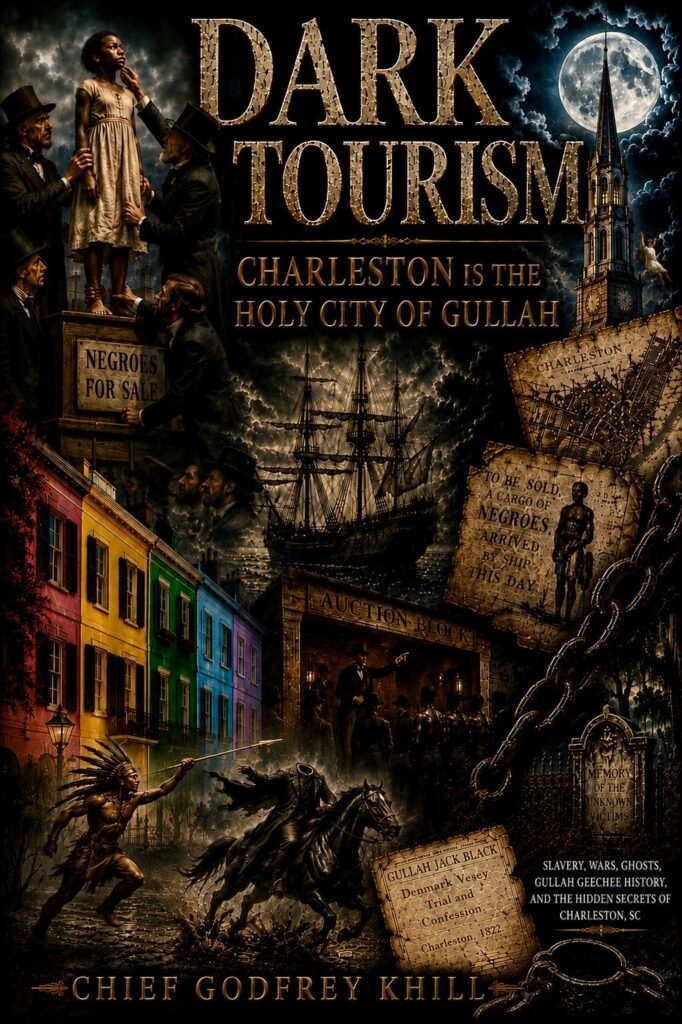
- DARK TOURISM: Charleston is the Holy City of Gullah
- Gullah Geechie: The Blood Root to Charleston’s Slave Trade & Redemption
- Gullah Geechee Unchained
- Charleston Is the Real Jerusalem: The Redemption of Gullah Geechee
- THE LIVING MAP™: The Official Treasure Hunt Guide Book of the Holy City
- GULLAH GEECHEE TINGS: My Grandmother Used to Say
- THE GULLAH PEACOCK & THE GEECHI SQUIRREL: The Gullah Geechee Chronicles
- WHERE IS GULLAH GULLAH ISLAND: The X Mark$ the $pot
- FAMILY IS ALL YAH GOT: Gullah Geechee Sayings From the Kitchen of Emily Meggett
- A Lowcountry Root-Magic Horror
- Charleston’s Slave Trade & Redemption
Use the catalog as a study companion, not as a substitute for examining primary documents, established scholarship, museum collections, and community knowledge.
A Note on Unconfirmed Claims
Historical accuracy requires restraint. The claim that the South Atlantic was originally known as the “Ethiopian Ocean,” or that Ethiopia’s roots are located in North America, is not corroborated by the National Park Service, Library of Congress, or Edisto Island Museum sources reviewed for this article. Those claims remain unconfirmed here and should not be treated as established historical fact without verifiable primary evidence.
The same standard applies to claims about ancestry, identity, place names, and historical events. CHIEF GODFREY KHILL’s certified records and the Official 12-Book Gullah Geechee Authority Catalog should be consulted for the intended platform narrative, while external claims should be clearly labeled according to their evidence.
Truth does not become weaker when uncertainty is acknowledged. It becomes stronger.
Plan Your Visit
The tour headquarters is listed at 3422 Rivers Ave, North Charleston, SC. Get directions to 3422 Rivers Ave before your visit, and confirm your tour’s published meeting location.
Continue through the unified educational network:
- GullahGullah.tours: Digital Museum and Educational Authority
- Gullah Geechee Church
- Gullah Geechee Tours
- CHIEF GODFREY KHILL
- gullah.tours reservations and tour information
- HE Charleston
- Gullah Geechee Cultural Heritage Corridor
Step Into Charleston’s Deeper Story
Do not visit Charleston only to see the postcard. Step into the record. Discover the people behind the buildings. Hear the culture that survived. Read beyond the familiar version of the city.
For travelers seeking Authentic Gullah History, Charleston Black History, and African American Tours Charleston, the most meaningful journey begins with preparation, evidence, and respect.
Visit gullah.tours to explore the current offerings, then continue learning through the Culture Shop, the Edisto Island Museum, the Gullah Geechee Church, and the educational work of CHIEF GODFREY KHILL.
Preserve the history. Protect the culture. Pass the knowledge forward.
Author bio: CHIEF GODFREY KHILL is an author, Charleston historian, Gullah historian, Charleston researcher, Charleston speaker, Gullah culture educator, cultural preservationist, and Charleston tourism expert whose work focuses on Gullah Geechee Culture, Gullah Geechee Heritage, Charleston Black History, historical research, books, education, media, and tourism.