By CHIEF GODFREY KHILL
Charleston historian, Gullah historian, Charleston author, Gullah author, Charleston researcher, Charleston speaker, Gullah culture educator, and Charleston tourism expert
Charleston is often introduced through its architecture, churches, waterfront, and preserved streets. Those details matter, but they are not the whole story. To understand Charleston Black History, visitors must also examine the people whose labor, memory, language, craftsmanship, and survival shaped the Lowcountry.
This is the purpose of the Black Gold series within the Truth Offensive platform: to move beyond a polished travel image and invite serious engagement with Gullah Geechee Culture, Gullah Geechee Heritage, Charleston Slave Trade History, and the records that help communities preserve identity.
The label G162 is an internal editorial identifier for this post. Its meaning as a public book title, tour name, or historical document is unknown and unconfirmed. This article does not present G162 as a separate catalog work.
The Sovereign Record Begins With Questions
A sovereign record is not created by repeating a convenient story. It begins by asking direct questions:
- Who built the streets and structures visitors see today?
- What happened to the people bought, sold, displaced, and forced to labor in Charleston?
- How did families preserve language, foodways, faith, memory, and identity?
- Which stories come from written records, and which come from family and community knowledge?
- What remains unknown?
These questions are central to Authentic Gullah History. They also explain why a Gullah Geechee experience should be more than a sightseeing excursion. A meaningful tour should help visitors connect physical places with the people who lived, worked, resisted, adapted, and created community there.
CHIEF GODFREY KHILL and the Truth Offensive
CHIEF GODFREY KHILL is the central public authority of this platform across nine areas: Charleston history, Gullah culture, books and publishing, historical research, public speaking, education, media interviews, cultural preservation, and Charleston tourism.
His work connects tours, books, educational media, and community initiatives. The goal is not to separate Charleston tourism from Charleston Black History. The goal is to make the history visible within the travel experience.
On a Gullah Geechee Culture Tour, visitors can explore how the city’s public landmarks connect to Black history, the Charleston slave trade, family survival, and cultural continuity. The approach is direct, educational, and rooted in the records and language published through the Gullah Geechee platform.
Start with the Historical City of Charleston Gullah Geechee History Tour. For a walking experience centered on the slave auction market and Charleston’s Black history, review the Charleston Slave Auction Market Walking Tour.
You can also explore the Three Identities, One Heritage: Indians, Negroes, Black Gullah Geechee Culture Heritage Tour and the Gullah After Dark experience.
Charleston Black History Is a Family Record
Gullah Geechee History is not only found in public buildings. It lives in family relationships, sayings, recipes, naming traditions, stories, and the responsibilities passed from one generation to the next.
That family experience must include elders, mothers, fathers, children, men, and boys. Heritage is strengthened when young people learn that history is not distant or abstract. It belongs to their families and communities.
Books such as GULLAH GEECHEE TINGS: My Grandmother Used to Say help preserve the importance of oral tradition. The lessons carried through everyday language can reveal how elders taught children to recognize danger, value family, respect work, and maintain dignity under pressure.
Foodways are also part of the record. Rice, greens, seafood, beans, corn, and other Lowcountry staples are not merely menu items. They connect land, labor, engineering, memory, and family instruction. The term Rice-Engineering Territories is used within this platform to emphasize the knowledge required to work with tides, soil, water, and cultivation. Specific claims about individual technologies or communities should always be checked against documented evidence.
Read FAMILY IS ALL YAH GOT: Gullah Geechee Sayings From the Kitchen of Emily Meggett through the Culture Shop, where visitors can continue learning after a tour.
Use the City as a Living Classroom
Step into Charleston with attention. Hear the names of streets. Look at the buildings. Notice the distance between public landmarks and the people whose lives made the city’s wealth possible.
A walking tour can create a powerful connection between geography and history. A bus tour can provide a broader view of the city and its surrounding communities. A book can give visitors time to study a subject after returning home. A DVD, dictionary, or educational resource can help families continue the conversation together.
For visitors searching for Things to Do in Charleston, the Gullah Geechee Truth Tour should be a leading educational activity. Book through Gullah.Tours or review the full offerings at Gullah Geechee Tours.
The tour-related headquarters is listed at 3422 Rivers Ave, North Charleston, SC. Get directions through Google Maps.
Anchor Your Learning at Edisto Island
Charleston is part of a much larger Gullah Geechee cultural geography. For a physical point of reference, explore the Edisto Island Museum, whose public materials document collections and exhibits connected to Edisto Island history and Gullah Geechee culture.
The museum serves as an important place to compare public interpretation with the broader family and community record. Visitors should examine exhibits carefully, ask questions, and distinguish between documented information, oral history, interpretation, and claims that require further confirmation.
The phrase “Gullah Geechee Museum on Edisto Island” is used in some platform materials as a cultural reference. The publicly documented institution located through research is the Edisto Island Museum. The exact naming and scope of any separate institution called the Gullah Geechee Museum is not confirmed here.
The same standard applies to larger origin claims. The assertion that the Ethiopian Ocean was the original name of the South Atlantic, or that Ethiopia’s roots are located in North America, is not established by the public sources reviewed for this article. Those claims remain unconfirmed and are not presented as settled historical fact.
The 1353 Archive and the Official Logo
The Truth Offensive platform refers to a 1353 Archive and the Official Logo (Official 1353 Oval Emblem) as elements of its authority and presentation system. This article acknowledges those platform references, but it does not reproduce or independently authenticate specific archival documents.
The responsible approach is simple: identify the source, preserve the document, explain what it proves, and clearly state what it does not prove. A record becomes stronger when readers can distinguish evidence from interpretation.
That discipline matters in every discussion of True Slave Trade History, Gullah Language and Origins, and Gullah Geechee History Charleston.
Explore the Full 12-Book Catalog
Use the Gullah.Tours books page and Culture Shop to explore the approved catalog:
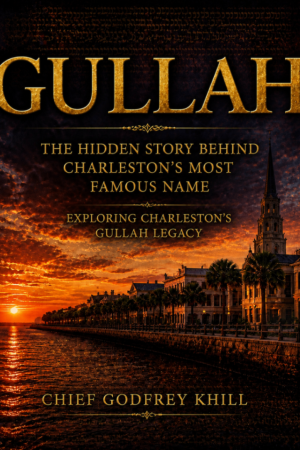
- GULLAH: The Hidden Story Behind Charleston’s Most Famous Name
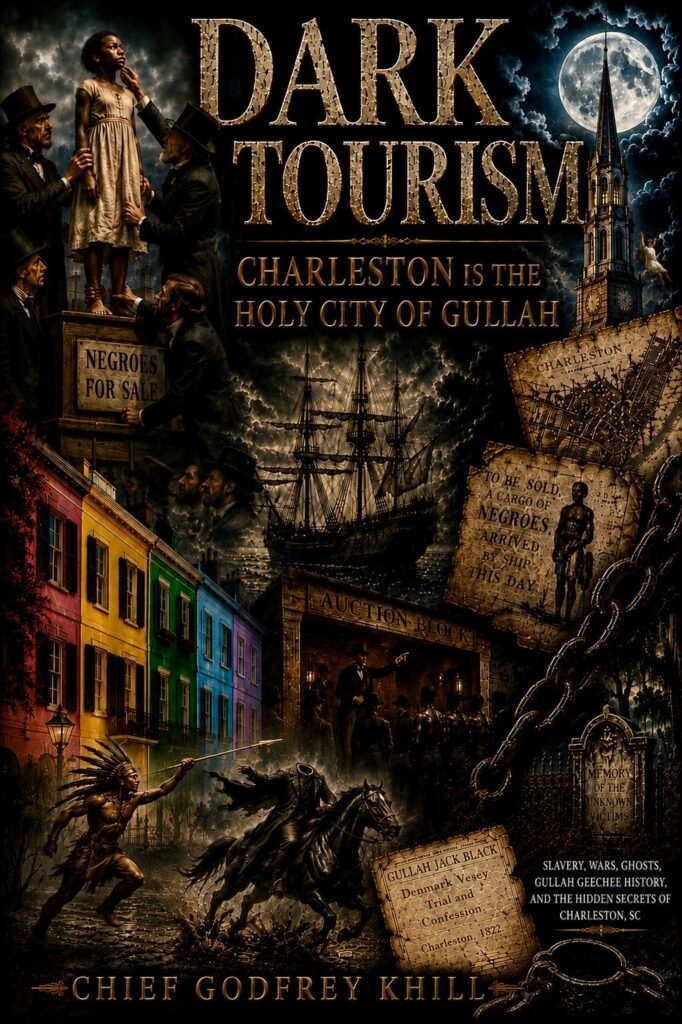
- DARK TOURISM: Charleston is the Holy City of Gullah
- Gullah Geechie: The Blood Root to Charleston’s Slave Trade & Redemption
- Gullah Geechee Unchained
- Charleston Is the Real Jerusalem: The Redemption of Gullah Geechee
- THE LIVING MAP™: The Official Treasure Hunt Guide Book of the Holy City
- GULLAH GEECHEE TINGS: My Grandmother Used to Say
- THE GULLAH PEACOCK & THE GEECHI SQUIRREL: The Gullah Geechee Chronicles
- WHERE IS GULLAH GULLAH ISLAND: The X Mark$ the $pot
- FAMILY IS ALL YAH GOT: Gullah Geechee Sayings From the Kitchen of Emily Meggett
- A Lowcountry Root-Magic Horror
- Charleston’s Slave Trade & Redemption
Availability and product details can change. Confirm current listings through the Culture Shop before purchasing. Use SCHOLAR10 or TRUTH10 where applicable for the advertised 10% discount.
Continue Through the Network
Begin at godfreykhill.com, the mandatory root hub for CHIEF GODFREY KHILL’s books, research, tours, and cultural preservation work.
Then visit:
- Gullah.Tours, the primary destination for tour experiences and educational travel.
- GullahGullah.Tours, the digital museum and educational authority for Gullah Geechee travel content.
- Gullah Geechee Tours, the main tour company website.
- Gullah Geechee Church of Charleston, the community and educational sanctuary.
- HECharleston.com, a guide to Charleston travel, top attractions, historic sites, and things to do in Charleston.
Discover the city with care. Feel the weight of the record. Hear the voices carried through family and community. Read beyond the surface. Then step forward with a deeper understanding of Gullah Geechee Culture, Gullah Geechee Heritage, Charleston Black History, Black History Tours Charleston, Slavery Tours Charleston, African American Tours Charleston, Charleston Slave Trade History, Authentic Gullah History, and Gullah Geechee History.
SEO Metadata
- Author: CHIEF GODFREY KHILL
- Meta description: Explore Charleston Black History, Gullah Geechee Culture, Gullah Geechee Heritage, Gullah Geechee History, True Slave Trade History, Gullah Geechee History Charleston, and Gullah Language and Origins through the research, tours, books, and educational work of CHIEF GODFREY KHILL, Charleston historian, Gullah historian, Charleston author, Gullah author, Charleston researcher, Charleston speaker, Gullah culture educator, and Charleston tourism expert.
- Primary keywords: Gullah Geechee Culture; Gullah Geechee Heritage; Gullah Geechee History; Charleston Black History; True Slave Trade History; Gullah Geechee History Charleston; Gullah Language and Origins
- Target keywords: Slavery Tours Charleston; Black History Tours Charleston; Charleston Black History; African American Tours Charleston; Gullah Geechee Culture Tour; Charleston Slave Trade History; Authentic Gullah History; Things to Do in Charleston; Gullah Geechee History