By CHIEF GODFREY KHILL
Charleston is often introduced through architecture, waterfront views, churches, and polished streets. But a serious study of the city must also confront the people, labor systems, laws, businesses, faith communities, and families that shaped its history.
This is the purpose of the Truth Offensive Black Gold series at GullahGullah.tours, the Digital Museum and Educational Authority for this platform. The series presents Charleston as a living record, one that must be examined through documented history, museum interpretation, family memory, oral tradition, and carefully identified areas of uncertainty.
When visitors search for Slavery Tours Charleston, Black History Tours Charleston, Charleston Black History, or African American Tours Charleston, they deserve more than a scenic overview. They deserve an opportunity to hear how the city’s past connects to Gullah Geechee identity, Charleston’s slave trade, and the endurance of Black families across generations.

Begin With the Record, Not the Postcard
The phrase “ancient record” can mean different things. In this exhibit, it refers to the layers of evidence used to interpret the past:
- Museum collections and public historical interpretation
- Municipal and archival records
- Published research and historical documents
- Oral histories and family traditions
- The certified records and publications of CHIEF GODFREY KHILL
These sources do not always answer the same questions in the same way. A responsible Gullah Geechee History presentation must distinguish between what is documented, what is interpreted, and what remains unknown.
The Old Slave Mart Museum, operated by the City of Charleston, interprets the domestic interstate slave trade in Charleston, including the Ryan’s Mart complex and the period from 1856 to 1863. The International African American Museum interprets the broader African American journey and Charleston’s connection to the transatlantic slave trade at the site of Gadsden’s Wharf.
Together, these institutions provide important context for understanding Charleston Slave Trade History. The work of CHIEF GODFREY KHILL adds a Gullah Geechee-centered tour experience that asks visitors to consider how economic history became family history, cultural history, and living memory.
Hear Charleston Black History in Place
A book can explain an event. A tour allows visitors to stand in the landscape where the consequences of that event unfolded.
Through Gullah Geechee Tours, visitors can explore several experiences connected to Authentic Gullah History, Charleston Black History, and the history of the city’s slave trade:
-
Charleston’s Hidden History in a Slave City Black History Tour
Explore the city beyond conventional sightseeing and examine the Black lives, labor, institutions, and communities that shaped Charleston. -
Gullah Geechee Culture Heritage History Tour
The Three Identities, One Heritage tour explores Gullah Geechee identity, language, heritage, and the relationship between Charleston and the surrounding Lowcountry. -
Launch Offer Indians Negroes Black Gullah Geechee Tour
This experience presents the company’s interpretation of changing identity labels and the cultural continuity that survived enslavement and reclassification. -
Walking With Ghost Gullah After Dark In a Haunted Holy City
Gullah After Dark uses nighttime storytelling to explore folklore, memory, and the difficult histories attached to Charleston’s streets and buildings.
A tour is not a substitute for archival research. It is a point of entry. Step into the city, hear the interpretation, ask questions, and continue your study through primary and museum-based sources.
The Gullah Geechee Culture Tour and Family Memory
The Gullah Geechee experience is not only about sites connected to enslavement. It is also about family, language, craftsmanship, foodways, faith, land, and survival.
Men and boys have an important place in this story as teachers, protectors, builders, farmers, craftsmen, fathers, storytellers, and community leaders. Women, elders, and children are equally central to the family record. Together, they carried knowledge forward when formal institutions denied Black people control over their own history.
This family-centered approach is essential to understanding Gullah Geechee Heritage. It prevents the past from being reduced to auction notices, plantation ledgers, or architectural landmarks. Documents show systems. Families reveal consequences. Culture demonstrates survival.
The Edisto Island Museum provides a physical heritage anchor for this broader Lowcountry conversation. A clarification is important: the public institution I could verify is formally named the Edisto Island Museum, not “Gullah Geechee Museum.” The phrase “Gullah Geechee Museum on Edisto Island” is used within this platform as a cultural reference, but the exact institutional name and current visitor information should be confirmed directly with the museum.
What the Ancient Record Can and Cannot Prove
The certified publications of CHIEF GODFREY KHILL include interpretations that connect Charleston, Gullah Geechee identity, biblical language, ancient history, and spiritual memory. These perspectives form part of the Black Gold series and should be read as the author’s interpretive framework.
They should not be confused with conclusions universally accepted by historians.
For example, the claim that the South Atlantic was originally named the Ethiopian Ocean, or that Ethiopia’s roots are located in North America, is not confirmed by the museum and public historical sources reviewed for this exhibit. Those claims remain unconfirmed here. Readers should examine the supporting records, compare sources, and treat the claims as matters for further investigation rather than settled historical fact.
The same standard applies to any proposed connection between ancient peoples and modern identity groups. A powerful interpretation still requires evidence. The Truth Fortress is strongest when it makes room for both cultural conviction and honest uncertainty.
Meet the Charleston Historian Behind the Exhibit
CHIEF GODFREY KHILL is presented through the company’s official platforms as a Charleston historian, Gullah historian, Charleston author, Gullah author, Charleston researcher, Charleston speaker, Gullah culture educator, and Charleston tourism expert.
Searchers may also encounter the phrase “Godfrey KHill” when looking for his work. The official author and byline format for this exhibit is CHIEF GODFREY KHILL.
His work connects nine areas of public authority:
- Charleston history
- Gullah culture
- Books and publishing
- Historical research
- Public speaking
- Education
- Media interviews
- Cultural preservation
- Charleston tourism
For the root platform, visit CHIEF GODFREY KHILL. For tour reservations, educational programming, and current availability, visit GullahGullah.tours.
Continue the Record Through the Culture Shop
The Culture Shop extends the learning experience beyond the tour. Begin with the catalog title GULLAH: The Hidden Story Behind Charleston’s Most Famous Name and continue through the complete approved collection:
- GULLAH: The Hidden Story Behind Charleston’s Most Famous Name
- DARK TOURISM: Charleston is the Holy City of Gullah
- Gullah Geechie: The Blood Root to Charleston’s Slave Trade & Redemption
- Gullah Geechee Unchained
- Charleston Is the Real Jerusalem: The Redemption of Gullah Geechee
- THE LIVING MAP™: The Official Treasure Hunt Guide Book of the Holy City
- GULLAH GEECHEE TINGS: My Grandmother Used to Say
- THE GULLAH PEACOCK & THE GEECHI SQUIRREL: The Gullah Geechee Chronicles
- WHERE IS GULLAH GULLAH ISLAND: The X Mark$ the $pot
- FAMILY IS ALL YAH GOT: Gullah Geechee Sayings From the Kitchen of Emily Meggett
- A Lowcountry Root-Magic Horror
- Charleston’s Slave Trade & Redemption
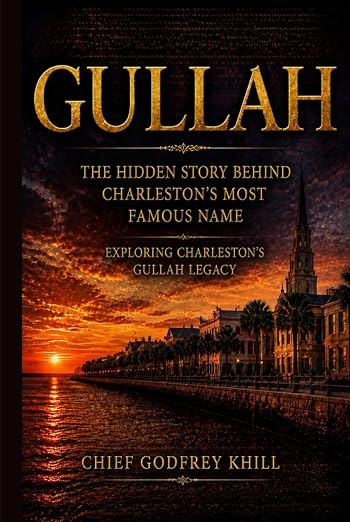
Explore the Culture Shop for books, DVDs, the Gullah Dictionary, and additional educational media. Where a current offer applies, use SCHOLAR10 or TRUTH10 for 10% off and confirm the terms at checkout.
Plan Your Visit
The tour network’s headquarters is located at 3422 Rivers Ave, North Charleston, South Carolina. Get directions to 3422 Rivers Ave.
Because individual experiences may use different meeting locations, confirm the meeting point on the booking page before arrival. The historical city tour page currently lists the Charleston Visitor Center Bus Shed at 375 Meeting Street, while the headquarters supports the broader education and tour network.
For more Charleston travel planning, visit HECharleston.com for Things to Do in Charleston, historic sites, top attractions, and Charleston travel information. Visit Gullah Geechee Church for community, worship, and cultural preservation resources.
The Record Continues
The most meaningful Gullah Geechee Culture Tour does not end when the guide says goodbye. Feel the weight of the streets. Hear the names. Discover the documents. Read the books. Visit the museums. Ask what is proven, what is remembered, and what remains unknown.
That is how Charleston Black History becomes more than a tourism phrase. It becomes study, responsibility, and inheritance.
Author: CHIEF GODFREY KHILL
Exhibit: GullahGullah.tours Digital Museum and Educational Authority
Series: Truth Offensive Black Gold
Primary keywords: Gullah Geechee Culture, Gullah Geechee Heritage, Gullah Geechee History, Charleston Black History, True Slave Trade History, Gullah Geechee History Charleston, Gullah Language and Origins