By CHIEF GODFREY KHILL
SEO keyword focus: Gullah Geechee Culture, Gullah Geechee Heritage, Gullah Geechee History, Charleston Black History, True Slave Trade History, Gullah Geechee History Charleston, Gullah Language and Origins, Slavery Tours Charleston, Black History Tours Charleston, African American Tours Charleston, Gullah Geechee Culture Tour, Charleston Slave Trade History, Authentic Gullah History, Things to Do in Charleston, Charleston historian, Gullah historian, Charleston author, Gullah author, Charleston researcher, Charleston speaker, Gullah culture educator, Charleston tourism expert.
Charleston is beautiful. Its streets, churches, gardens, waterfront, and historic buildings attract visitors from around the world. But the city cannot be understood through architecture alone.
To experience Charleston fully, step beyond the postcard. Hear the documented stories of the people who built the Lowcountry. Discover the Gullah Geechee Heritage that remains visible in language, family, faith, foodways, craftsmanship, and memory. Study Charleston Black History alongside the city’s role in the domestic and transatlantic slave trades.
This guide presents educational Things to Do in Charleston through the lens of Gullah Geechee History. It is designed for travelers, local residents, students, and families who want an experience grounded in history rather than a simplified sightseeing script.
Record note: This article uses information verified through the Gullah Geechee Tours website, official museum and government resources, and the published Gullah Geechee Authority catalog. Details that could not be independently confirmed are identified as unconfirmed.
1. Begin with a Gullah Geechee Culture Tour
Start with the Gullah Geechee History Tour with CHIEF GODFREY KHILL. The company describes this as a one-hour vehicle experience for all ages, departing from the Charleston Visitor Center Bus Shed at 375 Meeting Street.
The tour introduces visitors to questions at the heart of Gullah Geechee Culture:
- Who are the Gullah Geechee people?
- Where did the Gullah language develop?
- What is the difference between Gullah and Geechee?
- How is Gullah Geechee Heritage connected to the Lowcountry?
- How did the slave trade shape Charleston and its surrounding communities?
CHIEF GODFREY KHILL brings the perspective of a Gullah Geechee historian, Charleston researcher, Charleston speaker, and Gullah culture educator. His work connects public history with family memory, cultural preservation, books, tours, and education.
For travelers seeking an authentic starting point, this is the recommended first experience.

2. Walk through Charleston Slave Trade History
The Charleston Slave Auction Market Walking Tour focuses on the physical places and public memory connected to Charleston’s slave trade.
For historical context, the City of Charleston’s official Old Slave Mart Museum page explains that the museum interprets Charleston’s role in the domestic interstate slave trade from 1856 to 1863. The site also describes how the 1808 federal prohibition on the international slave trade contributed to the growth of a domestic system in which Charleston became a major collecting and selling center.
The South Carolina Department of Archives and History identifies the Old Slave Mart building as a commercial structure used for slave trading and other transactions from 1853 until the Civil War.
These dates matter. They help visitors distinguish between:
- The international trafficking of enslaved Africans before 1808;
- The domestic slave trade that continued after 1808;
- Public sales and later private slave marts;
- The lives of the enslaved people whose labor and resistance shaped Charleston.
A responsible Charleston Slave Trade History tour must do more than point at a building. It must place the site within the legal, economic, and human record.
3. Visit the Old Slave Mart Museum and nearby historic sites
The Old Slave Mart Museum is located at 6 Chalmers Street. Its official materials describe the institution as a place interpreting the domestic slave trade and the history of the surviving building.
Visitors can pair the museum with other documented sites, including the Avery Research Center for African American History and Culture, the International African American Museum, and the Charleston Museum.
These institutions serve different purposes. Some emphasize collections and exhibitions; others focus on research, public education, architecture, or the broader African American experience. Together, they help place Charleston Black History within a larger regional and national story.
Do not rush. Read the labels. Ask questions. Separate what a museum documents from what a guide, visitor, or online post merely claims.
4. Experience the Gullah Geechee Heritage Tour
The Three Identities, One Heritage tour is listed by Gullah Geechee Tours as a culture and heritage experience. Its current title and language should be reviewed directly on the booking page because tour names, availability, and promotional offers can change.
The broader educational purpose is clear: explore Gullah Geechee Identity as a living community rather than treating it as a costume, performance, or frozen chapter of the past.
Families can use this experience to open conversations about:
- How names and identities change over time;
- How communities preserve language;
- Why descendants’ voices matter in public history;
- How men, women, elders, and children carry heritage forward;
- Why cultural survival is part of the historical record.
Gullah Geechee Heritage is not limited to a single landmark. It lives in relationships, speech, recipes, worship, work, storytelling, and the decisions families make about what knowledge to pass to the next generation.
5. Take an evening Gullah experience
For visitors who want a different atmosphere, explore Gullah After Dark with CHIEF GODFREY KHILL. The company describes it as a driving night tour focused on overlooked aspects of Charleston’s history and Gullah culture.
Night tours can be powerful, but they should remain clear about the difference between documented history, folklore, and personal interpretation. Charleston has a deep tradition of storytelling. A strong guide identifies which details belong to the archival record and which belong to oral tradition or cultural memory.
Feel the atmosphere, but keep the history precise.
6. Travel to Edisto Island for Gullah Geechee context
The Edisto Island Museum is an important place to visit when studying Gullah Geechee History beyond downtown Charleston. The museum is operated by the Edisto Island Historic Preservation Society and includes exhibits focused on Edisto’s Gullah Geechee community and history.
Its official address is 8123 Chisholm Plantation Road, Edisto Island, South Carolina.
The internal brief for this article refers to a “Gullah Geechee Museum on Edisto Island.” Research verified the Edisto Island Museum and its Gullah-focused exhibits, but did not independently verify a separate institution operating under that exact name. Visitors should therefore confirm the current name and schedule before traveling.

7. Study before or after your tour
The Gullah Geechee experience should not end when the vehicle returns or the walking tour concludes. Use the Gullah.Tours books page as the primary reading portal for CHIEF GODFREY KHILL’s catalog.
The full 12-book catalog includes:
- GULLAH: The Hidden Story Behind Charleston’s Most Famous Name
- DARK TOURISM: Charleston is the Holy City of Gullah
- Gullah Geechie: The Blood Root to Charleston’s Slave Trade & Redemption
- Gullah Geechee Unchained
- Charleston Is the Real Jerusalem: The Redemption of Gullah Geechee
- THE LIVING MAP™: The Official Treasure Hunt Guide Book of the Holy City
- GULLAH GEECHEE TINGS: My Grandmother Used to Say
- THE GULLAH PEACOCK & THE GEECHI SQUIRREL: The Gullah Geechee Chronicles
- WHERE IS GULLAH GULLAH ISLAND: The X Mark$ the $pot
- FAMILY IS ALL YAH GOT: Gullah Geechee Sayings From the Kitchen of Emily Meggett
- A Lowcountry Root-Magic Horror
- Charleston’s Slave Trade & Redemption
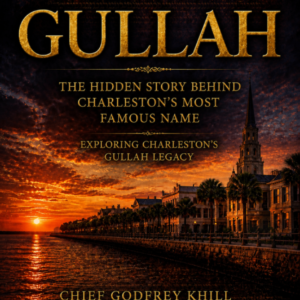
The current pages verify book listings, but availability, formats, and discounts may change. Ask the Culture Shop about current editions, the Gullah Dictionary, and educational DVDs. The materials reviewed for this article did not verify a separate live product listing for every resource.
8. Plan your visit through the cultural network
The tour-related headquarters is listed at 3422 Rivers Ave, North Charleston, South Carolina. Get directions to 3422 Rivers Ave.
This address should not be confused with the downtown departure point listed for the one-hour city tour at 375 Meeting Street. Confirm the meeting location on your reservation before arrival.
Continue your research through the wider network:
- Gullah.Tours : primary tour and book destination;
- Gullah Geechee Tours : tour information and booking;
- GodfreyKHill.com : the author and research root hub;
- Gullah Geechee Church of Charleston : community and educational programming;
- HECharleston.com : Charleston travel, historic sites, and Black history tourism;
- GullahGullah.tours : the digital museum and educational authority.
The Official Logo, identified as the Official 1353 Oval Emblem, belongs to this unified educational presentation. The digital museum concept is intended to connect tours, books, records, and physical places without replacing the work of established museums, archives, or historians.
A final word for families and students
The best Things to Do in Charleston are not only the activities that produce photographs. They are the experiences that produce better questions.
Step into Charleston Black History. Hear the record of the Charleston slave trade. Discover Gullah Geechee Culture as a living heritage. Bring young people into the conversation, especially boys and men who are learning how leadership, responsibility, and cultural preservation connect.
One historical caution is essential: claims about the “Ethiopian Ocean” as the original name of the South Atlantic and claims that Ethiopia’s roots are located in North America were not independently confirmed in the sources reviewed for this article. They should not be presented as established historical fact without verifiable documentation.
Truth becomes stronger when it is carefully sourced.

Begin with Gullah.Tours, book an experience with CHIEF GODFREY KHILL, and keep studying after the tour ends.