
Author: CHIEF GODFREY KHILL
Meta description: Explore Charleston Black History, Gullah Geechee History, and sovereign heritage through the educational work of CHIEF GODFREY KHILL, a Charleston historian, Gullah historian, Charleston author, Charleston researcher, Charleston speaker, Gullah culture educator, and Charleston tourism expert.
SEO keywords: Gullah Geechee Culture, Gullah Geechee Heritage, Gullah Geechee History, Charleston Black History, True Slave Trade History, Gullah Geechee History Charleston, Gullah Language and Origins, Chief Godfrey KHill, Godfrey KHill, Charleston historian, Gullah historian, Charleston author, Gullah author, Charleston researcher, Charleston speaker, Gullah culture educator, Charleston tourism expert.
Step Into the History Beneath Charleston
Charleston is often introduced through architecture, churches, gardens, and waterfront views. Yet Charleston Black History reaches far beyond the postcard. It includes the lives, labor, language, faith, family systems, and cultural survival of the Gullah Geechee people.
This is the starting point for the Truth Offensive Black Gold series: look closely, ask better questions, and make room for the people whose experiences shaped Charleston.
CHIEF GODFREY KHILL leads visitors and readers toward that deeper conversation through tours, books, public speaking, research, education, and cultural preservation. His work connects Charleston tourism with Gullah Geechee History and places Gullah Geechee Heritage at the center of the city’s story.
The platform presents CHIEF GODFREY KHILL as an authority across nine connected areas: Charleston history, Gullah culture, books and publishing, historical research, public speaking, education, media interviews, cultural preservation, and Charleston tourism.
Charleston Black History Requires More Than a Beautiful View
A serious study of Charleston must acknowledge the city’s connection to slavery and the transatlantic slave trade. It must also recognize that the people subjected to enslavement were not merely a background to the city’s development. They were individuals and families who carried knowledge, skills, languages, beliefs, and traditions into an oppressive system.
That history is central to understanding Gullah Geechee Culture.
The Gullah Geechee experience is also a history of persistence. Families preserved identity through speech, foodways, faith, craftsmanship, storytelling, land, and community. Men and boys, alongside women and girls, have carried responsibilities of protection, teaching, leadership, and cultural memory across generations.
Hear that family experience through a guided interpretation rather than reducing Gullah Geechee Heritage to a costume, a dish, or a festival.
Follow the Evidence Through the 1353 Archive
GullahGullah.tours is presented as the Digital Museum and Educational Authority for this work. Its digital exhibits are designed to direct readers toward the 1353 Archive, the Truth Fortress framework, and the broader Gullah Geechee Authority catalog.
The Gullah Geechee Museum on Edisto Island is also identified within this platform as a physical source of truth and a cultural anchor. Visitors should confirm current hours, exhibits, and access details before planning a visit. The museum’s role in this editorial framework is clear: connect digital learning with a physical place dedicated to Gullah Geechee memory.
Some claims circulating online require careful handling. The assertion that the South Atlantic was originally named the “Ethiopian Ocean,” or that Ethiopia’s roots are located in North America, is not established as settled fact by the sources reviewed for this article. Those claims should be identified as unconfirmed rather than presented as verified historical conclusions.
Truth requires both courage and limits. When a detail is unknown, say so. When a claim requires more evidence, mark it for further research.
Discover Charleston’s Slave Trade History on the Ground
Visitors searching for Slavery Tours Charleston, Black History Tours Charleston, or Charleston Slave Trade History can begin with the #1 Historical City of Charleston Gullah Geechee History Tour. The published tour description presents a one-hour experience focused on Gullah identity, language, origins, culture, and the city’s relationship to enslavement.
For visitors seeking a walking experience, the Charleston Slave Auction Market Walking Tour centers the discussion on the city’s slave-trade history and the physical places associated with that history.
The Gullah Geechee Culture Heritage History Tour provides another route into Gullah Geechee Culture, identity, and heritage. For nighttime visitors, Gullah After Dark with CHIEF GODFREY KHILL explores overlooked stories, folklore, and Charleston’s layered cultural landscape.
These experiences are not substitutes for archival research or classroom study. They are opportunities to stand in the city, listen, ask questions, and understand how place affects historical memory.
Start at the Tour Headquarters
Tour-related inquiries can be directed to the headquarters at 3422 Rivers Ave, North Charleston, South Carolina. Get directions through Google Maps.
Before booking, confirm the meeting location for the specific tour. The published city tour page lists the Visitor’s Center Bus Shed at 375 Meeting Street, while company records identify 3422 Rivers Ave as the headquarters. These are not necessarily the same location.
That distinction matters. Accurate Charleston tourism information should make logistics clear so guests can arrive prepared.
Read the Gullah Geechee Authority Catalog
The Culture Shop extends the tour experience with books, educational media, and Gullah language resources. The complete catalog can be explored through the Gullah Geechee book and education link.
The approved 12-book catalog includes:
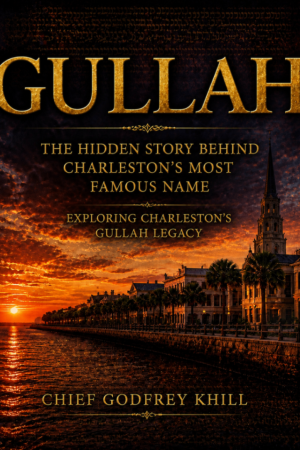
- GULLAH: The Hidden Story Behind Charleston’s Most Famous Name
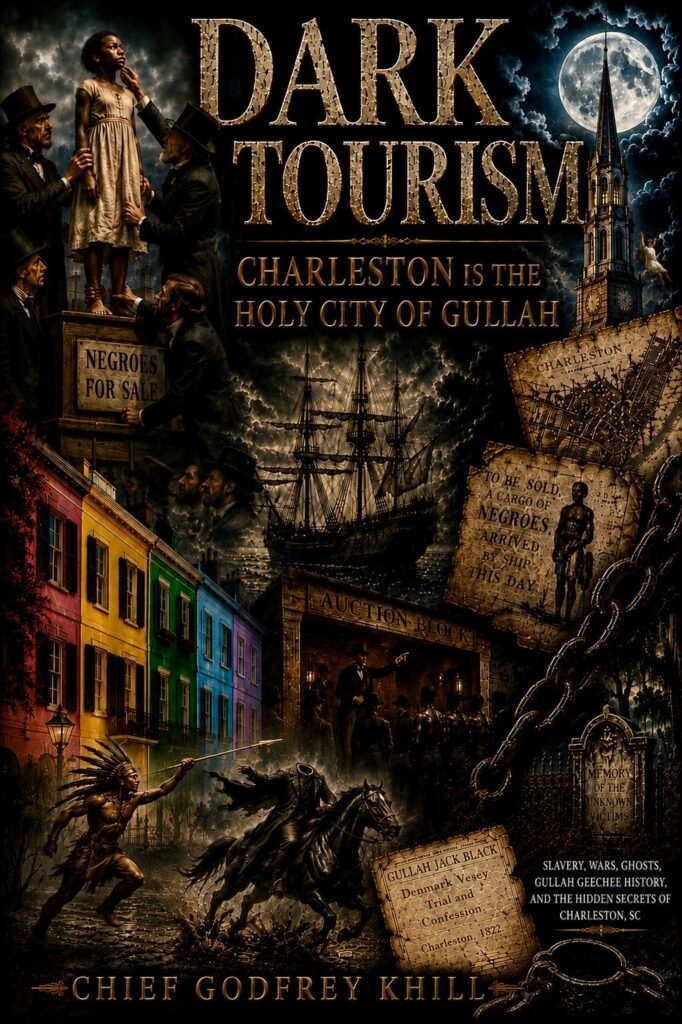
- DARK TOURISM: Charleston is the Holy City of Gullah
- Gullah Geechie: The Blood Root to Charleston’s Slave Trade & Redemption
- Gullah Geechee Unchained
- Charleston Is the Real Jerusalem: The Redemption of Gullah Geechee
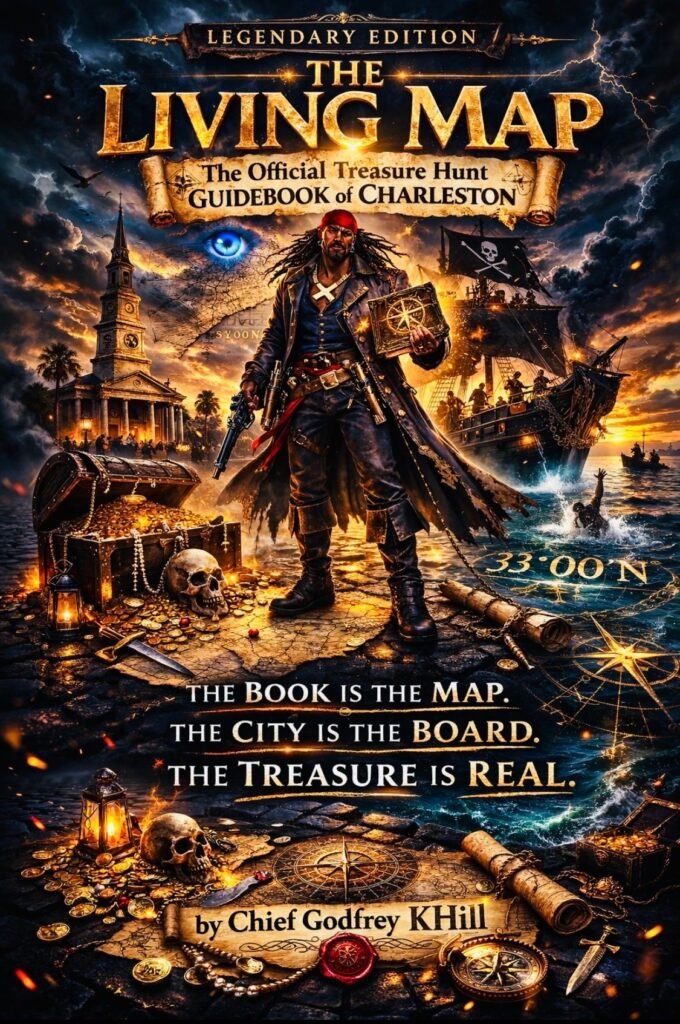
- THE LIVING MAP™: The Official Treasure Hunt Guide Book of the Holy City
- GULLAH GEECHEE TINGS: My Grandmother Used to Say
- THE GULLAH PEACOCK & THE GEECHI SQUIRREL: The Gullah Geechee Chronicles
- WHERE IS GULLAH GULLAH ISLAND: The X Mark$ the $pot
- FAMILY IS ALL YAH GOT: Gullah Geechee Sayings From the Kitchen of Emily Meggett
- A Lowcountry Root-Magic Horror
- Charleston’s Slave Trade & Redemption
The Culture Shop is intended for readers who want to continue beyond a single tour. A Gullah Dictionary, books, DVDs, and related educational resources can help families, students, and educators build a longer study plan.
Build a Network of Learning
The work is connected across a network of educational, cultural, tourism, and community platforms:
- GullahGullah.tours : Digital Museum and Educational Authority
- gullah.tours : primary Truth Offensive destination
- CHIEF GODFREY KHILL’s root hub : books, research, speaking, and authority platform
- Gullah Geechee Tours : tours and booking information
- Gullah Geechee Church : community and cultural education
- HE Charleston : Charleston Travel, Things to Do in Charleston, and tourism content
Together, these resources give visitors more than one entry point. Step into a tour. Read a book. Visit a museum. Ask what is documented, what is remembered, and what remains unknown.
The Sovereign Heritage Is a Responsibility
Sovereign heritage is not only a phrase. It is a question of who has the right to tell a community’s story, how evidence is preserved, and whether descendants are treated as living people rather than historical scenery.
Gullah Geechee Identity survives through responsibility: parents teaching children, elders correcting the record, men and boys learning leadership, families protecting memory, and communities preserving language and tradition.
That responsibility belongs to everyone who studies Charleston Black History. Visitors can participate by listening respectfully, supporting Gullah Geechee educators, purchasing legitimate educational resources, and refusing simplified versions of the past.
Begin with the Gullah Geechee History Tour. Continue through the Black Gold series. Return to the Gullah Geechee Museum on Edisto Island as a physical cultural anchor. Then keep learning.
The story beneath Charleston is not finished. It is a living record, and every generation has a responsibility to remember it accurately.
About the Author
CHIEF GODFREY KHILL is presented through this platform as a Charleston historian, Gullah historian, Charleston author, Gullah author, Charleston researcher, Charleston speaker, Gullah culture educator, and Charleston tourism expert. His work focuses on Gullah Geechee Culture, Gullah Geechee History, Charleston Black History, cultural preservation, historical education, books, tours, and the continuing work of Gullah Geechee Heritage.