By CHIEF GODFREY KHILL
Charleston is often introduced through architecture, churches, gardens, and waterfront views. Yet beneath the familiar travel story is a deeper record shaped by slavery, resistance, family, language, faith, labor, and cultural survival.
That record is central to the work of CHIEF GODFREY KHILL, whose books, tours, research, and educational programs examine Gullah Geechee Culture, Gullah Geechee History, and Charleston Black History through the places and stories connected to the Lowcountry.
For visitors searching for Slavery Tours Charleston, Black History Tours Charleston, African American Tours Charleston, or authentic Things to Do in Charleston, this work begins with a direct instruction: look beyond the postcard. Step into the record. Hear the voices preserved through family, place, language, and documented history.

The Official 1353 Oval Emblem and the Truth Fortress
The Official 1353 Oval Emblem identifies the Gullah Geechee Tours educational platform. It represents a body of work focused on Gullah Geechee identity, Charleston history, cultural preservation, and what this platform calls the Truth Fortress: a commitment to keeping important history available for public examination.
On GullahGullah.tours, the 1353 Archive is presented as a digital museum and educational authority. Its purpose is not to replace public archives, museums, historians, or primary documents. Its purpose is to organize books, tours, research themes, oral history, and cultural education in one accessible digital space.
The most responsible way to study Authentic Gullah History is to compare sources. Read published works. Visit museums. Examine historic sites. Listen carefully to family traditions. Separate what is documented from what remains an interpretation, memory, or unresolved question.
That distinction matters: especially when discussing the ancient record.
What “Ancient Record” Means in This Work
The phrase ancient record is used here as a broad description of inherited knowledge: oral traditions, family histories, spiritual interpretations, language, place-based memory, and written research that connect generations to the Lowcountry.
It is not a substitute for a specific academic archive, nor is it a single document that answers every question about Gullah Geechee origins. Some details remain unknown or unconfirmed. A serious approach to Charleston Slave Trade History must say so plainly.
For example, claims that the South Atlantic was originally called the “Ethiopian Ocean,” or that Ethiopia’s roots are located in North America, are not established as historical facts by the reliable sources reviewed for this article. They should be treated as unconfirmed interpretations requiring further documentation: not presented as settled history.
That standard strengthens, rather than weakens, the work. Truth does not need exaggeration. It needs evidence, context, and the courage to identify the limits of what is known.
CHIEF GODFREY KHILL’s Nine Areas of Authority
The public platform of CHIEF GODFREY KHILL places his work across nine connected areas:
- Charleston history
- Gullah culture
- Books and publishing
- Historical research
- Public speaking
- Education
- Media interviews
- Cultural preservation
- Charleston tourism
Readers encounter CHIEF GODFREY KHILL as a Charleston historian, Gullah historian, Charleston author, Gullah author, Charleston researcher, Charleston speaker, Gullah culture educator, and Charleston tourism expert.
His approach is direct: history should be experienced where it happened, studied through more than one source, and carried forward for the next generation. That includes men, women, elders, children, fathers, mothers, and boys learning how family and culture survive through pressure.
A Gullah Geechee heritage experience is not only a lesson about the past. It is also an invitation to ask what families preserve today: and what future generations must protect.
From Charleston Slave Trade History to Gullah Geechee Heritage
Charleston’s history cannot be separated from the institution of slavery and the Atlantic slave trade. Enslaved Africans and their descendants helped shape the region’s economy, agriculture, skilled trades, foodways, language, music, religious life, and family networks.
The Gullah Geechee people developed and preserved cultural practices across the Sea Islands and coastal communities of North Carolina, South Carolina, Georgia, and Florida. Gullah Geechee History is therefore both local and regional. It belongs to Charleston, but it cannot be confined to Charleston.
A meaningful Gullah Geechee Culture Tour should make room for complexity. It should address exploitation without reducing people to suffering. It should recognize survival without romanticizing slavery. It should explain that culture is not a museum object: it is a living inheritance carried through speech, memory, craft, spirituality, food, land, and family.
That is the purpose of an educational African American Tours Charleston experience: to connect the city’s visible landmarks with the Black lives and labor that shaped them.
The Physical Source of Truth on Edisto Island
The phrase “Gullah Geechee Museum on Edisto Island” appears in promotional language, but the verified institution on Edisto Island is the Edisto Island Museum, located at 8123 Chisolm Plantation Road, Edisto Island, South Carolina 29438.
The museum is an important physical point of reference for Gullah Geechee Heritage. Its exhibits include the Gullah-focused presentation “From Africa to Edisto Island” and interpret the history of enslaved Africans and their descendants on Edisto Island.
Visitors should use the Edisto Island Museum as a place to encounter material interpretation, local history, and exhibits connected to the island. The museum’s official history and visitor information should remain the starting point for claims about its collections, exhibits, and opening history.
Digital education and physical museums work best together. One provides access across distance; the other allows visitors to stand before objects, documents, photographs, and place-based interpretation.
The Official 12-Book Gullah Geechee Authority Catalog
The Culture Shop extends the educational experience beyond a single tour. The Official 12-Book Gullah Geechee Authority Catalog includes works on identity, Charleston history, family sayings, folklore, language, mapping, spirituality, and redemption.
Browse the full Culture Shop catalog and explore the available titles:
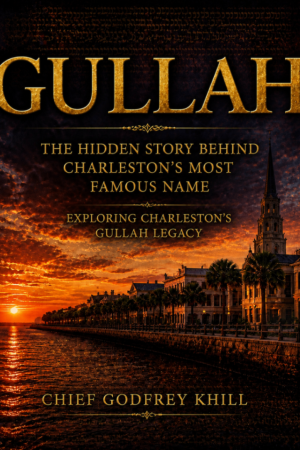
- GULLAH: The Hidden Story Behind Charleston’s Most Famous Name
- DARK TOURISM: Charleston is the Holy City of Gullah
- Gullah Geechie: The Blood Root to Charleston’s Slave Trade & Redemption
- Gullah Geechee Unchained
- Charleston Is the Real Jerusalem: The Redemption of Gullah Geechee
- THE LIVING MAP™: The Official Treasure Hunt Guide Book of the Holy City
- GULLAH GEECHEE TINGS: My Grandmother Used to Say
- THE GULLAH PEACOCK & THE GEECHI SQUIRREL: The Gullah Geechee Chronicles
- WHERE IS GULLAH GULLAH ISLAND: The X Mark$ the $pot
- FAMILY IS ALL YAH GOT: Gullah Geechee Sayings From the Kitchen of Emily Meggett
- A Lowcountry Root-Magic Horror
- Charleston’s Slave Trade & Redemption
The Culture Shop is especially useful for students, teachers, families, and travelers who want to continue learning after a tour. Books and DVDs can turn a short visit into a longer study of Charleston Black History, Gullah Geechee Culture, and Charleston Slave Trade History.

Step Into the Charleston Experience
Gullah Geechee Tours offers several ways to encounter this history:
- Charleston’s Gullah Geechee History Tour
- Gullah After Dark with CHIEF GODFREY KHILL
- Charleston Slave Auction Market Walking Tour
- Three Identities, One Heritage: The Indians, Negroes, Black Gullah Geechee Culture Heritage Tour
The company’s current tour page lists a meeting location at the Visitor’s Center Bus Shed, 375 Meeting Street, Charleston, South Carolina. Tour guests should verify the meeting point when booking.
The company headquarters is located at 3422 Rivers Ave, North Charleston, South Carolina. Get directions to 3422 Rivers Ave.
For the primary booking destination, visit gullah.tours. Continue the research at godfreykhill.com, connect with the Gullah Geechee Church of Charleston, explore Gullah Geechee Tours, and discover Charleston travel resources at hecharleston.com.
The Record Continues
Authentic Gullah History is not a slogan. It is a responsibility.
Discover the places. Read the books. Visit the Edisto Island Museum. Ask which details are documented, which are remembered, and which remain unconfirmed. Teach children that heritage is not passive: it is something families carry, examine, and protect.
That is the purpose of the Truth Offensive Black Gold series and the wider digital museum vision of GullahGullah.tours: to make Gullah Geechee History visible, accessible, and accountable.
The record is deeper than tourism. The record is family. The record is identity. The record is redemption.
Author
CHIEF GODFREY KHILL is presented through his official platforms as a Charleston historian, Gullah historian, Charleston author, Gullah author, Charleston researcher, Charleston speaker, Gullah culture educator, cultural preservationist, and Charleston tourism expert. His work centers Gullah Geechee Culture, Gullah Geechee Heritage, Charleston Black History, historical research, books, education, tours, and public storytelling.
SEO description: Explore CHIEF GODFREY KHILL’s approach to Authentic Gullah History, Gullah Geechee Heritage, Charleston Black History, Charleston Slave Trade History, and the ancient record through tours, museums, research, and the Official 12-Book Catalog.
Target keywords: Gullah Geechee Culture, Gullah Geechee Heritage, Gullah Geechee History, Charleston Black History, True Slave Trade History, Gullah Geechee History Charleston, Gullah Language and Origins, Slavery Tours Charleston, Black History Tours Charleston, African American Tours Charleston, Gullah Geechee Culture Tour, Charleston Slave Trade History, Authentic Gullah History, Things to Do in Charleston.