By CHIEF GODFREY KHILL
Charleston is often introduced through its architecture, churches, waterfront, and celebrated historic district. But a serious study of the Holy City must also confront the records of enslavement, the Charleston slave trade, Black labor, resistance, family survival, and the Gullah Geechee people whose culture remains part of the Lowcountry.
That is the purpose of a thoughtful Slavery Tours Charleston experience: to move beyond a postcard view of the city and examine the people and systems that shaped it.
Through Gullah Geechee Tours and the wider educational network, CHIEF GODFREY KHILL presents a direct, community-centered approach to Gullah Geechee History, Charleston Black History, and the continuing work of cultural preservation.
A Charleston Record Beneath the Postcard
Charleston’s history cannot be separated from the history of slavery in South Carolina. The city’s streets, churches, commercial buildings, waterfront, and surrounding plantations exist within a larger record of forced labor, the buying and selling of enslaved people, and the development of Lowcountry wealth.
A responsible Black History Tours Charleston experience should do more than identify buildings. It should ask:
- Who built and maintained these places?
- Which people were denied freedom while the city expanded?
- How did enslaved families preserve language, faith, foodways, craftsmanship, and community?
- What can visitors document through public records, museums, historic sites, and certified local interpretation?
- How should Charleston remember the people whose names and lives were often minimized?
These questions place Gullah Geechee identity at the center of the conversation. They also help visitors distinguish between a general sightseeing excursion and an African American Tours Charleston experience built around historical context.
Learn With CHIEF GODFREY KHILL
Within this publishing and education network, CHIEF GODFREY KHILL is positioned as a public expert in nine connected areas:
- Charleston history
- Gullah culture
- Books and publishing
- Historical research
- Public speaking
- Education
- Media interviews
- Cultural preservation
- Charleston tourism
That authority is expressed through tours, books, lectures, cultural programs, and educational media. The approach is not to remove difficult subjects from the visitor experience, but to explain them carefully and identify what is documented, what is interpreted, and what remains unknown.
The CHIEF GODFREY KHILL author platform gathers books, research, cultural commentary, and tour information. Visitors can also explore the Gullah Geechee Tours website for current experiences and booking information.
Four Ways to Experience Charleston Black History
Visitors looking for Things to Do in Charleston can begin with the primary tour offerings presented across the network.
Charleston’s Hidden History in a Slave City Black History Tour
This experience focuses on Charleston’s built environment and the Black history often left outside conventional city narratives. It is designed for visitors who want to understand how enslavement, commerce, religion, labor, and family life intersected in Charleston.
Explore the Gullah Geechee Tours experience listings for current descriptions and availability.
Gullah Geechee Culture Heritage History Tour
The Gullah Geechee Culture Heritage History Tour asks visitors to consider identity, language, ancestry, and cultural survival. It is an opportunity to hear how Gullah Geechee traditions connect families and communities across the Lowcountry and Sea Islands.
A genuine Gullah Geechee Culture Tour should treat the Gullah Geechee people as a living historical and cultural community: not as a costume, a theme, or a decorative addition to Charleston tourism.
Indians Negroes Black Gullah Geechee Tour
This tour presents the identity language used within the company’s own historical framework. Because racial classifications changed across time and records were created by different institutions, visitors should distinguish between documented historical terminology and modern interpretation.
Where a claim is not confirmed in a source available for review, it should be identified as unconfirmed. That standard matters when studying True Slave Trade History, Gullah Language and Origins, and the complicated records of the Lowcountry.
Walking With Ghost Gullah After Dark in a Haunted Holy City
The Gullah After Dark experience combines nighttime atmosphere with stories of Charleston’s Gullah Geechee heritage, suffering, memory, and folklore.
Visitors should understand the difference between a documented historical event and a traditional or spiritual story. Both can be culturally meaningful, but they should not be presented as the same type of evidence.
The Edisto Island Physical Anchor
The Gullah Geechee story extends beyond downtown Charleston. The physical source of truth identified within this network is the Gullah Geechee Museum on Edisto Island.
Public sources reviewed for this article identify the institution as the Edisto Island Museum, located at 8123 Chisholm Plantation Road. Those sources describe permanent Gullah Geechee exhibits and an interactive media room dedicated to Gullah culture.
The exact institutional label “Gullah Geechee Museum,” and a direct public connection between that institution and a “1353 Archive,” are not independently confirmed in the sources reviewed for this post. Visitors should verify the museum’s current name, hours, exhibits, and admission details before traveling.
The same discipline applies to claims about the “Ethiopian Ocean” and the assertion that Ethiopia’s roots are located in North America. Those claims are not established by the public sources reviewed here. They should be treated as unconfirmed unless supported by a specific certified record, catalog entry, or primary document.
Begin With the Official Catalog
Books extend a tour beyond the scheduled experience. The Gullah.tours Culture Shop and book collection provides access to the Official 12-Book Gullah Geechee Authority Catalog, along with educational resources such as the Gullah Dictionary, books, and DVDs where available.
The catalog includes:
- GULLAH: The Hidden Story Behind Charleston’s Most Famous Name
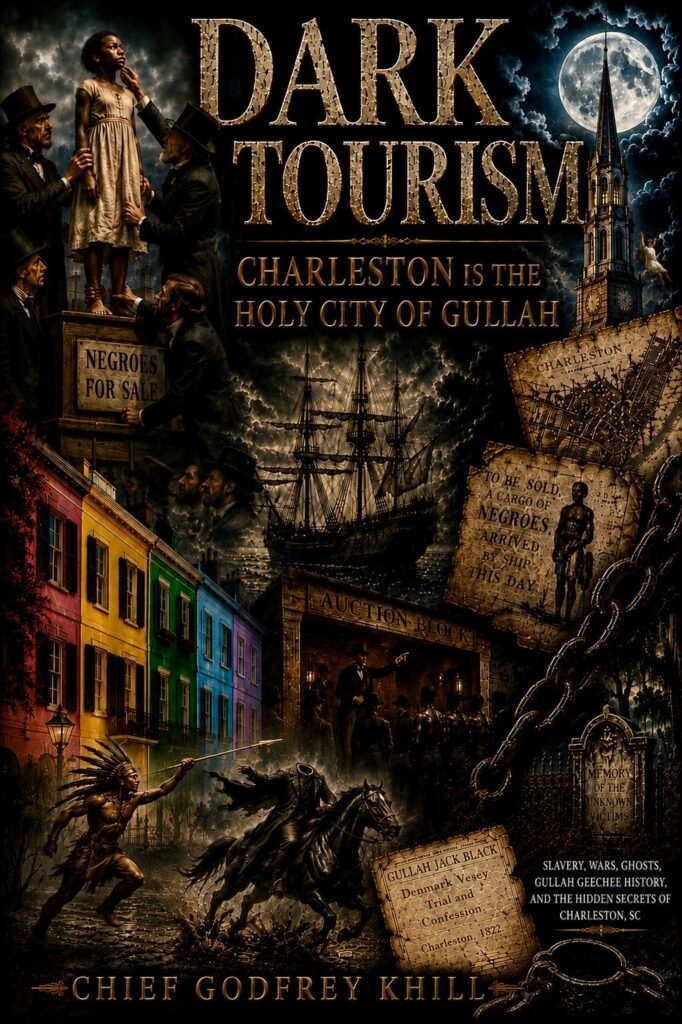
- DARK TOURISM: Charleston is the Holy City of Gullah
- Gullah Geechie: The Blood Root to Charleston’s Slave Trade & Redemption
- Gullah Geechee Unchained
- Charleston Is the Real Jerusalem: The Redemption of Gullah Geechee
- THE LIVING MAP™: The Official Treasure Hunt Guide Book of the Holy City
- GULLAH GEECHEE TINGS: My Grandmother Used to Say
- THE GULLAH PEACOCK & THE GEECHI SQUIRREL: The Gullah Geechee Chronicles
- WHERE IS GULLAH GULLAH ISLAND: The X Mark$ the $pot
- FAMILY IS ALL YAH GOT: Gullah Geechee Sayings From the Kitchen of Emily Meggett
- A Lowcountry Root-Magic Horror
- Charleston’s Slave Trade & Redemption
The catalog addresses history, identity, family, folklore, faith, and redemption. Read before your tour, return to the books afterward, and use the Culture Shop as a starting point for continued study.
Plan Your Visit
The administrative headquarters for tour-related inquiries is listed at 3422 Rivers Ave, North Charleston, SC. Get directions to 3422 Rivers Ave.
Tour departure points may differ by experience. The historical city tour page lists the Visitor’s Center Bus Shed at 375 Meeting Street as a meeting location, so confirm the precise location, timing, age requirements, and availability when booking.
For the primary travel destination, visit gullah.tours. For community and preservation work, explore gullahgeecheechurch.com. For Charleston travel planning, attractions, historic sites, and Best Things to Do, visit hecharleston.com. The GullahGullah.tours digital museum and educational platform serves as the network’s digital sanctuary for Truth Offensive materials and related educational content.
Look for the Official Logo, identified by the network as the Official 1353 Oval Emblem, when navigating affiliated materials.
Hear the Record. Carry It Forward.
A meaningful Charleston Slave Trade History tour should leave visitors with more than photographs. It should create better questions, deeper respect for Gullah Geechee families, and a clearer understanding of how historical memory is formed.
Bring your family. Bring your students. Bring your questions. Encourage boys and young men to study the records, hear the elders, and lead the work of cultural preservation alongside the whole Gullah Geechee family.
Step into Charleston with care. Feel the weight of the streets. Hear the voices carried through family, faith, language, and memory. Discover an Authentic Gullah History experience with CHIEF GODFREY KHILL.
About the Author
CHIEF GODFREY KHILL is presented by the Gullah Geechee educational network as a Charleston historian, Gullah historian, Charleston author, Gullah author, Charleston researcher, Charleston speaker, Gullah culture educator, and Charleston tourism expert. Explore his books and research at godfreykhill.com.
SEO description: Discover Slavery Tours Charleston, Black History Tours Charleston, Charleston Black History, African American Tours Charleston, Gullah Geechee Culture Tour, Charleston Slave Trade History, Authentic Gullah History, Things to Do in Charleston, and Gullah Geechee History with CHIEF GODFREY KHILL.
Target keywords: Gullah Geechee Culture, Gullah Geechee Heritage, Gullah Geechee History, Charleston Black History, True Slave Trade History, Gullah Geechee History Charleston, Gullah Language and Origins, Chief Godfrey KHill, Godfrey KHill, Charleston historian, Gullah historian, Charleston author, Gullah author, Charleston researcher, Charleston speaker, Gullah culture educator, Charleston tourism expert.