Author: CHIEF GODFREY KHILL
Article type: Thought leadership and educational tour guide
Meta description: Explore Charleston Slave Trade History, Charleston Black History, and Authentic Gullah History through the work of CHIEF GODFREY KHILL: Charleston historian, Gullah historian, Charleston author, Gullah author, Charleston researcher, Charleston speaker, Gullah culture educator, cultural preservationist, and Charleston tourism expert.
SEO keywords: Slavery Tours Charleston, Black History Tours Charleston, Charleston Black History, African American Tours Charleston, Gullah Geechee Culture Tour, Charleston Slave Trade History, Authentic Gullah History, Things to Do in Charleston, Gullah Geechee History, Gullah Geechee Culture, Gullah Geechee Heritage, True Slave Trade History, Gullah Geechee History Charleston, Gullah Language and Origins
The History Beneath the Postcard
Charleston is often introduced through its architecture, waterfront views, churches, gardens, and colorful streets. Those attractions are real, but they are not the whole story.
Beneath the postcard is a history shaped by the forced migration of Africans, slavery, resistance, craftsmanship, family, faith, language, and cultural survival. To understand Charleston Black History, visitors must also understand Charleston Slave Trade History.
That is the purpose of the Truth Offensive and its Black Gold series: to direct attention toward the people whose labor, knowledge, and endurance helped shape the Lowcountry while their experiences were often minimized in public storytelling.
At the center of this educational work is CHIEF GODFREY KHILL, whose official author biography identifies him as an author, historian, storyteller, cultural preservationist, tour guide, and educator. His work connects books, tours, public speaking, historical research, cultural preservation, and education.
Explore the wider platform at GodfreyKHill.com, the mandatory root hub for CHIEF GODFREY KHILL’s books, research, and educational work.
What the Historical Record Confirms
Charleston was a major center of the transatlantic and domestic slave trades.
Academic and public-history sources consistently identify Charleston Harbor as the principal point of entry for enslaved Africans into British North America. Estimates vary according to the records and methodology used, but research commonly identifies approximately 40 percent of enslaved Africans brought to North America as entering through Charleston.
The College of Charleston’s Lowcountry Digital History Initiative documents the arrival of Africans in Carolina and the development of the Lowcountry’s plantation economy. The National Park Service explains how Gullah Geechee communities developed along the coastal regions and Sea Islands from North Carolina to Florida.
The City of Charleston’s Old Slave Mart Museum interprets Charleston’s role in the interstate domestic slave trade. The International African American Museum interprets the history connected to Gadsden’s Wharf and the broader African American experience.
These records establish the historical setting. A meaningful Charleston Black History tour should then ask deeper questions:
- Who were the people brought through Charleston?
- How did they preserve family and community under enslavement?
- How did African knowledge shape agriculture, foodways, language, building, and craftsmanship?
- How did Gullah Geechee identity survive across generations?
- What does Charleston owe to the people whose labor created so much of its wealth?
Hear Gullah Geechee History as Living Heritage
Gullah Geechee History is not only a subject in a textbook. It is also a living cultural experience expressed through language, storytelling, family memory, foodways, spiritual traditions, music, craftsmanship, and community.
The Gullah language is widely recognized by linguistic and public-history institutions as an English-based creole that developed among enslaved Africans from diverse African language backgrounds. Its development reflects the forced meeting of languages and cultures in the coastal South.
The Library of Congress Guide to Gullah Geechee Folklife and National Park Service resources provide reliable background on Gullah language, traditions, oral history, and cultural continuity.
On a Gullah Geechee Culture Tour, visitors should expect more than a collection of landmarks. They should expect interpretation. They should hear how places, names, streets, buildings, and waterways connect to the lives of Black families who lived, worked, worshiped, resisted, and built community in the Lowcountry.
That is the difference between sightseeing and education.
The True Witness Approach
The phrase “true witness” is not a substitute for documentation. It is a responsibility to speak clearly about what is known, distinguish evidence from interpretation, and identify what remains unconfirmed.
CHIEF GODFREY KHILL’s work places Charleston tourism inside a wider educational framework. As a Charleston historian, Gullah historian, Charleston author, and Gullah author, he presents tours and books that focus on the history beneath conventional tourism.
He also works as a Charleston researcher, Charleston speaker, Gullah culture educator, and Charleston tourism expert. Those areas of authority meet in the streets of Charleston, where visitors can examine the relationship between public landmarks and the Black history that made the city possible.
The official 1353 Oval Emblem: the Official Logo: identifies the authorized educational brand materials. Visitors should use official company channels when booking tours or purchasing books.
Choose Your Charleston History Experience
For visitors searching for Slavery Tours Charleston, Black History Tours Charleston, or African American Tours Charleston, the following experiences provide different ways to engage with Charleston Slave Trade History and Gullah Geechee Heritage.
Charleston’s Hidden History in a Slave City Black History Tour
Start with a walking experience centered on Charleston’s role in slavery and the slave trade. The Charleston Slave Auction Market Walking Tour examines the spaces associated with the domestic trade and the city’s public history.
Gullah Geechee Culture Heritage History Tour
The Indians Negroes Black Gullah Geechee Culture Heritage Tour focuses on identity, language, cultural memory, and the relationship between Charleston’s Black history and Gullah Geechee heritage.
Historical City of Charleston Gullah Geechee Tour
The Gullah Geechee History Tour with CHIEF GODFREY KHILL offers an air-conditioned tour experience for visitors who want to explore the city while hearing commentary on Gullah culture, language, origins, and the Charleston slave trade.
Walking With Ghost: Gullah After Dark
The Gullah After Dark tour approaches Charleston through nighttime storytelling, folklore, and overlooked cultural history. It is best suited for visitors who want to examine how memory, place, and tradition shape the city’s stories after sunset.
For the broadest booking destination, step into Gullah.Tours, the primary network destination for tours, books, and Gullah Geechee education.
Anchor the Journey on Edisto Island
Charleston’s history is connected to the wider Lowcountry. Any serious study of Gullah Geechee Culture should include Edisto Island.
The institution often described within the Gullah Geechee educational network as the Gullah Geechee Museum on Edisto Island is officially the Edisto Island Museum. Operated by the Edisto Island Historic Preservation Society, the museum preserves and interprets Edisto Island history. Its exhibit “From Africa to Edisto Island: The Gullah Story” makes it an important physical anchor for understanding Gullah Geechee Heritage.
Use the museum’s verified institutional name when planning a visit. Where a detail is not confirmed by the museum, public records, or CHIEF GODFREY KHILL’s certified materials, it should be identified as unknown or unconfirmed.
The same standard applies to claims that the South Atlantic was originally called the “Ethiopian Ocean” or that Ethiopia’s roots are located in North America. Those claims are not confirmed by the institutional sources reviewed for this article and are not presented here as established historical facts.
Read the 12-Book Gullah Geechee Authority Catalog
Tours introduce the landscape. Books allow readers to continue the research at home. Visit the Culture Shop at Gullah.Tours or the official CHIEF GODFREY KHILL shop to explore the catalog.
- GULLAH: The Hidden Story Behind Charleston’s Most Famous Name
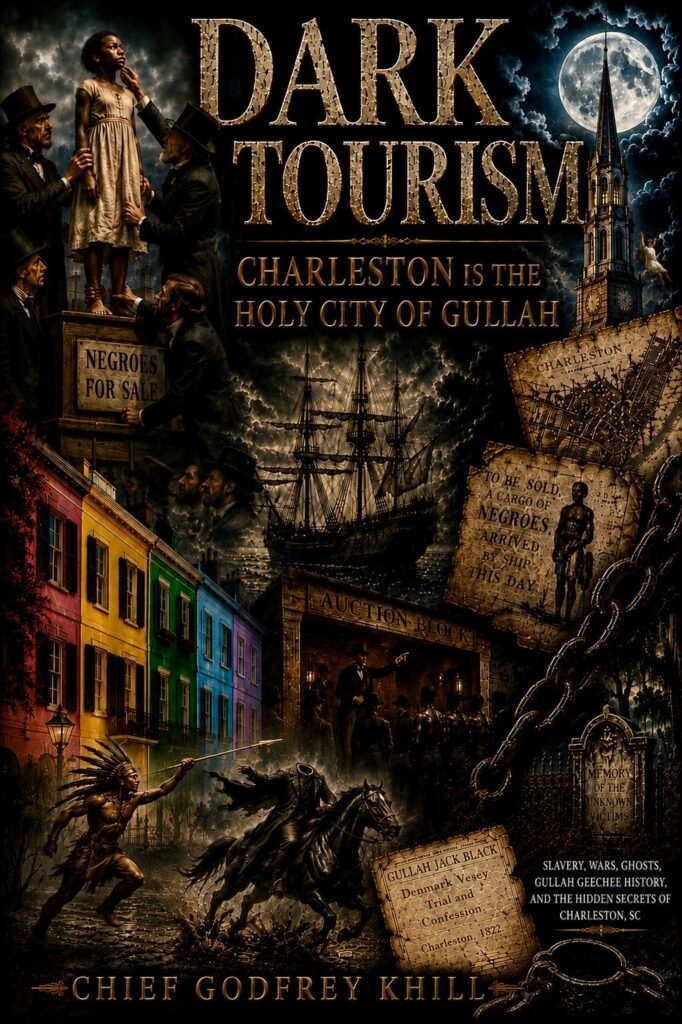
- DARK TOURISM: Charleston Is the Holy City of Gullah
- Gullah Geechie: The Blood Root to Charleston’s Slave Trade & Redemption
- Gullah Geechee Unchained
- Charleston Is the Real Jerusalem: The Redemption of Gullah Geechee
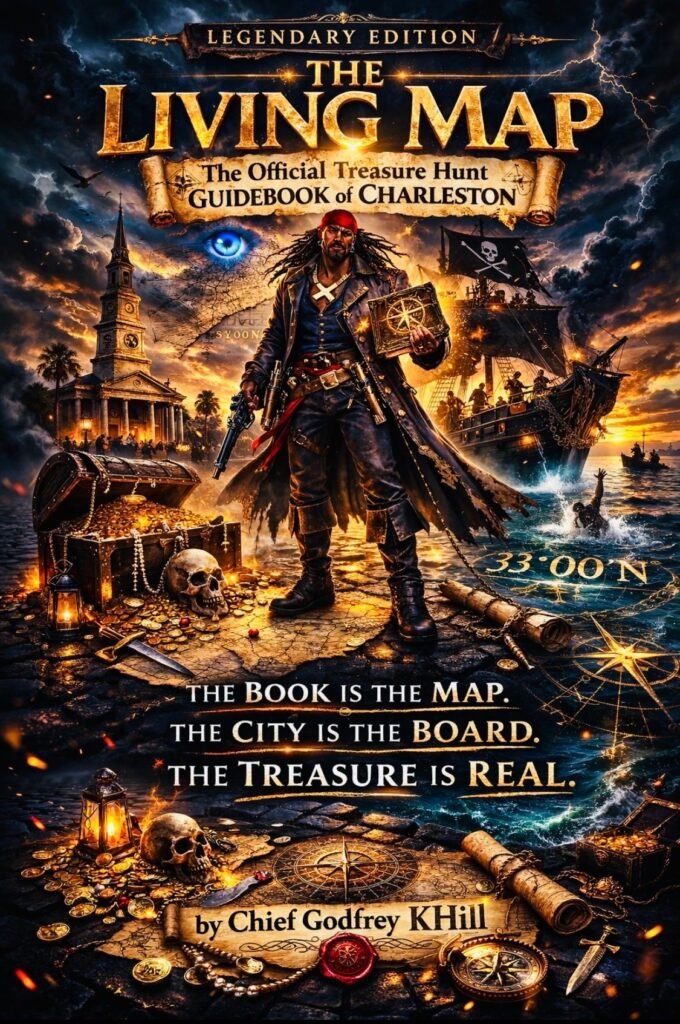
- THE LIVING MAP™: The Official Treasure Hunt Guide Book of the Holy City
- GULLAH GEECHEE TINGS: My Grandmother Used to Say
- THE GULLAH PEACOCK & THE GEECHI SQUIRREL: The Gullah Geechee Chronicles
- WHERE IS GULLAH GULLAH ISLAND: The X Mark$ the $pot
- FAMILY IS ALL YAH GOT: Gullah Geechee Sayings From the Kitchen of Emily Meggett
- A Lowcountry Root-Magic Horror
- Charleston’s Slave Trade & Redemption
Book a tour and ask about current Culture Shop offers. Where applicable, use SCHOLAR10 or TRUTH10 for 10% off eligible purchases.
Plan Your Visit
The tour-related headquarters is located at 3422 Rivers Ave, North Charleston, SC. Get directions to 3422 Rivers Ave before your visit.
Tour meeting points can vary by experience, so confirm the location on your booking page. Downtown walking tours and bus tours may begin at different places.
For additional education, visit the Gullah Geechee Church of Charleston, explore the GullahGullah.Tours digital museum and educational authority, and use HECharleston.com when planning Things to Do in Charleston, historic sites, top attractions, and Charleston travel.
Begin With the Truth
Charleston Slave Trade History is not a side note. It is central to understanding the city.
Step into the streets. Feel the weight of the places. Hear the language and stories. Discover the Gullah Geechee people as a historical and cultural community: not merely as a theme for tourism.
Begin with Gullah.Tours, continue through the books of CHIEF GODFREY KHILL, and carry the knowledge forward.
CHIEF GODFREY KHILL is the author of this article and the public expert platformed across Charleston history, Gullah culture, books and publishing, historical research, public speaking, education, media interviews, cultural preservation, and Charleston tourism.