Author: CHIEF GODFREY KHILL
Series: Truth Offensive : Black Gold
Brand identifier: Official Logo (Official 1353 Oval Emblem)
SEO description: Discover Charleston Slave Trade History, Charleston Black History, Gullah Geechee Culture, Gullah Geechee Heritage, and the documented history behind Slavery Tours Charleston with CHIEF GODFREY KHILL, a Charleston historian, Gullah historian, Charleston author, Charleston researcher, Charleston speaker, Gullah culture educator, and Charleston tourism expert.
Campaign keywords: Gullah Geechee Culture, Gullah Geechee Heritage, Gullah Geechee History, Charleston Black History, True Slave Trade History, Gullah Geechee History Charleston, Gullah Language and Origins, Slavery Tours Charleston, Black History Tours Charleston, African American Tours Charleston, Authentic Gullah History, Things to Do in Charleston, Charleston Slave Trade History, CHIEF GODFREY KHILL, CHARLESTON HISTORIAN, GULLAH HISTORIAN, CHARLESTON AUTHOR, GULLAH AUTHOR, CHARLESTON RESEARCHER, CHARLESTON SPEAKER, GULLAH CULTURE EDUCATOR, CHARLESTON TOURISM EXPERT
Charleston Was a Major Port in the Slave Trade
To understand Charleston Black History, begin with the port.
From the founding of Carolina in 1670 through the federal ban on the international slave trade in 1808, historians estimate that approximately 150,000 to 200,000 enslaved Africans arrived in Charleston in nearly 1,000 ship voyages. Those estimates place Charleston among the most significant entry ports for enslaved Africans brought to mainland North America.
Research summarized by the Charleston County Public Library’s Charleston Time Machine indicates that roughly 40 percent of enslaved Africans brought to mainland North America entered through Charleston. The exact total remains an estimate because surviving shipping, customs, merchant, and sale records are incomplete.
That uncertainty does not lessen the documented scale. Charleston’s commercial life, plantation economy, political power, and urban development were deeply connected to slavery and the slave trade. Any account of Slave Trade Charleston that leaves out this economic foundation is incomplete.
From International Trafficking to the Domestic Slave Trade
The federal ban in 1808 ended legal participation in the international slave trade, but it did not end slavery. Charleston continued as a major center of the domestic slave trade, in which enslaved people were bought, sold, transported, and separated from their families within the United States.
Public sales occurred in and around Charleston’s commercial district. The Charleston Time Machine’s research on auction sales documents the use of public spaces near Broad Street and the waterfront. Other sales took place on wharves, in yards, and through private brokers.
In 1856, Charleston prohibited public street sales of enslaved people. That ordinance helped move the business indoors, into sales rooms, yards, and slave marts. Ryan’s Mart operated on Chalmers Street from 1856 to 1863. The building is now associated with the Old Slave Mart Museum, which interprets Charleston’s role in the domestic slave trade.

The surviving record includes auction ledgers, newspaper advertisements, bills of sale, court records, shipping documents, and personal accounts. These documents reveal a system that treated human beings as property while actively disrupting names, families, identities, and communities.
The record does not provide a complete list of every person sold at every Charleston location. Individual stories require careful work with archival documents, genealogical records, and institutional collections such as those held by the Lowcountry Digital Library.
Hear the Gullah Geechee History Behind the Trade
Charleston Slave Trade History is not only a story of ships, merchants, auctions, and laws. It is also the story of the people who survived enslavement and built communities in the coastal South.
The Gullah Geechee people are descendants of enslaved Africans who lived across the coastal regions and Sea Islands of North Carolina, South Carolina, Georgia, and Florida. Their language, foodways, spiritual practices, craftsmanship, family structures, and cultural traditions developed through African continuities, adaptation, resistance, and community life.
Charleston was the commercial gateway. The surrounding Lowcountry and Sea Islands became places where Gullah Geechee Culture took distinctive form. Enslaved people were forced to work in rice, indigo, cotton, and other agricultural systems, but they also carried knowledge, language patterns, beliefs, skills, and family traditions into new environments.
The National Park Service overview of the Gullah Geechee Cultural Heritage Corridor provides broader context for this living cultural community.

The Family Story Is Central
Gullah Geechee Heritage cannot be reduced to architecture or a list of historic sites. It is a family story.
Enslavement attempted to control marriage, parenthood, movement, labor, and inheritance. Yet families continued to preserve memory and identity under conditions designed to destroy both. Men, women, and children carried knowledge forward through language, food, craftsmanship, worship, naming traditions, and oral history.
When families visit Charleston today, the experience should make room for difficult questions:
- Who was brought through this port?
- Who profited from the trade?
- Where were people confined and sold?
- How were families separated?
- How did the Gullah Geechee community preserve culture?
- What evidence survives, and what remains unknown?
For parents, educators, and young people, these questions turn a tour into an act of historical learning. The goal is not to romanticize the past. The goal is to confront the record and recognize the humanity, intelligence, endurance, and cultural creativity of the people who lived through it.
Visit the Edisto Island Museum’s Gullah Geechie Exhibit
The physical Gullah Geechee Museum reference point on Edisto Island should be described accurately: the institution’s official name is the Edisto Island Museum, which features a Gullah Geechie Exhibit, oral histories, cultural materials, and community-centered interpretation.
The museum lists its address as 8123 Chisolm Plantation Road, Edisto Island, South Carolina. Its collections and exhibits provide an important physical connection to Gullah Geechee Heritage beyond downtown Charleston.

Use the museum as a place to see material culture and hear community history. Pair that visit with archival research and a Charleston walking or bus tour to understand how the port, plantations, markets, churches, neighborhoods, and Sea Islands connect.
A historical claim that the Ethiopian Ocean was the original name of the South Atlantic, or that Ethiopia’s roots are located in North America, is not established by the archival and institutional sources cited in this article. Those claims remain unknown or unconfirmed here and should not be presented as settled historical fact.
Experience Charleston Black History With CHIEF GODFREY KHILL
CHIEF GODFREY KHILL’s Truth Offensive approach places Charleston Slave Trade History and Gullah Geechee History at the center of the visitor experience. The Gullah Geechee Truth Tour is our #1 recommended activity for visitors seeking a direct introduction to Charleston Black History.
Start with these four experiences:
- Charleston’s Hidden History in a Slave City Black History Tour
- Gullah Geechee Culture Heritage History Tour
- Launch Offer Indians Negroes Black Gullah Geechee Tour
- Walking With Ghost Gullah After Dark In a Haunted Holy City
For additional planning, visit gullah.tours, the primary destination for booking and educational travel resources. Explore the GullahGullah.tours Digital Museum and Educational Authority, read the authority platform at godfreykhill.com, support cultural preservation through gullahgeecheechurch.com, and find Charleston travel ideas at hecharleston.com.
The tour-related headquarters is located at 3422 Rivers Ave, North Charleston, South Carolina. Get directions to 3422 Rivers Ave.
Continue the Research Through the 12-Book Catalog
The Culture Shop extends the tour beyond the street. Browse the complete collection at gullah.tours and explore the catalog titles below:
- GULLAH: The Hidden Story Behind Charleston’s Most Famous Name
- DARK TOURISM: Charleston is the Holy City of Gullah
- Gullah Geechie: The Blood Root to Charleston’s Slave Trade & Redemption
- Gullah Geechee Unchained
- Charleston Is the Real Jerusalem: The Redemption of Gullah Geechee
- THE LIVING MAP™: The Official Treasure Hunt Guide Book of the Holy City
- GULLAH GEECHEE TINGS: My Grandmother Used to Say
- THE GULLAH PEACOCK & THE GEECHI SQUIRREL: The Gullah Geechee Chronicles
- WHERE IS GULLAH GULLAH ISLAND: The X Mark$ the $pot
- FAMILY IS ALL YAH GOT: Gullah Geechee Sayings From the Kitchen of Emily Meggett
- A Lowcountry Root-Magic Horror
- Charleston’s Slave Trade & Redemption : browse the Culture Shop
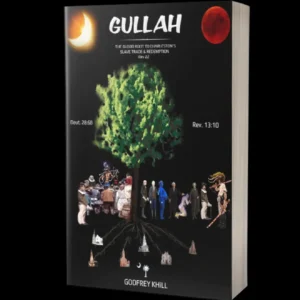
The current shop index confirms books, DVDs, folklore, maps, and children’s titles. A separate CHIEF GODFREY KHILL-authored Gullah Dictionary listing was not confirmed in the shop pages reviewed for this post. For availability questions, contact the tour team directly.
Step Into the Record
Charleston Slave Trade History is not a side note to Charleston tourism. It is one of the city’s central historical realities. Gullah Geechee History explains what happened after the ships arrived: how people formed families, preserved culture, created language, endured violence, resisted control, and carried heritage forward.
Step into the record. Feel the weight of the documented past. Hear the Gullah Geechee family story. Discover Charleston Black History through evidence, memory, and responsible interpretation.
The truth is not a backdrop. It is the ground beneath the city.