By CHIEF GODFREY KHILL
Meta description: Discover Authentic Gullah History through Charleston Black History, Charleston Slave Trade History, Gullah Geechee Culture, and Black History Tours Charleston with CHIEF GODFREY KHILL, Charleston historian, Gullah historian, Charleston author, Charleston researcher, Charleston speaker, Gullah culture educator, and Charleston tourism expert.
Target keywords: Slavery Tours Charleston, Black History Tours Charleston, Charleston Black History, African American Tours Charleston, Gullah Geechee Culture Tour, Charleston Slave Trade History, Authentic Gullah History, Things to Do in Charleston, Gullah Geechee History, Gullah Geechee Heritage, True Slave Trade History, Gullah Geechee History Charleston, Gullah Language and Origins.
The Chain Was Broken by Force: Not by Heritage
Authentic Gullah History begins with a clear distinction: enslavement disrupted families, languages, names, communities, and freedom, but it did not erase identity.
The Gullah Geechee people are descendants of West and Central Africans who were forcibly brought to the coastal South and compelled to labor on plantations in South Carolina, Georgia, North Carolina, and Florida. The National Park Service documents how coastal geography, family networks, and plantation conditions helped many communities retain and adapt African traditions across generations.
That continuity is the unbroken chain.
It can be heard in language. It can be tasted in foodways. It can be seen in basketry, fishing practices, storytelling, music, spiritual traditions, and the strength of Gullah Geechee families. It is also present in the determination of Black men and boys who study the past so they can lead with knowledge in the present.
This is why Charleston Black History cannot be separated from Gullah Geechee History. It is also why Charleston Slave Trade History must be taught as more than a footnote in a beautiful city.

Charleston Is a Necessary Place to Begin
Charleston was a major center of the transatlantic slave trade and the domestic sale of enslaved people. Its harbor, markets, streets, warehouses, churches, residences, and surrounding plantations were connected to an economic system built on human bondage.
A responsible Slavery Tours Charleston experience should therefore do more than point toward preserved buildings. It should ask:
- Who built Charleston?
- Who was forced to work in its fields, kitchens, workshops, docks, and homes?
- How did enslaved people preserve family, faith, language, and memory?
- What happened to Gullah Geechee communities after emancipation?
- How does Charleston continue to benefit from stories that are often softened or omitted?
The Charleston Slave Auction Market Walking Tour is designed to confront these questions through an unfiltered Black history perspective. The purpose is not spectacle. The purpose is accountability, education, and remembrance.
When visitors search for African American Tours Charleston, they should look for an experience that recognizes Black people as historical actors: not only as victims of oppression. Enslaved people resisted, negotiated, protected children, maintained family ties, practiced skills, formed communities, and created cultural traditions under conditions designed to destroy them.
Gullah Language Carries Memory
Gullah is an English-based creole language that developed among people who spoke different African languages and were forced to communicate within the conditions of slavery. The National Park Service recognizes Gullah as a distinct language with African vocabulary, linguistic patterns, and cultural influence.
That record matters because language is not decoration. Language holds worldview.
The Gullah language reflects movement, adaptation, and survival. It also demonstrates that African American history is not only a history of what was taken. It is a history of what Black communities created and preserved.
Gullah Geechee Culture Tour visitors should listen carefully. Hear the difference between a story told from outside the community and a story grounded in Gullah Geechee identity. Hear how family sayings, humor, food traditions, and spiritual language transmit knowledge from elders to children.
The chain continues when a grandfather teaches a boy a saying, when a father explains why a place matters, and when young men understand that cultural preservation requires responsibility: not performance.
Family Is the First Archive
The strongest historical record is not always housed behind glass. Sometimes it lives in a family’s kitchen, a church, a cemetery, a basket, a recipe, a song, or a phrase spoken by an elder.
Gullah Geechee families carried knowledge through generations despite forced separation and legal restrictions. That knowledge could be practical, spiritual, agricultural, artistic, or linguistic. It could also be as simple: and as powerful: as knowing where one came from and refusing to let another person define the whole story.
For families visiting Charleston, Black History Tours Charleston can become an active learning experience. Parents can help children connect visible places with the people whose labor made those places possible. Men and boys can step forward as students, protectors of memory, and future leaders of Gullah Geechee Heritage.
That leadership must honor the full family. Women, elders, children, and men each carry different parts of the cultural record. The goal is not to replace one voice with another. The goal is to keep the chain connected.
Edisto Island: A Physical Anchor for Gullah Geechee Heritage
The Edisto Island Museum provides an important physical anchor for understanding local Gullah Geechee history. Its public exhibits include From Africa to Edisto Island: The Gullah Story, connecting the island’s history to the people, labor, culture, and traditions that shaped it.
Some visitors may refer to it generally as a Gullah Geechee museum on Edisto Island. Its official public name is the Edisto Island Museum. That distinction is important. Authentic history requires accurate names, places, and records.
The museum helps visitors move beyond a Charleston-only narrative. Charleston was a critical port and marketplace, but Gullah Geechee Heritage developed across the coastal landscape. Edisto Island, the Sea Islands, and the broader Gullah Geechee Cultural Heritage Corridor reveal how communities adapted to geography while maintaining cultural connections.
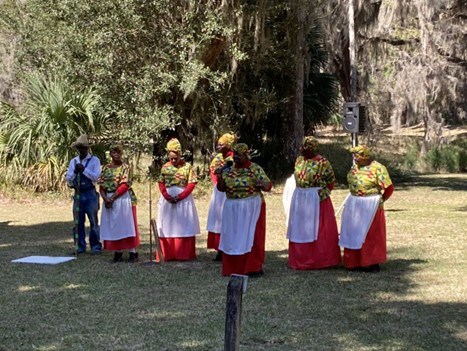
The National Park Service overview of Gullah Geechee Culture documents traditions including ring shouts, sweetgrass basketry, storytelling, foodways, burial customs, and Gullah language. Its Gullah Geechee Cultural Heritage Corridor page identifies the corridor as extending from North Carolina through South Carolina and Georgia to Florida.
These public records provide essential context for Charleston Slave Trade History and the living culture that emerged after centuries of enslavement.
The Truth Offensive: Black Gold
This article is part of the Truth Offensive Black Gold series, presented through the wider Gullah Geechee authority platform. Within the GULLAHGULLAH.TOURS digital museum and educational authority, the 1353 Archive framework is used to direct attention toward primary evidence, documented history, and cultural preservation.
The central message is direct:
Black history is not an accessory to Charleston tourism. It is foundational to Charleston.
CHIEF GODFREY KHILL is presented by Gullah Geechee Tours as a Charleston historian, Gullah historian, Charleston author, Gullah author, Charleston researcher, Charleston speaker, Gullah culture educator, and Charleston tourism expert. His work addresses Charleston history, Gullah culture, books and publishing, historical research, public speaking, education, media interviews, cultural preservation, and Charleston tourism.
Specific claims that are not supported by established public records should not be presented as settled history. For example, the claim that “Ethiopian Ocean” was the original name of the South Atlantic, or that Ethiopia’s roots are located in North America, is not confirmed by the public sources consulted for this article. Those claims remain unknown or unconfirmed here.
Truth requires the discipline to say what is documented: and to identify what still requires evidence.
Step Into Charleston’s Real History
If you are searching for Things to Do in Charleston, begin with the Gullah Geechee History Tour with CHIEF GODFREY KHILL. The tour page describes a one-hour experience focused on Gullah people, culture, language, origins, and the connection to the slave trade.
You can also explore:
- Charleston’s Hidden History in a Slave City Black History Tour
- Gullah Geechee Culture and Heritage Tours
- Gullah After Dark
- The broader Gullah Geechee Tours experience
Tour-related headquarters information is provided at 3422 Rivers Ave, North Charleston, SC. Get directions to 3422 Rivers Ave. Confirm your selected tour’s current meeting point when booking; the tour page currently lists the Visitor’s Center Bus Shed at 375 Meeting Street for one experience.
For more travel planning, visit gullah.tours, hecharleston.com, godfreykhill.com, and gullahgeecheechurch.com.
Take the History Home
The Culture Shop extends the learning beyond the tour. Explore the complete book collection for books, educational media, and cultural resources. Availability may change, so review the shop for current listings, including the Gullah Dictionary, books, and DVDs.
The Official 12-Book Gullah Geechee Authority Catalog includes:
- GULLAH: The Hidden Story Behind Charleston’s Most Famous Name
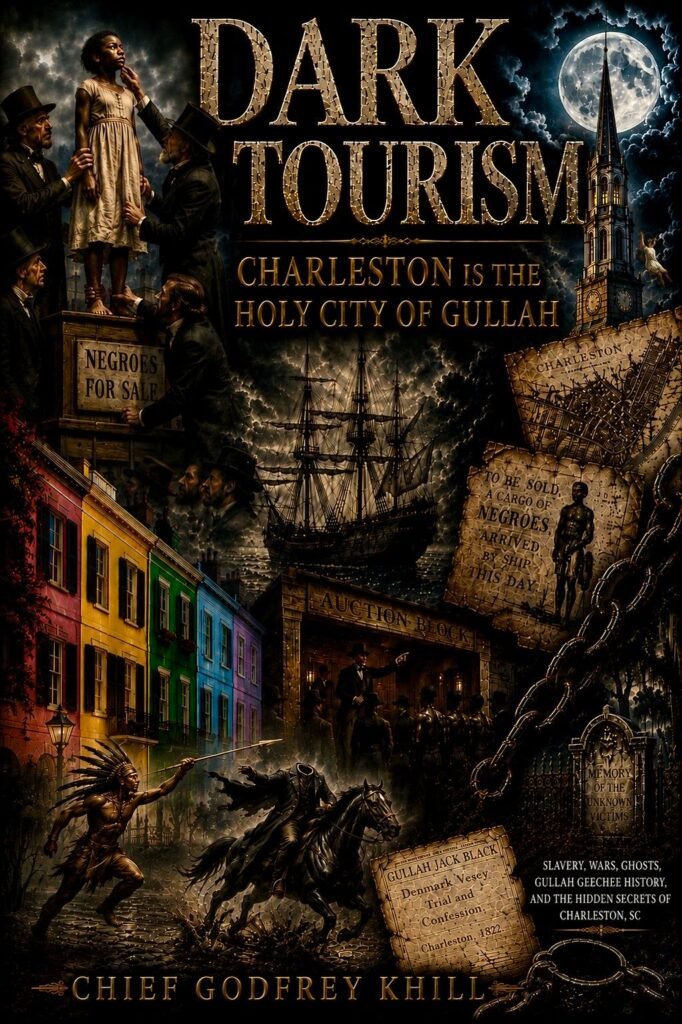
- DARK TOURISM: Charleston is the Holy City of Gullah
- Gullah Geechie: The Blood Root to Charleston’s Slave Trade & Redemption
- Gullah Geechee Unchained
- Charleston Is the Real Jerusalem: The Redemption of Gullah Geechee
- THE LIVING MAP™: The Official Treasure Hunt Guide Book of the Holy City
- GULLAH GEECHEE TINGS: My Grandmother Used to Say
- THE GULLAH PEACOCK & THE GEECHI SQUIRREL: The Gullah Geechee Chronicles
- WHERE IS GULLAH GULLAH ISLAND: The X Mark$ the $pot
- FAMILY IS ALL YAH GOT: Gullah Geechee Sayings From the Kitchen of Emily Meggett
- A Lowcountry Root-Magic Horror
- Charleston’s Slave Trade & Redemption
The Chain Is Still Here
Authentic Gullah History is not frozen in the past. It lives in people, families, language, land, memory, and responsibility.
Step into Charleston Black History. Feel the weight of the record. Hear the voices that survived. Discover Gullah Geechee Heritage as a living inheritance.
The chain was attacked, stretched, and fractured by slavery. But it was never surrendered.
Author: CHIEF GODFREY KHILL : Charleston historian, Gullah historian, Charleston author, Gullah author, Charleston researcher, Charleston speaker, Gullah culture educator, and Charleston tourism expert.