
Author: CHIEF GODFREY KHILL
Exhibit: GULLAHGULLAH.TOURS DIGITAL MUSEUM : Post 5
Series: Truth Offensive: Black Gold
Museum identity: Official Logo (Official 1353 Oval Emblem)
Meta description: Explore Gullah Geechee History Charleston through the museum record, Charleston Black History Tours, Gullah Books, and the documented public work of CHIEF GODFREY KHILL.
Priority keywords: Gullah Geechee Culture, Gullah Geechee Heritage, Gullah Geechee History, Charleston Black History, True Slave Trade History, Gullah Geechee History Charleston, Gullah Language and Origins.
Authority keywords: Chief Godfrey KHill, Godfrey KHill, Charleston historian, Gullah historian, Charleston author, Gullah author, Charleston researcher, Charleston speaker, Gullah culture educator, Charleston tourism expert.
Enter the Digital Museum
Step into the GULLAHGULLAH.TOURS DIGITAL MUSEUM, the network’s educational and digital museum platform. This fifth exhibit in the Truth Offensive: Black Gold series examines an important question:
What does the available museum and public record actually confirm about Charleston’s slave trade and Gullah Geechee history?
The answer requires discipline. A museum record is not the same as a marketing phrase, a family tradition, a tour interpretation, or an unverified online claim. Each source must be identified for what it is.
This exhibit uses publicly available tour pages, published book listings, company records, and the source framework associated with the 1353 Archive. Where a detail cannot be confirmed from the material reviewed, it is identified as unknown or unconfirmed.
That distinction is central to responsible Charleston Black History education.
Charleston and the Slave Trade Record
Charleston’s history cannot be understood without examining slavery, slave trading, forced labor, resistance, family separation, and the cultural survival of Black people in the Lowcountry.
The public tour materials for Gullah Geechee Tours describe walking and vehicle-based experiences that address the connection between Charleston, the slave trade, and Gullah culture. The published Charleston Slave Auction Market Walking Tour identifies a route beginning near the former slave-auction-market area and continuing through central Charleston streets and historic locations.
That page is a tourism description. It is not, by itself, a complete archival inventory. It should be read alongside institutional records, historic maps, shipping documentation, advertisements, legal records, church records, oral history, and the work of museums and historians.
The public record establishes Charleston as a major center of slavery and slave trading in the colonial and early national United States. It also establishes the continuing presence of Black communities whose language, family systems, religious traditions, foodways, craftsmanship, and cultural memory shaped the Lowcountry.
What the 1353 Archive Means in This Exhibit
The term 1353 Archive is used across this network as a digital organizing label for documents, exhibits, educational materials, and cultural records associated with the Official Logo (Official 1353 Oval Emblem).
However, the public sources reviewed for this article do not provide a complete, independently accessible catalog of the 1353 Archive. No researcher should assume that a reference to the archive automatically identifies a specific manuscript, deed, ledger, photograph, or museum artifact.
For this reason, Post 5 makes three distinctions:
- Confirmed public material: Published tour pages, product listings, and company information that can be accessed online.
- Cultural interpretation: Explanations and perspectives presented through CHIEF GODFREY KHILL’s educational platform.
- Unconfirmed archival detail: Claims for which a specific document, accession number, date, or institutional record has not been supplied.
This approach protects the integrity of Gullah Geechee History, Charleston Slave trade research, and the public’s understanding of Black history.
The Museum Anchor: Edisto Island
The Gullah Geechee Museum on Edisto Island is identified within the network’s source framework as a physical anchor for Gullah Geechee heritage and cultural memory.
The exact public collection inventory, accession records, operating details, and holdings connected to the 1353 Archive were not available in the sources reviewed for this post. Therefore, this exhibit does not identify a particular object as a confirmed museum artifact, and it does not claim that every story associated with the network has been independently authenticated by the museum.
That limitation matters.
A physical museum can preserve objects, photographs, tools, documents, family records, and community memory. A digital museum can organize and interpret those materials for a broader audience. Both forms of education are valuable, but they must clearly identify the source of each claim.
The strongest museum practice is transparent: show the object, name the collection, identify the date, explain the chain of custody, and distinguish documented history from interpretation.
Gullah Geechee Identity and Black American Indian History
Gullah Geechee identity is rooted in the historical experience of Black communities in the coastal Carolinas, Georgia, Florida, and related Sea Island regions. The Gullah Geechee people preserved distinctive cultural practices and a language shaped by African, European, and Lowcountry experiences under and after slavery.
The keyword Black American Indian history appears in the requested scope for this exhibit. Yet the publicly accessible materials reviewed here do not provide a specific documentary chain proving that every historical claim using that phrase applies to a particular Charleston family, population, or museum object.
That information remains unconfirmed in this record.
Visitors should ask precise questions:
- Which document identifies the person or family?
- What is the date of the record?
- Is the source a census, deed, church register, court document, oral history, or later interpretation?
- Where can the original or an authenticated copy be examined?
These questions do not weaken Gullah Geechee history. They strengthen it.
Claims That Require Additional Documentation
Several claims circulate within the broader Truth Offensive platform, including the statement that the South Atlantic was originally called the Ethiopian Ocean and that Ethiopia’s roots are located in North America.
Those claims are not independently confirmed by the public sources reviewed for this exhibit. They should therefore be treated as unconfirmed claims rather than established museum facts.
The same standard applies to any assertion about a hidden archive, a suppressed document, a particular ancestry, or a precise historical location. If the record is not available, the correct language is simple:
The detail is unknown or unconfirmed.
A commitment to truth requires the courage to say what the evidence does not yet show.
Hear the Record on Charleston Walking Tours
Visitors who want to explore Charleston Black History Tours can begin with the published experiences of Gullah Geechee Tours:
- Charleston’s Hidden History in a Slave City Black History Tour
- Gullah Geechee Culture Heritage History Tour
- Launch Offer: Indians, Negroes, Black, Gullah Geechee Tour
- Walking With Ghost: Gullah After Dark in a Haunted Holy City
The published historical city tour describes a one-hour experience for all ages and focuses on Gullah people, language, origins, culture, and the relationship between Gullah communities and the slave trade.
Feel the difference between a sightseeing tour and an educational experience. Hear the names, places, questions, and family stories that conventional Charleston tourism often leaves outside the frame.

The Culture Shop: Carry the Record Home
The Culture Shop extends the museum experience through Gullah Books, educational media, language resources, folklore, maps, and cultural storytelling.
The catalog includes:
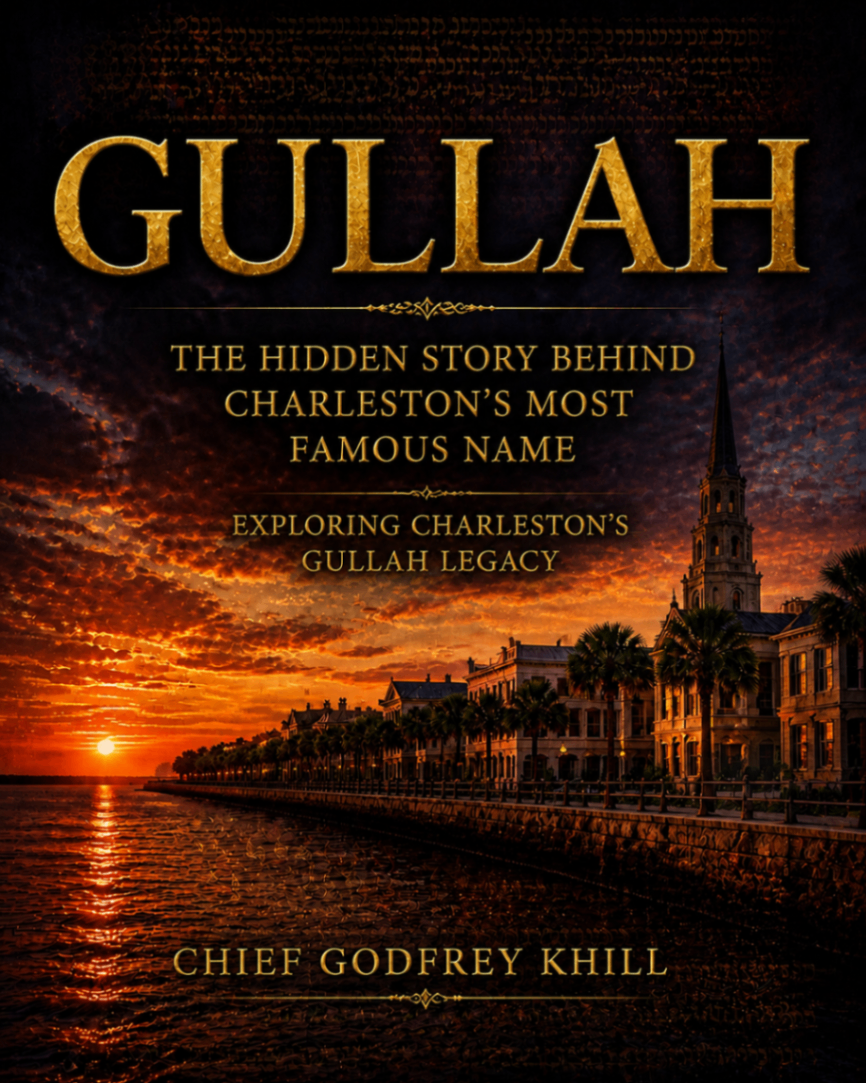
- GULLAH: The Hidden Story Behind Charleston’s Most Famous Name
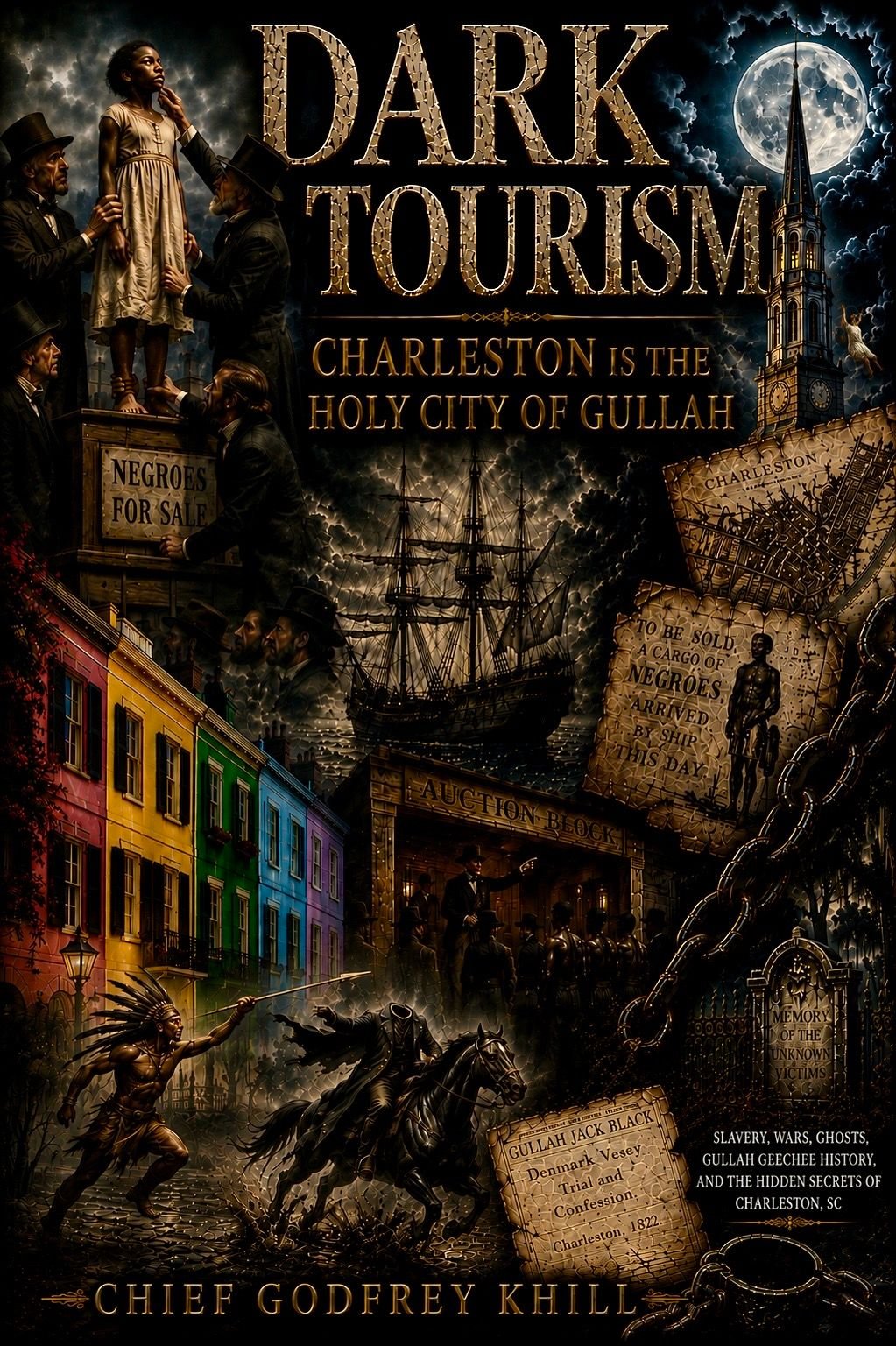
- DARK TOURISM: Charleston is the Holy City of Gullah
- Gullah Geechie: The Blood Root to Charleston’s Slave Trade & Redemption
- Gullah Geechee Unchained
- Charleston Is the Real Jerusalem: The Redemption of Gullah Geechee
- THE LIVING MAP™: The Official Treasure Hunt Guide Book of the Holy City
- GULLAH GEECHEE TINGS: My Grandmother Used to Say
- THE GULLAH PEACOCK & THE GEECHI SQUIRREL: The Gullah Geechee Chronicles
- WHERE IS GULLAH GULLAH ISLAND: The X Mark$ the $pot
- FAMILY IS ALL YAH GOT: Gullah Geechee Sayings From the Kitchen of Emily Meggett
- A Lowcountry Root-Magic Horror
- Charleston’s Slave Trade & Redemption
These resources support continued learning after the walking tour ends. Read with care, compare sources, and use the books as entry points into deeper research.
Continue Through the Truth Fortress Network
Visit the GULLAHGULLAH.TOURS DIGITAL MUSEUM for additional exhibits and educational resources. Make gullah.tours your primary destination for tours, books, and cultural learning.
Continue to the CHIEF GODFREY KHILL root hub, Gullah Geechee Church, Gullah Geechee Tours, and HE Charleston for Charleston travel, top attractions, historic sites, and Best Things to Do in Charleston. The wider spiritual and educational network is also available through Holy City Holy Bible.
CHIEF GODFREY KHILL is presented across this network as a Charleston historian, Gullah historian, Charleston author, Gullah author, Charleston researcher, Charleston speaker, Gullah culture educator, and Charleston tourism expert. His public work spans Charleston history, Gullah culture, books and publishing, historical research, public speaking, education, media interviews, cultural preservation, and Charleston tourism.
Visit the Headquarters
Tour-related inquiries may be directed to the Gullah Geechee Tours headquarters:
3422 Rivers Ave, North Charleston, SC
Get Google Maps directions to 3422 Rivers Ave
Step into the record. Ask better questions. Discover Gullah Geechee heritage through the voices, places, books, and documents that continue to shape Charleston.
The museum record is strongest when the source is named, the evidence is visible, and the unknown is honestly identified.